Categories
Uncategorized

St Paul’s by William Wordsworth

I have to thank Tim Miller and his podcast “Human voices wake us” for bringing this great London poem to my attention.

St Paul’s from Tate Modern

Pressed with conflicting thoughts of love and fear
I parted from thee, Friend, and took my way
Through the great City, pacing with an eye
Downcast, ear sleeping, and feet masterless
That were sufficient guide unto themselves,
And step by step went pensively. Now, mark!
Not how my trouble was entirely hushed,
(That might not be) but how, by sudden gift,
Gift of Imagination’s holy power,
My Soul in her uneasiness received
An anchor of stability. — It chanced
That while I thus was pacing, I raised up
My heavy eyes and instantly beheld,
Saw at a glance in that familiar spot
A visionary scene—a length of street
Laid open in its morning quietness,
Deep, hollow, unobstructed, vacant, smooth,
And white with winter’s purest white, as fair,
As fresh and spotless as he ever sheds
On field or mountain. Moving Form was none
Save here and there a shadowy Passenger
Slow, shadowy, silent, dusky, and beyond
And high above this winding length of street,
This moveless and unpeopled avenue,
Pure, silent, solemn, beautiful, was seen
The huge, majestic Temple of St Paul
In awful sequestration, through a veil,
Through its own sacred veil of falling snow.

St Paul’s from Millennium bridge
Categories
Uncategorized

The Capital Ring, Section 2

Station to Station 9k

Falconwood to Grove Park is one of the shorter walks on the ring, I’m not sure how come it measured 9k on my app, when the ramblers site says they did it in 7.1k. I think they followed the direct route from the station to the footbridge whereas I followed the signposted path, which I have to admit looks a little more circuitous on the map. Start by walking in Eltham Park North, which changes to Eltham Park South once you cross the brutalist footbridge over the busy A2.

Falconwood Footbridge
Crocus in February in 2020

Next, we have a section of suburban streets. A typical London mixed income area, some posh houses and schools, with some modern new build, low rise blocks of flats, Eltham would be considered a reasonably well-off part of South London. Its big claim to fame is that it is the birthplace of Bob Hope. Conduit Meadow here. held the spring that fed the river Shuttle, although it is not visible here, and it provided the water for the nearby palace.

Conduit Head diverted the water from the spring to the palace

As the houses become older, the street names become more interesting, and we enter Tilt Yard Approach. This is a hint that we are arriving at a place of historical significance and sure enough as we go down the hill we see the walls and moat of Eltham Palace.

Eltham Palace moat
Art Deco door from inside the palace

This is a fantastic historical building. Now cared for by English Heritage, both the house and gardens are a treat to visit. It has great architectural items from two very distinct historical periods. It was the country residence of the Kings and queens of England from the 14th to 16th century and then in the early 20th Century it was bought by the Courtauld Family and is one of the beautifully preserved Art Deco buildings in the country.

Small Ornamental Garden, Eltham Palace

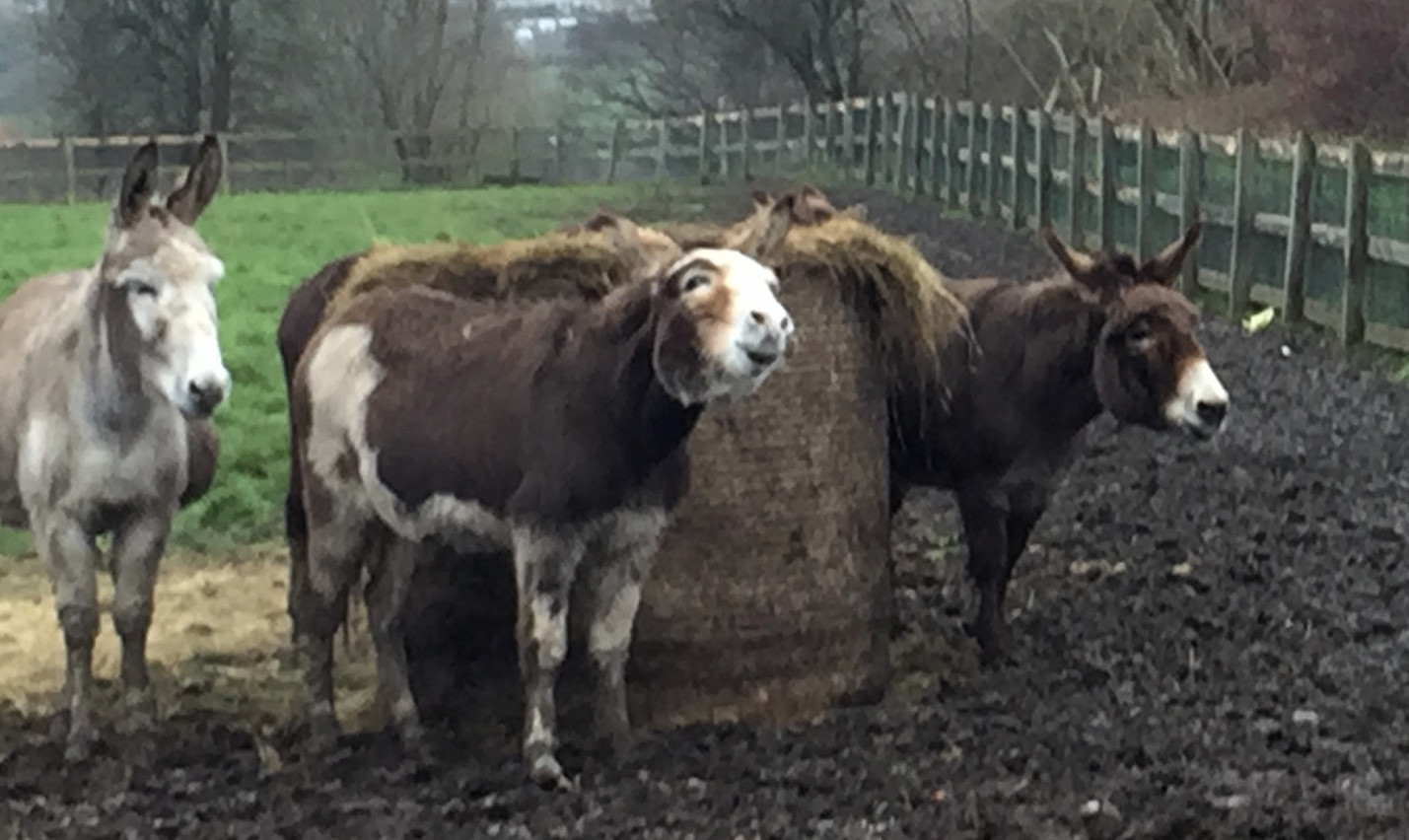
Past the Palace we go along King John’s walk, which is now a lane of stables and riding schools. It has a lovely juxtaposition of old and new with horses grazing before a classic London skyline. There are also some nice ornate wrought iron gates along this walkway. It also passes a large house, named Fairmont, that was once the home of the cricketer W.G. Grace.

Mottingham Farm
Donkeys in St John’s walk
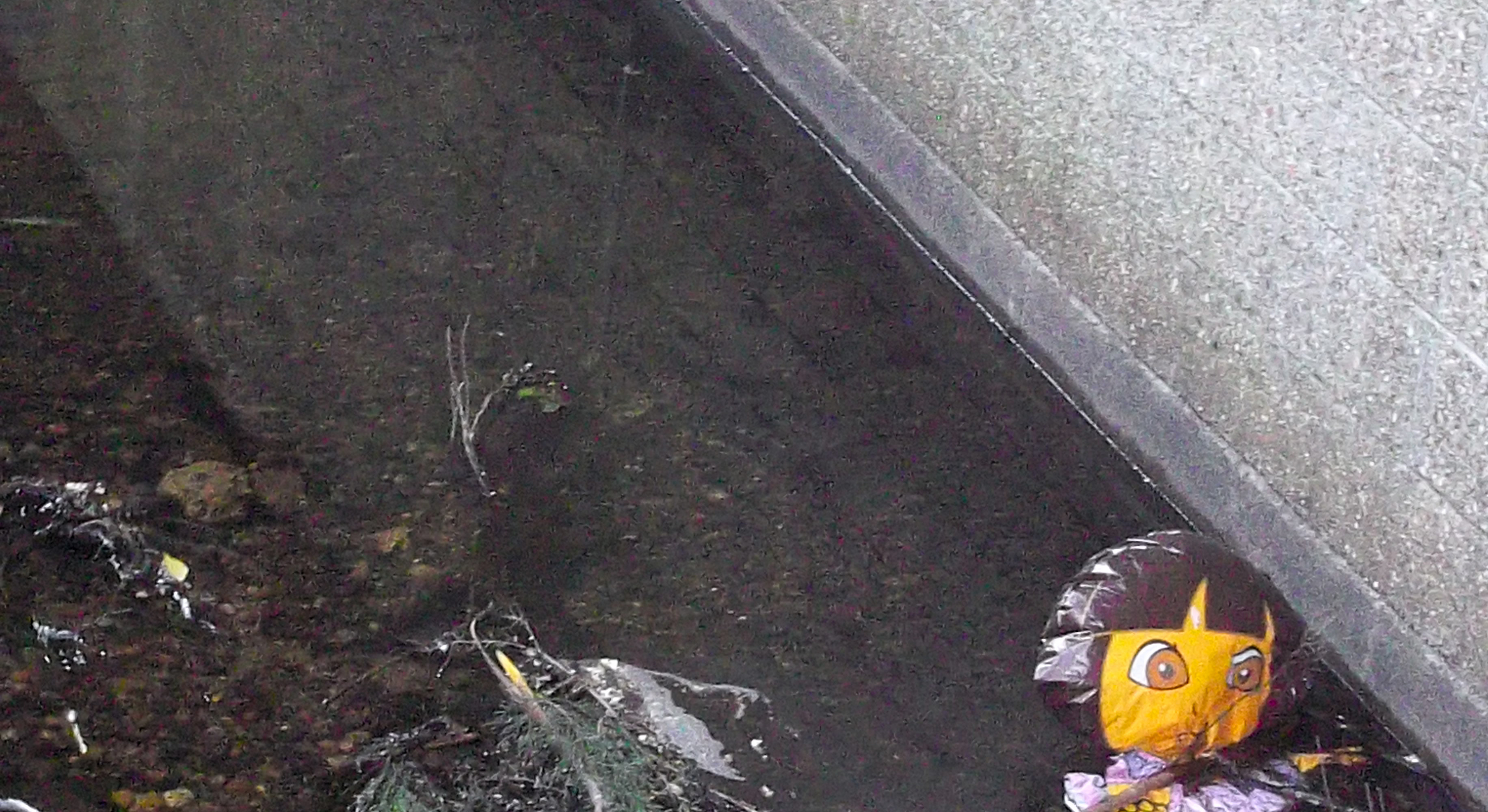
Sad balloon in the Quaggy river

A brief walk College meadow, past football and cricket training pitches brings you to the nicely named, but less interesting to look at, Quaggy River. This is the end of section 2, and on to Grove Park station which brings you Back to London Bridge. Grove Park has a nice mural to Edith Nesbit, who wrote “The Railway Children”

Quaggy River
There is a Railway Children literary walk here.
Categories
Attractions Days Out

Highclere Castle

Highclere Castle is the home of the Earl of Carnarvon, a Grade I listed building, and Grade I listed garden, in Hampshire between Newbury and Andover. It is a beautiful, historic building in its own right and has added renown because of its use in many films and TV series, probably most famously Downton Abbey. If you know these films or watch the TV series, you will recognize the building as you drive up the long sweeping drive to the car parks. 

The walk up to the house from the car park is also recognizable and there was a constant queue of people having photos taken at the famous front door.

When you book, you need to be aware that there is no photography allowed inside the house, however the interior decoration is both sumptuous and recognizable. You certainly do have the feeling that you are walking around a film set rather than a family home. The views of the gardens from the windows of the house are equally attractive, which is a testament to the talent of Capability Brown, the famous 18th Century landscape gardener, who designed the ground in the 1870s.

The house is full of historic interest too. It was used as a hospital for wounded soldiers in the first world war, a storyline used the TV series, if I remember correctly. Before that, it was here that the discussions were held, that led to Canada becoming an independent country. There is a Canadian Maple tree in the front garden, donated by the Canadian embassy, to commemorate this. The building also holds a notable Egyptology museum, as the 5th Earl of Carnarvon, funded the dig that exhumed the tomb of Tutankhamun. His interest also led him to purchase many other ancient treasures from that part of the world.

The day I went was a more expensive tour than the basic entry day and although this did not appear to give a great deal more (a couple of extra rooms, a personal guide and a talk) in terms of access, it did limit the number of people in the grounds and castle to under 200 through the whole day. On a normal open day, they can get over 1100 people, so I’d imagine that queue for photos at the front door becomes very long.

There is a café and bar and you can order afternoon tea on the lawns. It is about an hour from London by car and roughly the same by train (a £20 taxi ride from the station). I spent about 4 hours there wandering the house and gardens and the time passed very quickly, so with the travelling times, it was a full day out – and a day well spent.

Categories
music

Jazz Brunch at Ronnie Scott’s

Ronnie Scott’s has been at the heart of the London Jazz scene for over 60 years. It opened in 1959 and has hosted many of the world’s most famous musicians in that time and continues to do so now. During the week they host shows in the late afternoon and evening, staying open until 3am. However, on Sundays they have and afternoon session between noon and 4pm, they serve brunch, and they have a live band playing between 1pm and 3pm.

This session is usually relaxed swing, and they serve a lunch menu – what better way to spend a chilled Sunday afternoon. If you wish to eat there is an extra charge, but the food is good quality, and the service was fast and unobtrusive on the day we were there. Once you have bought your seat ticket there is no pressure to buy either food or alcohol, the waiters refill your glasses with still water through the show.

On the Sunday I went, the music was of the highest quality, a set of Wayne Shorter songs, from his time with the Miles Davis band. Every seat in the intimate venue has a good view of the stage and the sound quality is what you would expect from one of the most famous jazz clubs in the world. The décor is dark, and the lights are low, the whole place is geared to showing off the band on stage to their best effect.

The sunshine is a shock when you leave at 4pm but it is a very pleasant way to spend a Sunday afternoon!

Categories
Attractions Exhibition

Kensington Palace, London W8. Part 2. Queen’s State Apartments and King’s State Apartments.

kensingtonp2

Kensington Palace has been a place of residence of the British Royal family since 1689. It was bought as a completed building by William and Mary when they ascended to the throne.  Those parts not being lived in are open to the public. Currently they contain four exhibitions, one ticket allows entry to all four. Entrance to the Palace gardens, including the attractive sunken gardens is free and these are certainly worth the time it takes to walk round them on days when the weather is clement. The first two exhibitions are about Queen Victoria and Princess Diana’s dresses. They are both interesting in different ways, I have a blog post about them here: Kensington Palace, London W8. Part 1. Victoria Revealed & Diana, her fashion story.

House of Stuart tapestry_058

The next two exhibitions are The Queens’ State Apartments, which has the rooms decorated as they were in the 1690s, during the reign of William and Mary, and The King’s State Apartments, which has the rooms restored in the way they were in the early 1700s, during the reign of Georges I and II.
Grand Staircase_050

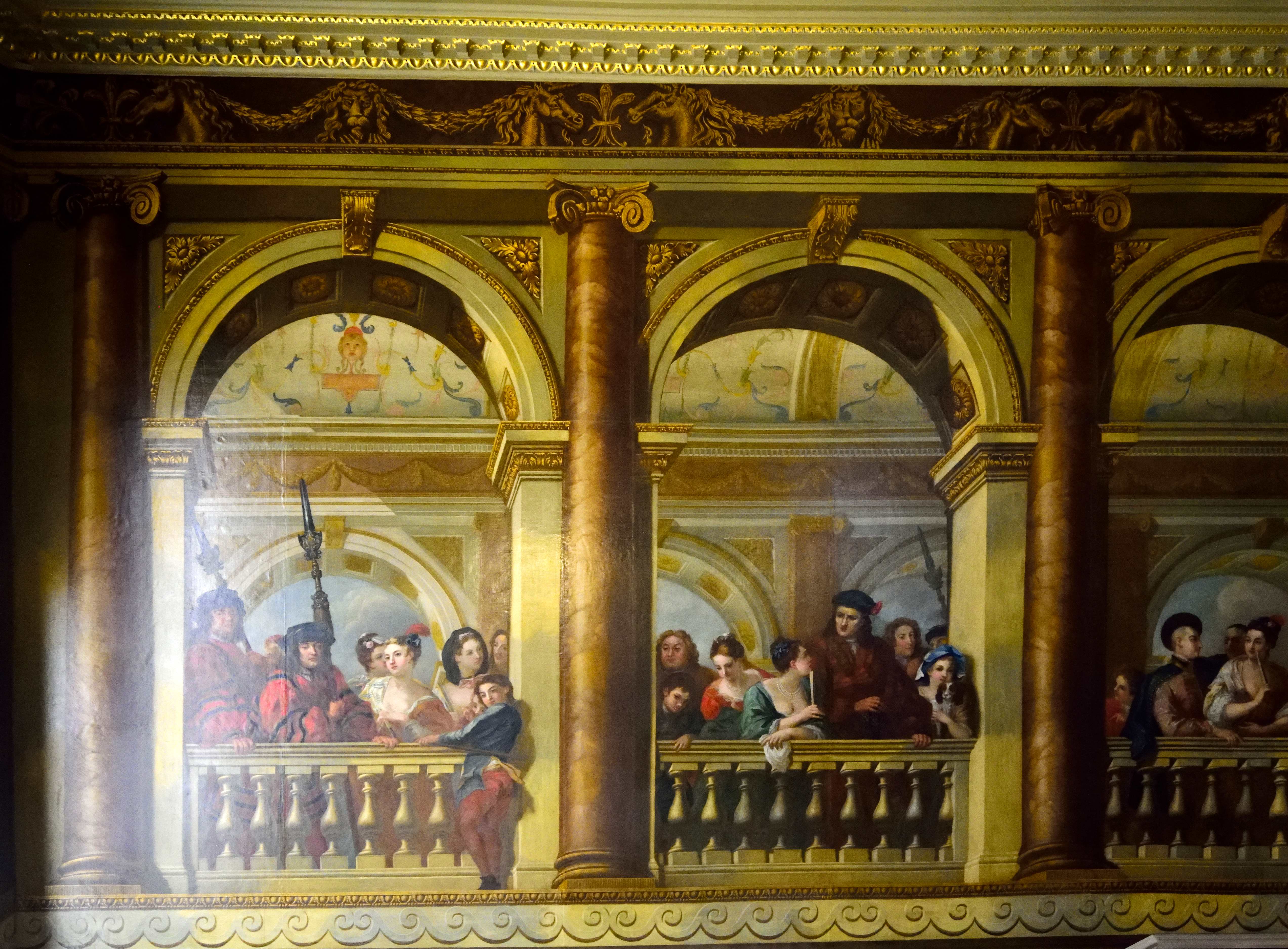
These are arranged in reverse chronological order, entry is through the sumptuous King’s Grand Staircase. Decorated in the time of George II, this is broad and spacious,  we are overlooked by painted figures as we ascend. The staircase is certainly grand, immediately we can tell that we are in an era when conspicuous wealth was expected of the monarchy. The mural was painted by William Kent in 1724 and contains depictions of many actual members of the royal court at the time. Kent even included himself in the painting, he is the man wearing a brown turban and holding an artist’s palette, and the lady looking over his shoulder was reportedly his mistress.

Ceiling_060

The rooms in the King’s State Apartments have many wonderful Georgian features. The fireplaces and ceilings are spectacular. One ceiling is decorated with shields representing the members of the Order of the Garter, with its insignia making the centrepiece. The King’s Gallery has a mantelpiece with a map of the British Isles and Western Europe. This is linked to a weather vane on the roof, so that King George could see how the wind was affecting his fleet. It is still working today. The drawing room has some interesting examples of gaming tables from the era and the best perspective of the gardens, down to the lake.

Weather vane_052


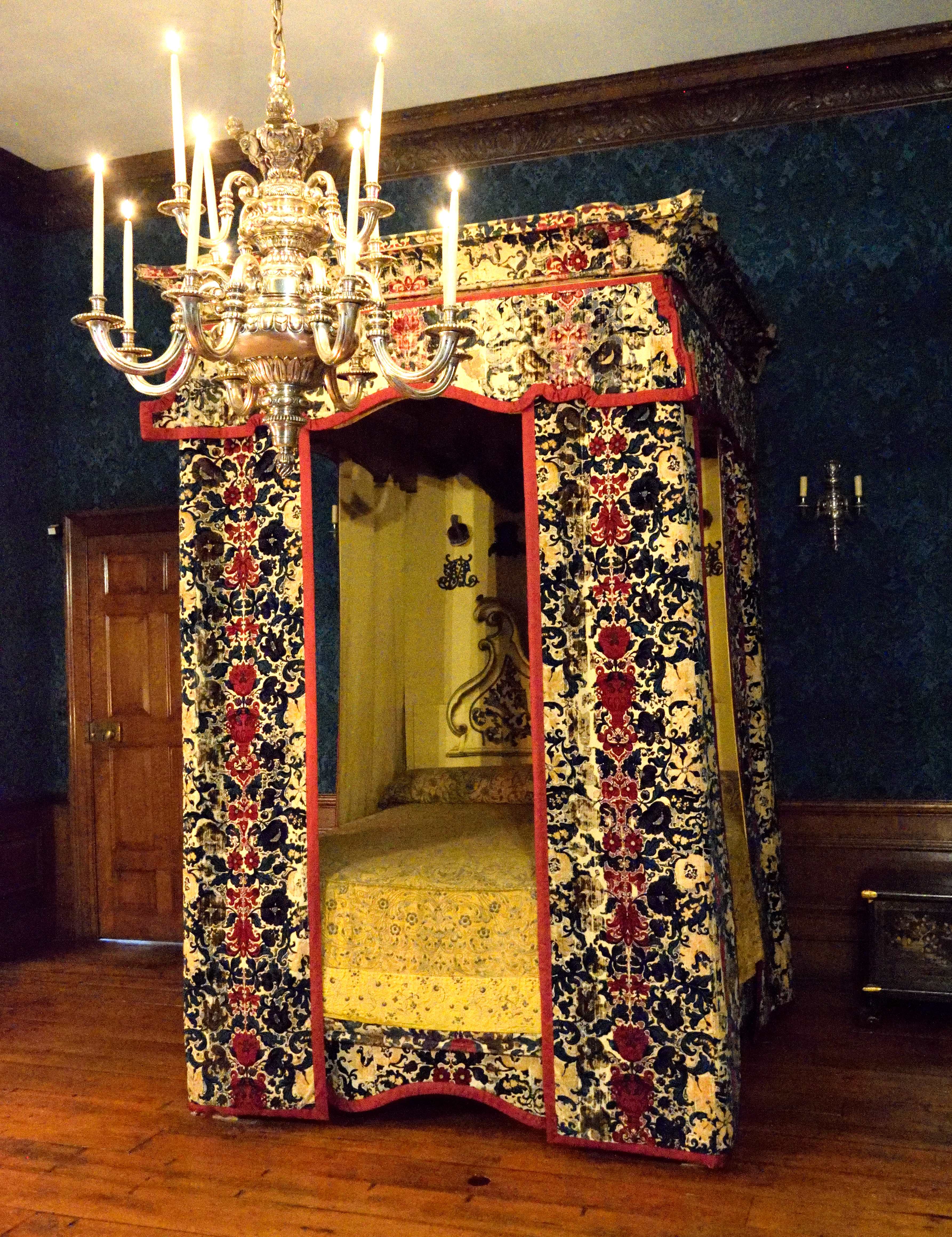
The Queen’s State Apartments are 17th Century and this exhibition is more intimate, showing their bedrooms, their dining room and gives a little more of an insight into how they went about their, still opulent, daily lives. The furniture and delft is remarkable and the tapestries and bed coverings are extravagant. It is interesting to see the shortness of the four poster bed, it was thought at that time to be beneficial to health to sleep in a sitting position.
Bed_056.JPG

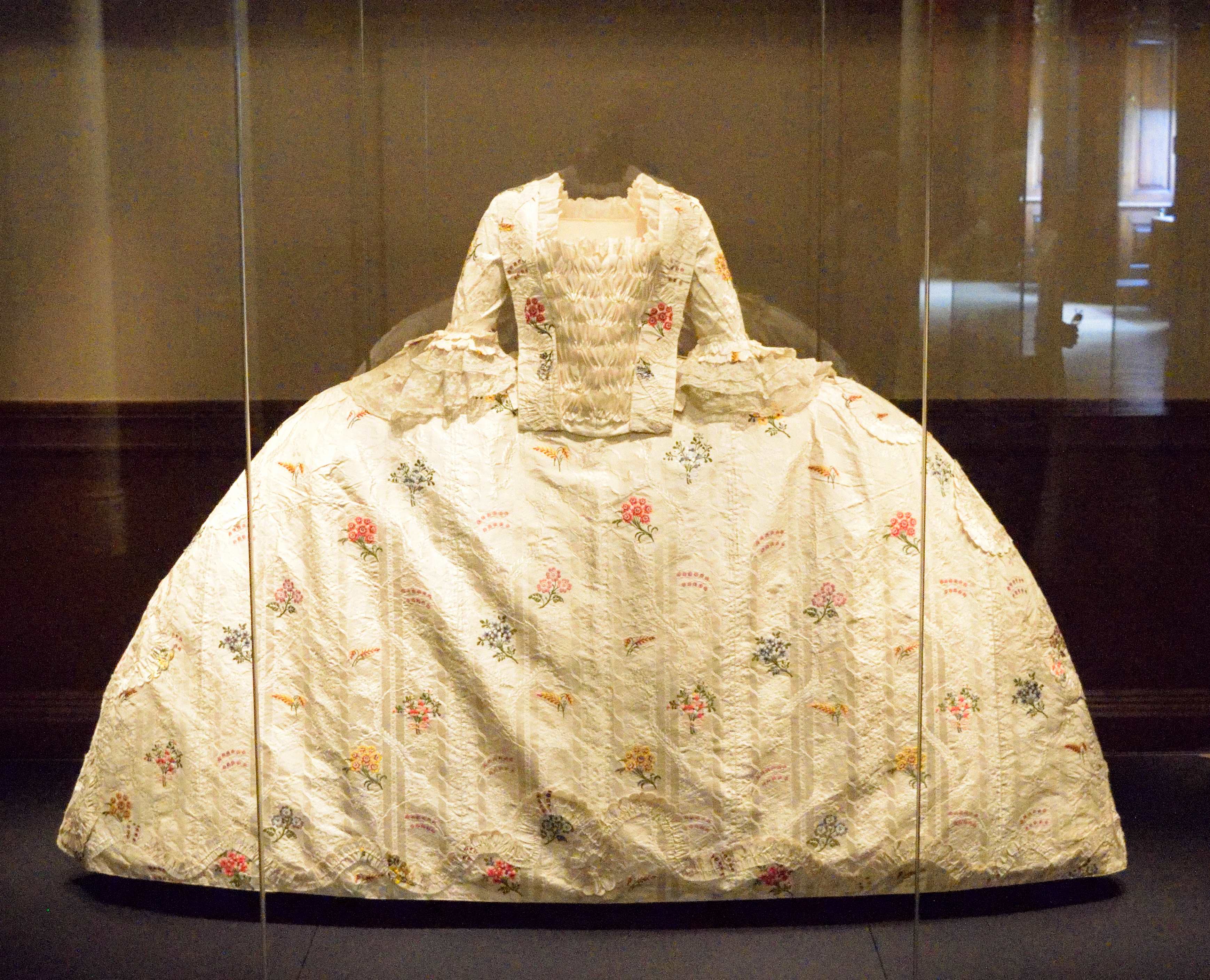
The exhibitions also contain lovely examples of the fashions at the time, there are some wonderful farthingale supported embroidered skirts, which look spectacular but must have been completely impractical to wear.
Dress_059

Between all four of the shows here, it would be difficult to do it justice in less than a couple of hours, there is almost too much to see in one visit. Perhaps it would be worth viewing the Palace on one day and the Gardens, Park and Orangery, which are free to enter, on another. This way you could spread the visit over a couple of days and only have to pay the, not inconsiderable, entry fee once. Kensington Palace and Gardens is one of the most historic visitor attractions in London, the exhibitions are well stocked and informative, although it is not cheap to visit, it should be among the sights that you consider when in London. It is free to enter with an Art Pass, if you have one of these you should not miss it, Kensington Palace is a highlight of their offer.


Categories
Attractions

Handel & Hendrix in London, Brook Street, London W1

Handel & Hendrix_034

London has a number of small and quirky museums. This one dedicated to life and works of George Frederic Handel and Jimi Hendrix is certainly an unexpected combination. Handel lived at 25 Brook Street for 36 years in the 18th Century and Hendrix lived at number 23 for short time in the 1960s.

DSC_7375_035

Bach’s house is decorated in the slightly austere Georgian style that was fashionable when he lived there. It does contain some beautiful musical instruments, including a wonderful harpsichord and a chamber organ. The bedroom has a four poster bed and there are some good paintings and a bust of Handel too. There are recitals held in the music room at least once a week and the staff are knowledgeable and helpful.

DSC_7379_036

The Hendrix flat is laid out somewhat differently. The bedroom/living room is decorated as it would have been when Hendrix and his girlfriend lived here, this is borne out by the many photos of the room published during this time. The rest of the apartment is done in a more traditional museum style, with guitars and jackets in glass cases and commemorative posters on the walls.  The bedroom is interesting, the fact that it is so classically psychedelic Carnaby Street 1960s in style probably reflects the huge effect that he had on the fashion of the time.

Bach and his harpsichord_032

Unlike many museums in London, this one is not free unless you have a National Art Pass. It is small but it does contain a number of curious items. It is striking to compare what the height of fashion was in the centre of London two hundred years apart – and there is something apt in the fact that it doesn’t open until 11am on any day. Half an hour or forty minutes will adequately see you round this exhibition, but if you are a fan of either rock or baroque, I think there will be something here to please you.

Categories
Attractions

Imperial War Museum, Lambeth Road, London SE1

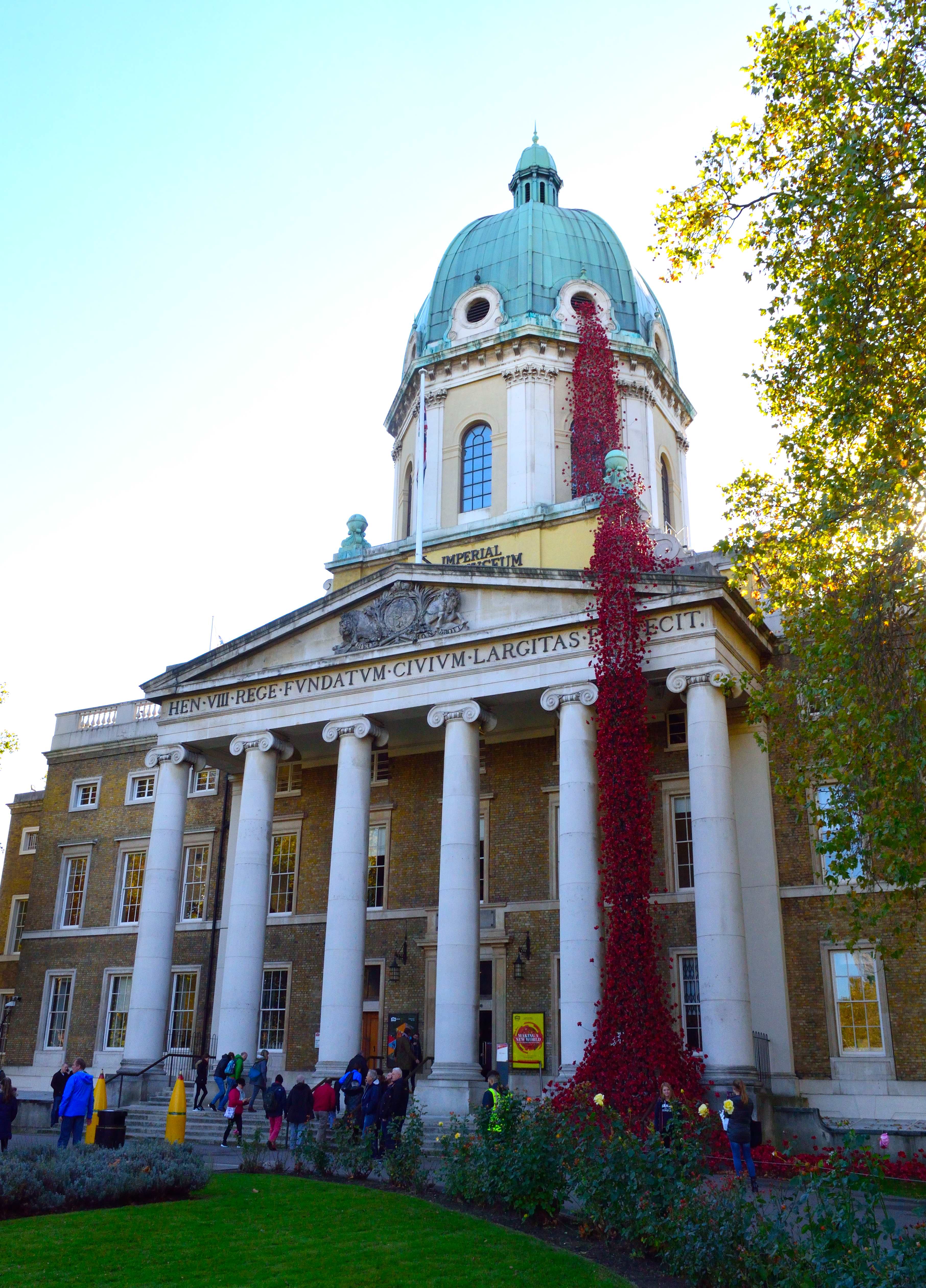
Weeping Window_088

London is blessed with a large selection of excellent museums and galleries. The majority of these are free. The Imperial War Museum in Lambeth is a good example of this. It is one of five Imperial War Museum locations in the UK, three of which are in London. Set up in the 1920s to commemorate the effort and sacrifice of Britain in First World War, it is now dedicated to the understanding of modern war, and confines itself to those conflicts in which Britain or the Commonwealth had some involvement.

The building is impressive, surrounded by the green lawns of Geraldine Mary Harmsworth Park, it is about a five minute walk from Lambeth North tube station. It has ionic columns at its entrance and an impressive dome. It also has its own interesting history, in the 19th Century it was the notorious Bethlem Royal Hospital, the psychiatric facility that allowed visitors to watch the inmates as public entertainment. It is this building that became the origin of the word bedlam.

Paul Nash_076

The museum is arranged over five floors. The top floor is the Lord Ashcroft gallery which has a large collection of medals awarded for bravery and the stories of many people who have been presented with them. It is an interesting investigation into the definition of courage and what inspires heroic acts.

Auschwitz_065

The fourth floor is dedicated to the holocaust and the rise of Nazism in the mid twentieth century. This contains a surprisingly in depth analysis of the political climate that led to the spreading of the ideology and a comprehensive presentation of its results. There is a scale model of the Auschwitz-Birkenau concentration camp, which really gives perspective to the magnitude of the crimes. This floor needs to be approached with care, the display is moving and distressing.

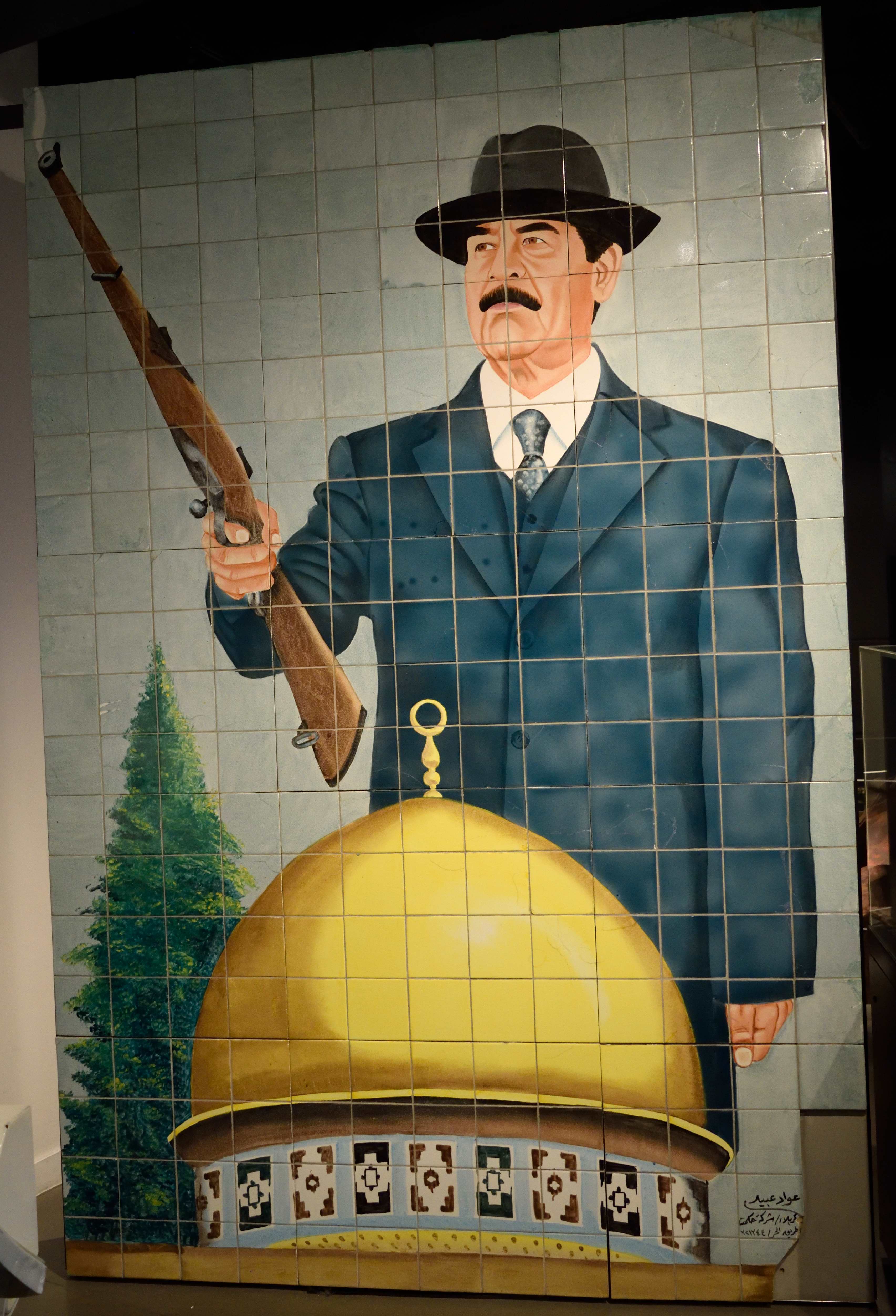
Saddam tiles_079


The Third floor has an exhibit called Curiosities of War, which is a collection of unusual war related items. This is quirky and  comparatively light. The second floor is split between conflicts after WWII and a display about espionage. The recent conflicts exhibition is thought provoking, it brings current events sharply into focus. The spy section seems lightweight, I guess it is tough to say much about state secrets without giving those secrets away. This floor also holds a real size model of an atomic bomb, it is shocking how small it is.

Atomic Bomb_064

The two lowest floors hold the largest items, tanks, ambulances, rockets, large guns and planes….the remains of a vehicle that was once a car bomb. The descriptions of the items and the uses to which they were put is almost more interesting than viewing the items themselves.

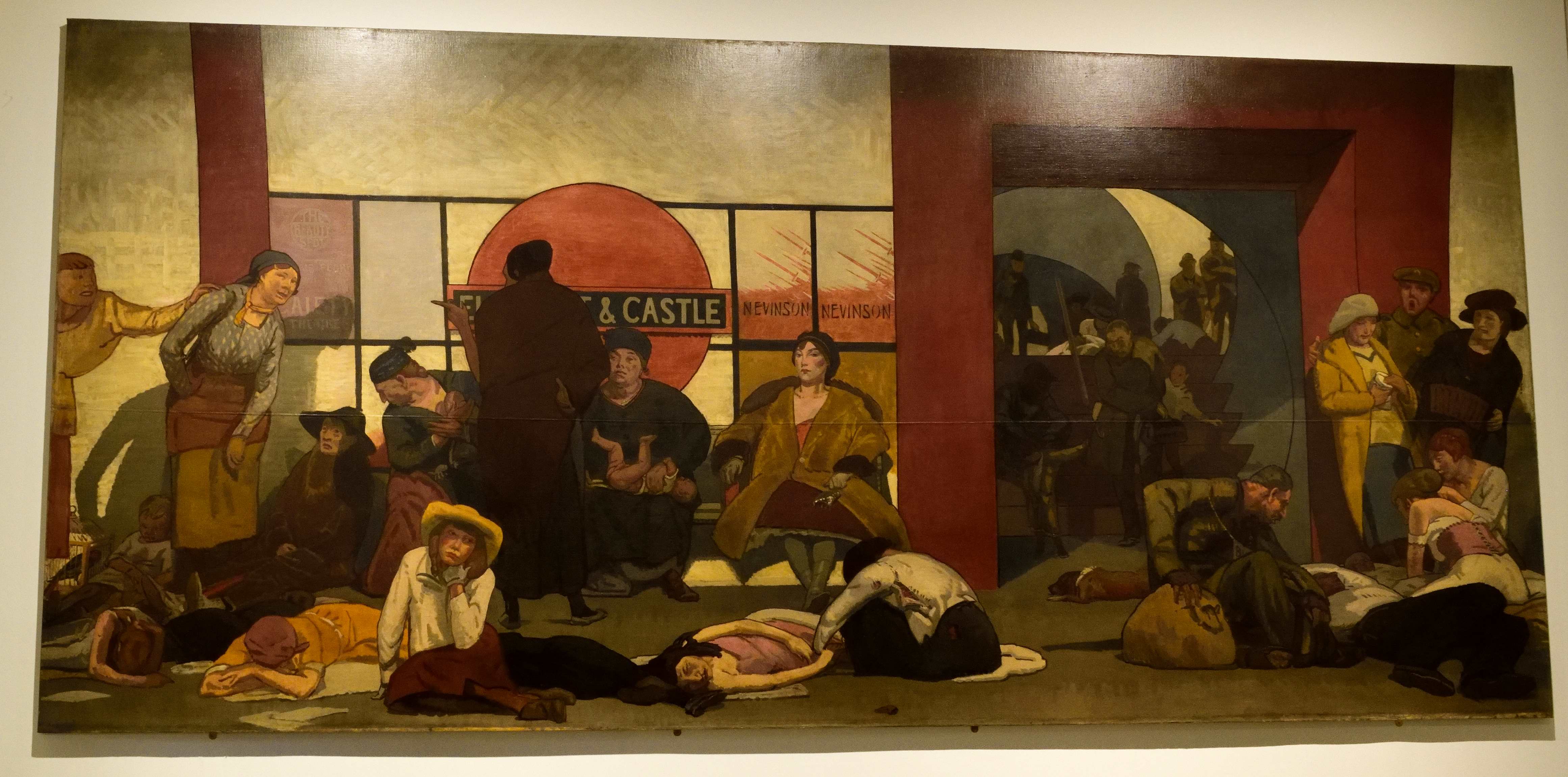
The Hall of Remembrance, is a gallery that was proposed to be built containing artwork commissioned as a memorial to the war dead of WWI. The project ran out of money in the 1920s and was never completed. The Imperial War Museum holds all the artwork that was due to be shown in this gallery and has put it on their website in the form of a virtual gallery. This is a beautiful testimonial and well worth a visit, I have put a link here . 

Tube Station mural_081

War is not entertainment and this will not be your jolliest day out in London. However, The Imperial War Museum is something that you really should visit when you come to the UK. It is wonderful that this city has such high quality resources and amazing that it offers them for free. The building has step free access and there is  parking for Blue Badge holders, but it needs to be booked. Recommended.


Categories
Attractions Exhibition

Kensington Palace, London W8. Part 1. Victoria Revealed & Diana, her fashion story.

Kensington_Palace,_the_South_Front_-_geograph.org.uk_-_287402

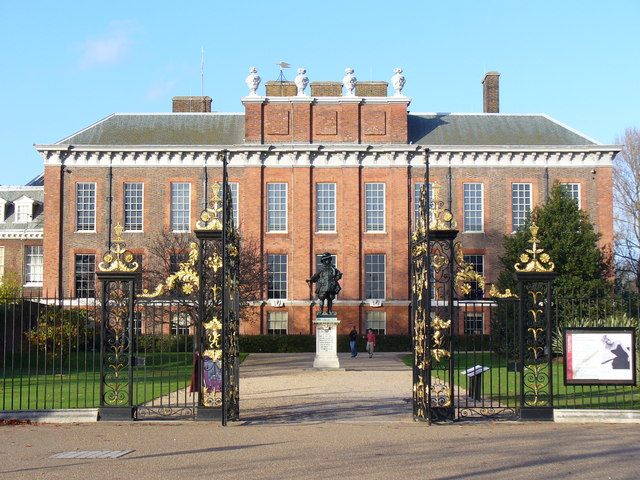
Kensington Palace has been a place of residence of the British Royal family since 1689. It was bought as a completed building by William and Mary when they ascended to the throne and it has been expended and improved since, by both Christopher Wren and by Nicholas Hawksmoor. Part of the palace is still used as living accommodation by the Dukes and Duchesses of Cambridge and Sussex.

Those parts not being lived in are open to the public. Currently they contain four exhibitions, one ticket allows entry to all four. Entrance to the Palace gardens, including the attractive sunken gardens is free and these are certainly worth the time it takes to walk round them on days when the weather is clement.

Victoria_043

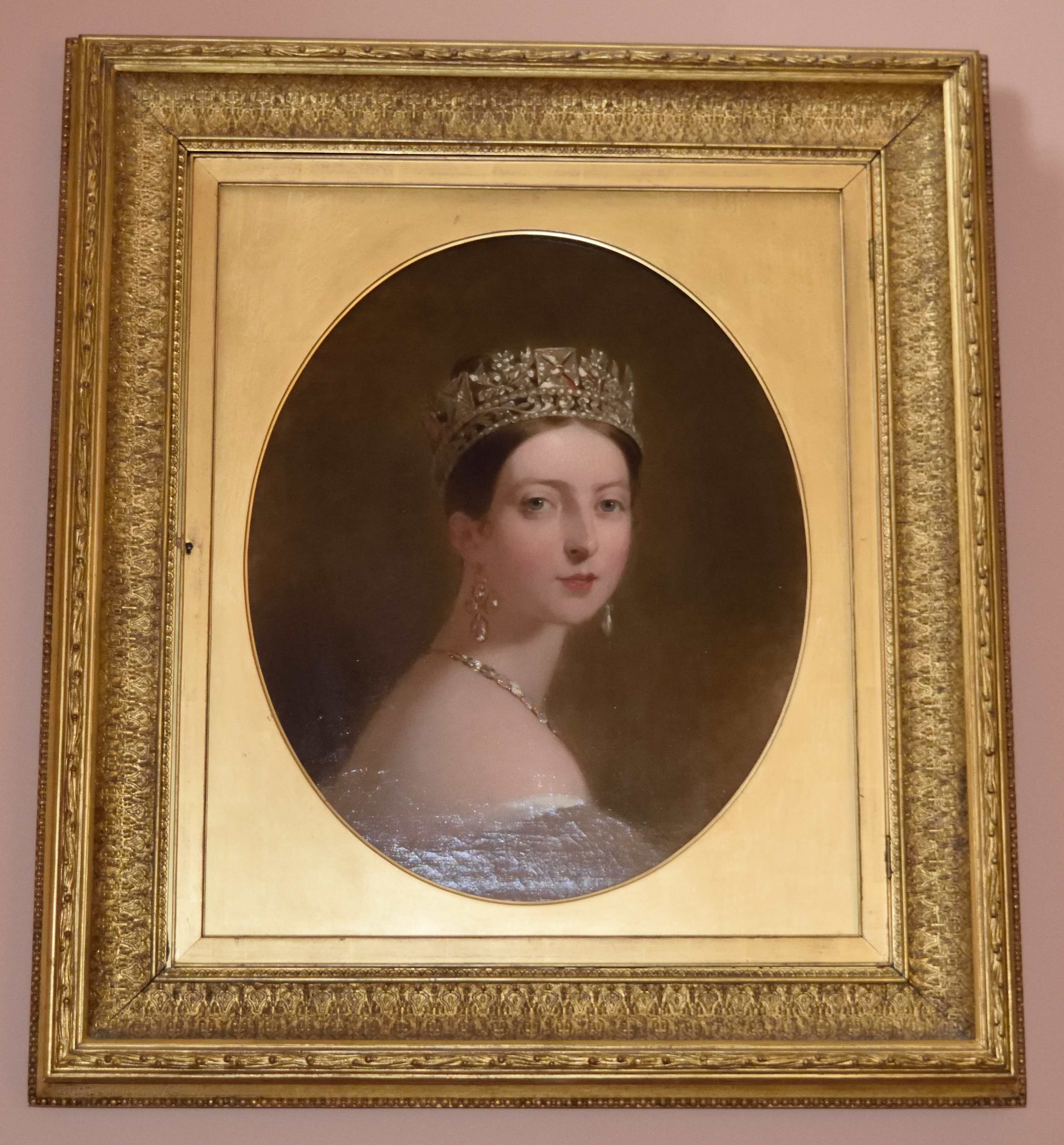
Victoria Revealed is an exhibition about the life of Queen Victoria. She was born in Kensington Palace and lived here until she became monarch in 1837. It consists of eight rooms detailing her life in, mainly chronological, order. It does contain some interesting personal items such as the dolls with which she played as a child. The portrait of her at the time of her coronation, shows why she was considered a beauty in her youth.

Crib_045


It has the uniform that her husband Albert wore on their wedding day. This has embroidered messages, such as “dearly loved” and “Oh my Angel Albert”, on the cuffs collar and pockets. It also has a garter, tied visibly, just below the left knee. It also has the gilt bassinet which held many of her nine children, as babies.

Garter_038

The rooms are relatively sparsely decorated, but have some nice busts and a few interesting paintings, including a couple of the Great Exhibition and the Crystal Palace, in which it took place. The Great Exhibition was opened in in 1851 by Queen Victoria herself. In the gardens of the palace, stands “The Queen Victoria Statue” designed, in marble, by her own daughter Louise, who was a celebrated artist of the time.

Statue_042

The presentation contains a moving memorial to Albert. Victoria was strongly affected by his death, she wore mourning clothes and withdrew from public life for many years after.  Victoria Revealed is a fascinating show, the items on display are sympathetically exhibited and give a nice insight into her personal life.

Memorial_041

Also on the first floor is “Diana, her fashion story”. This is a collection of Princess Diana’s most famous suits and dresses. There are about 20 of her outfits on show here, along with notes about the designers and details of the occasions on which she wore them. They are interesting in that they mark the fashions of the time as well as well as being beautifully designed. It is surprising how many of them are recognizable, it seems that time has proven that Diana really was a fashion icon of the 1980s and 90s.

Categories
Theatre review

Circolombia, Underbelly Festival, Southbank, London


Circolombia6
This photo is courtesy of @tcspr.


Let’s start with the Underbelly Festival itself. Over the past 10 years this has become a symbol of summer on the Southbank. Each year it seems to get bigger and last longer. It started as an event around a giant inflatable purple cow in a coach park on Belvedere Road and used to be called Udderbelly. Now the cow appears to have gone (surely I didn’t miss it?!) but it has two covered performance spaces, at least four bars, street food stalls, plenty of outdoor seating and it lasts half the year – from early April until late September.

The shows consist of comedy, circus, music and cabaret, usually with a couple of silent discos thrown in through the season. The content varies from full on family entertainment to risqué burlesque. The tickets are generally pretty cheap for central London although many of the shows get booked up very quickly. You can just go in to use the bars and seating for free though, so its a nice place to meet friends even if you are not seeing a show – think Box Park without the claustrophobia of the box!

Circolombia are a  fourteen strong circus/dance/music troupe from Colombia and the show they present is part concert, part circus. They sing, they dance, they rap and they display awesome tumbling skills and wonderful aerial work. It all works very well together and you can see why they have built a big international reputation from their global tours. The music enhances the atmosphere for the circus work and you can feel the tension rise when the place quietens for a particularly daring routine.

circo 7

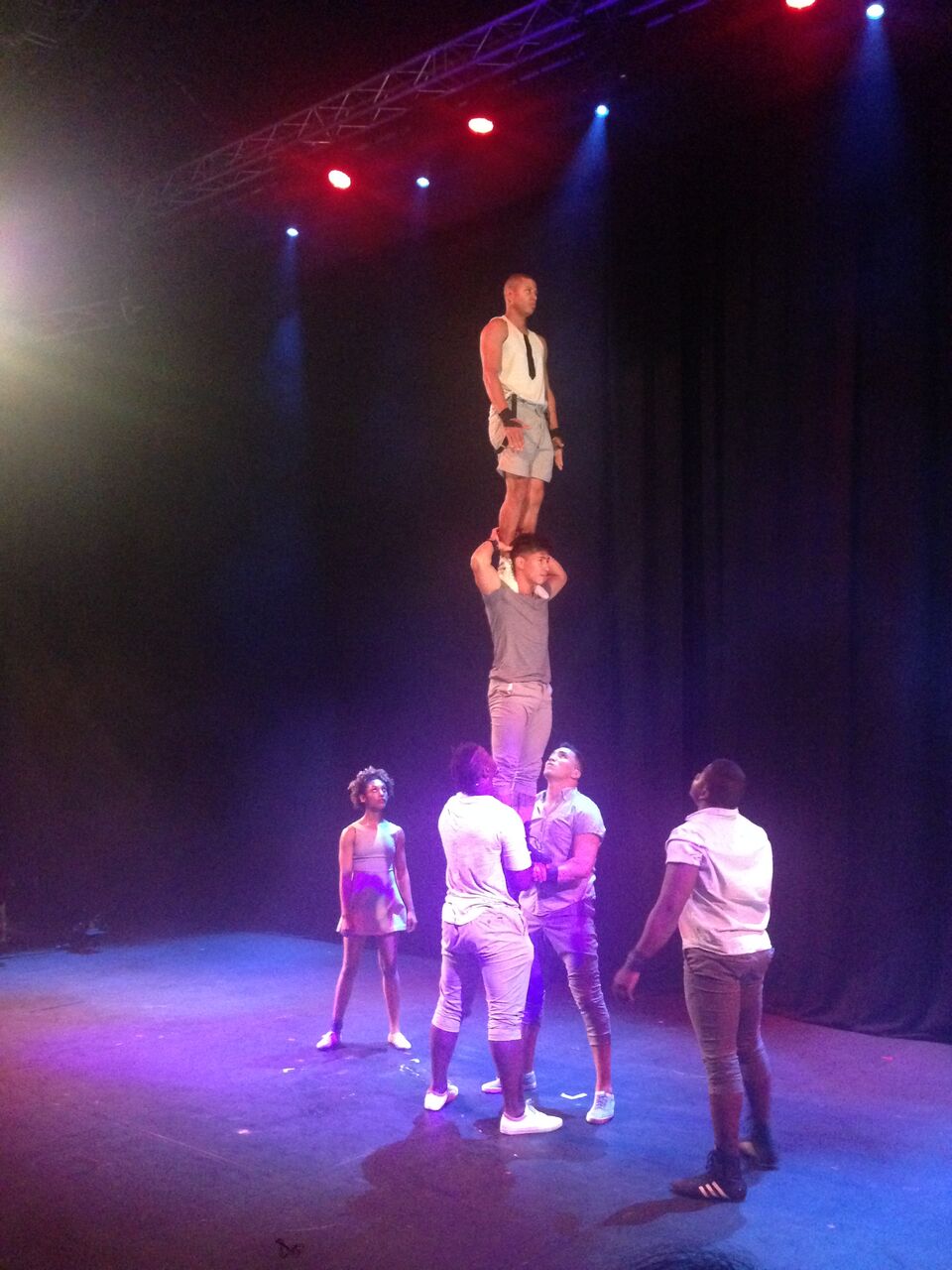
The routines are jaw dropping. The tumbling skills are immense, from rolling under and over a see-saw as it rocks, to throwing a performer onto the shoulders of another person who is already balanced on the shoulders of a third. There is one where one performer does acrobatics inside a circular frame, while that frame is balanced on the forehead of a man below.

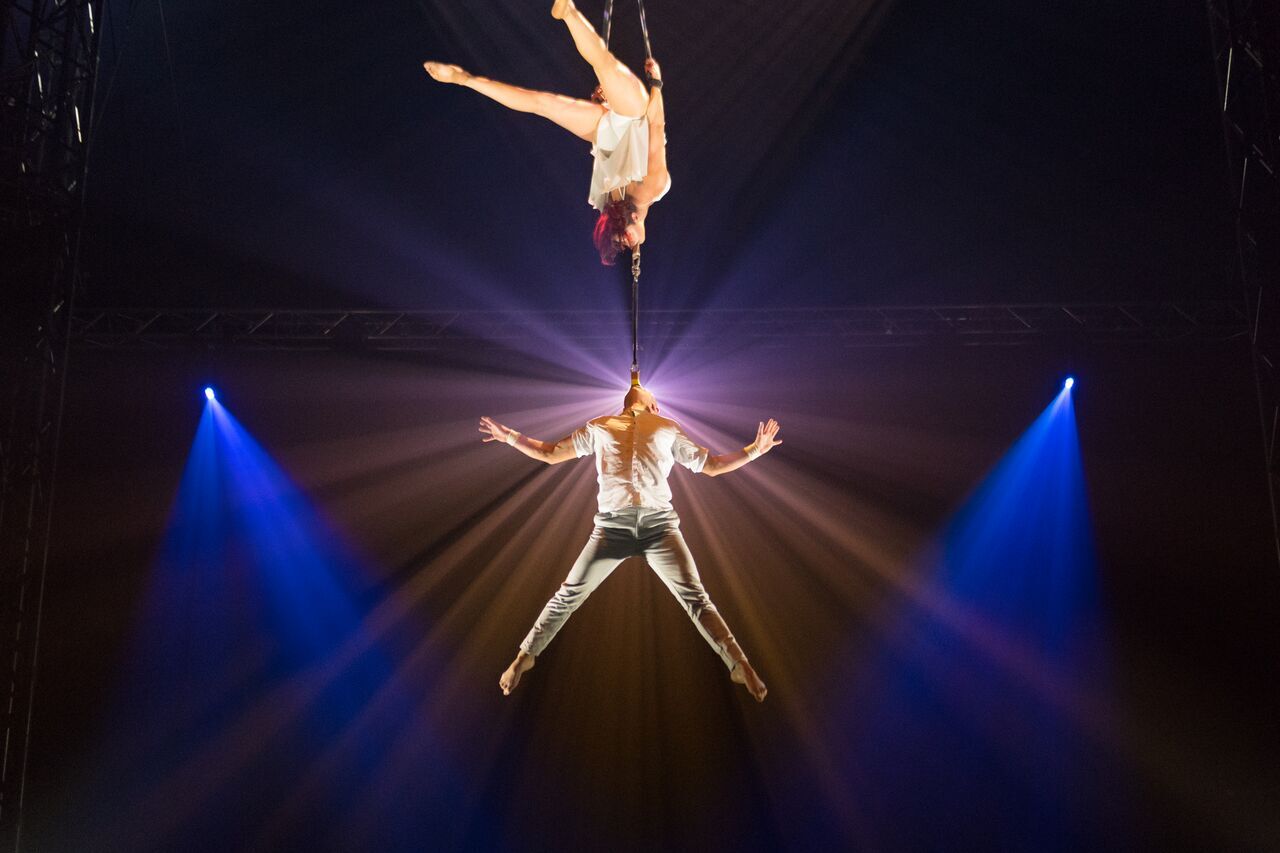
The aerial feats are equally amazing, varying from solo high rope tumbling to double acrobatics with both people suspended by just a rope around the neck of one of them. At one point a performer is lifted high into the air by a ribbon held in his teeth, the person lifting him is suspended by her legs and carrying that ribbon by her teeth. One cannot help but be moved by both their strength and their trust.

CircolombiaUnderbellySouthbankFestival3_preview.jpeg

The show is short, at only an hour long, and the quality is of the highest order, there is no filler here, there were audible gasps from the audience throughout the show. I hope the acts are not actually as risky as they make them appear, because there is a sense of jeopardy, watching them in such a small space, you are aware that these are real people, taking real risks and this adds to the intensity of the performance.

Circolombia at the Underbelly Festival is a fantastic, exciting evening out and they have a number of dates here before moving on to the Edinburgh Festival in August. If you are unable to catch them here – or there, I urge you to look out for them, in case they come to a venue near you.

Categories
Theatre review

Harry Potter and the Cursed Child, Palace Theatre, Shaftesbury Avenue, London W1

Harry Potter

I guess that I had better begin by explaining where I am on the Hogwarts spectrum. I enjoy the Harry Potter franchise. I read the first three books and really liked them. I have watched all the films, including the fantastic beasts one, although I couldn’t say exactly what happened in which film, especially the ones towards the end of the series. So, I know all the main characters pretty well, but I’m not a person you would invite to be on your team in the Harry Potter trivia quiz.

This play is written by Jack Thorne, although it is based on a story by him, JK Rowling and John Tiffany. However, it does really feel like it is written by JK Rowling because it is, first and foremost, a really good story and she does know how to construct a good story. I’m not too sure why it is separated into two plays, because it is a single adventure and I suspect that if you were to just see part two, you wouldn’t have a clue what was going on at the beginning.  So, if you are planning to book, do see both parts and do see them in the correct order. Never have I been to the theatre and been warned so often about revealing the plot; luckily, I prefer leaving the storytelling to the playwright so rarely reveal plot twists in a review.

The story is great, not particularly complicated or cutting edge, but it is told in convincing detail over the course of five and a half hours. We know most of the main characters already, having lived through their adolescence, and I have to say it is interesting to see them all fully grown up with children of their own. The actors playing these parts have a tough job, taking over characters with whom we are already very familiar, but needing to bring their own ethos to the role. They all cope admirably with this challenge, Rakie Ayola and Jamie Glover are good as Hermione and Harry. I loved the reimagining of Ron Weasley; Thomas Aldridge’s character probably did have a little more of a free rein for development given his incidental part in the story, but it is very funny and he delivers it well. The new people are really the stars in this show, Theo Ancient is very good as Albus Severus Potter and Samuel Blenkin is fantastic as Scorpius Malfoy. April Hughes has a wonderful, scene stealing cameo as Moaning Myrtle.

The magic and special effects are spectacular, it is one thing seeing them on film as we are used to, but seeing them around you in the theatre really adds to the excitement. The effects are constant throughout the show and they are all top notch. The sets are clever and engaging, there is always something new to attract your attention, not an easy achievement over the course of such a long play. The choreography felt clunky at first, with too many flourishes, but you come to realise that this is necessary to help the magic along, and by the end I was full of admiration for the choreographer – with a company of 43 people, military precision must have been crucial.

These were the most expensive tickets I have ever bought, so it needed to be good, but I have to say that even so, I still feel that they were good value for money.