Categories
Attractions Exhibition

Kensington Palace, London W8. Part 1. Victoria Revealed & Diana, her fashion story.

Kensington_Palace,_the_South_Front_-_geograph.org.uk_-_287402

Kensington Palace has been a place of residence of the British Royal family since 1689. It was bought as a completed building by William and Mary when they ascended to the throne and it has been expended and improved since, by both Christopher Wren and by Nicholas Hawksmoor. Part of the palace is still used as living accommodation by the Dukes and Duchesses of Cambridge and Sussex.

Those parts not being lived in are open to the public. Currently they contain four exhibitions, one ticket allows entry to all four. Entrance to the Palace gardens, including the attractive sunken gardens is free and these are certainly worth the time it takes to walk round them on days when the weather is clement.

Victoria_043

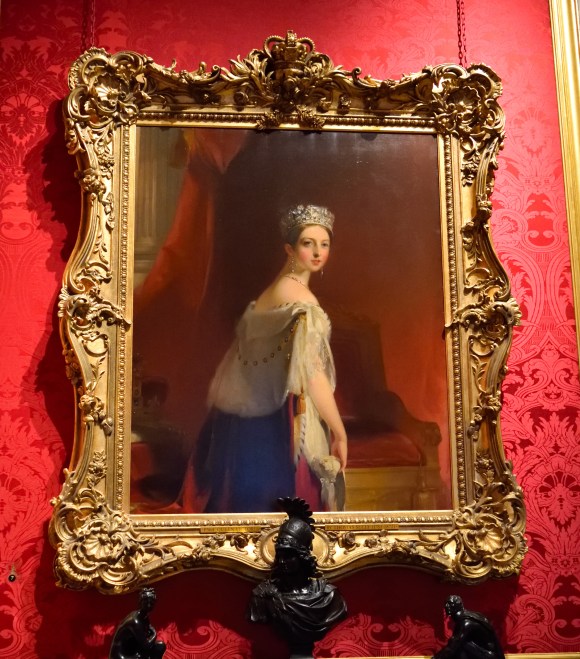
Victoria Revealed is an exhibition about the life of Queen Victoria. She was born in Kensington Palace and lived here until she became monarch in 1837. It consists of eight rooms detailing her life in, mainly chronological, order. It does contain some interesting personal items such as the dolls with which she played as a child. The portrait of her at the time of her coronation, shows why she was considered a beauty in her youth.

Crib_045


It has the uniform that her husband Albert wore on their wedding day. This has embroidered messages, such as “dearly loved” and “Oh my Angel Albert”, on the cuffs collar and pockets. It also has a garter, tied visibly, just below the left knee. It also has the gilt bassinet which held many of her nine children, as babies.
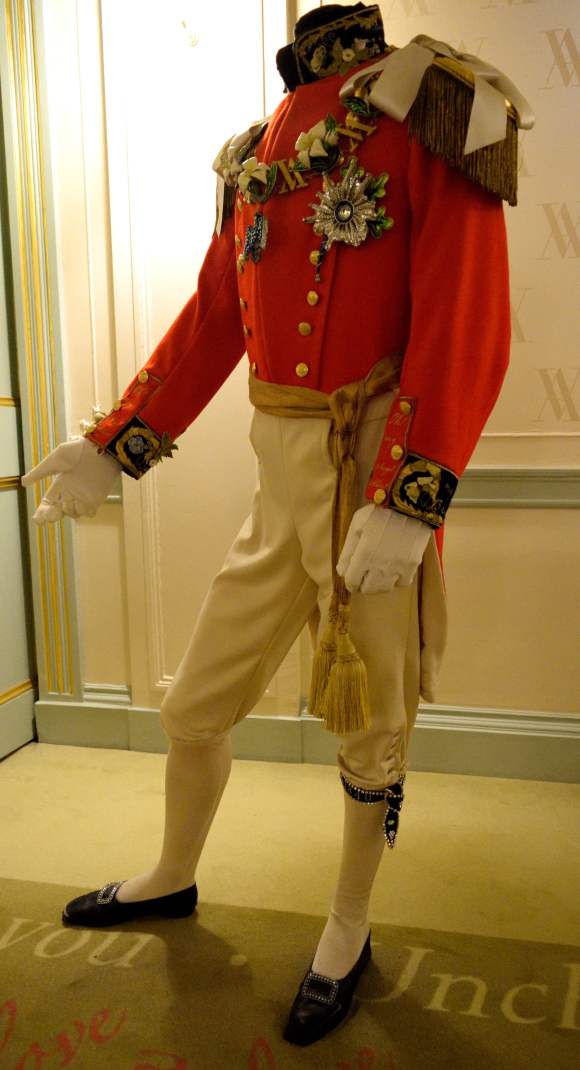
Garter_038

The rooms are relatively sparsely decorated, but have some nice busts and a few interesting paintings, including a couple of the Great Exhibition and the Crystal Palace, in which it took place. The Great Exhibition was opened in in 1851 by Queen Victoria herself. In the gardens of the palace, stands “The Queen Victoria Statue” designed, in marble, by her own daughter Louise, who was a celebrated artist of the time.

Statue_042

The presentation contains a moving memorial to Albert. Victoria was strongly affected by his death, she wore mourning clothes and withdrew from public life for many years after.  Victoria Revealed is a fascinating show, the items on display are sympathetically exhibited and give a nice insight into her personal life.

Memorial_041

Also on the first floor is “Diana, her fashion story”. This is a collection of Princess Diana’s most famous suits and dresses. There are about 20 of her outfits on show here, along with notes about the designers and details of the occasions on which she wore them. They are interesting in that they mark the fashions of the time as well as well as being beautifully designed. It is surprising how many of them are recognizable, it seems that time has proven that Diana really was a fashion icon of the 1980s and 90s.
Categories
Restaurant review

Gillray’s Steakhouse & Bar, County Hall, Westminster Bridge Road, London SE1

Gillrays

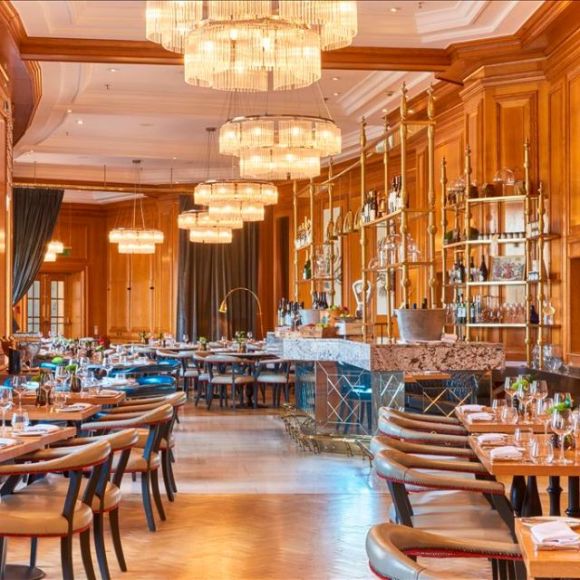
This restaurant is inside the Marriott County Hall hotel. If you arrive by car the entrance is from Westminster Bridge Road through the hotel. The most attractive entrance though, is from Queens Walk, beside the river Thames. A sweep of steps leads you up from the walkway into a bright relaxed bar area and the restaurant entrance is a few steps to the right inside the door.

The room is sunlit and airy, light wood walls with large windows along one side overlooking the river. The view is lovely on a summer evening; people walking beside the river, the London Eye to the right and Big Ben and the Houses of Parliament across the Thames to the left. We were here quite early, a pre-theatre dinner before a show at the National, which is a couple of hundred metres away along the South Bank. They have a pre and post theatre offer, it has a wider choice than many set menus and it is good value too.

There is a starter of chicken and mushroom roll, this is pleasantly spicy, a nice combination of flavours. We also tried the crusted pan fried mackerel, which was really a Caesar salad with mackerel, also good – the crusted fish taking the place of croutons. There is a choice of six mains, three steaks, a lamb, a fish dish and a vegetarian choice. The rib eye was nice, a little undersealed to be perfect but a good flavour. The lamb yorkie pie is a lamb casserole inside a large Yorkshire pudding, a clever serving idea. The lamb was nice, although the Yorkshire was more like a carvery pudding which is made in advance and kept warm.

I felt that the drinks were a little overpriced, the beer especially. The happy hour offer of a house gin and tonic for a fiver is not necessarily so wise, as this makes one aware of how much one might be paying for a branded gin at other times. The service was good, the staff were attentive and available whenever we needed them.

Overall, we had an enjoyable dinner in very pleasant surroundings, so if you have a show on the Southbank, Gillray’s Steakhouse and Bar is certainly worth considering.

Categories
Exhibition

Now The Hero, Swansea International Festival.

Swansea

Swansea International Festival runs from the 22nd September to the 7th October this year. It has many interesting events, among them a stand up performance by Rob Bryden and a production of Gilbert and Sullivan’s “Iolanthe”.

The centrepiece of the Festival is a Welsh Commission for 14-18NOW called “Now The Hero” 14-18NOW have collaborated with various artists to make some very compelling pieces over the past few years, related to the centenary of the First World War. A particularly thought provoking event earlier this year was “Fly by Night” where thousands of pigeons with LED lights were released over the Thames at sunset.

David-Williams-infront-of-Brangwyn-Panel-001

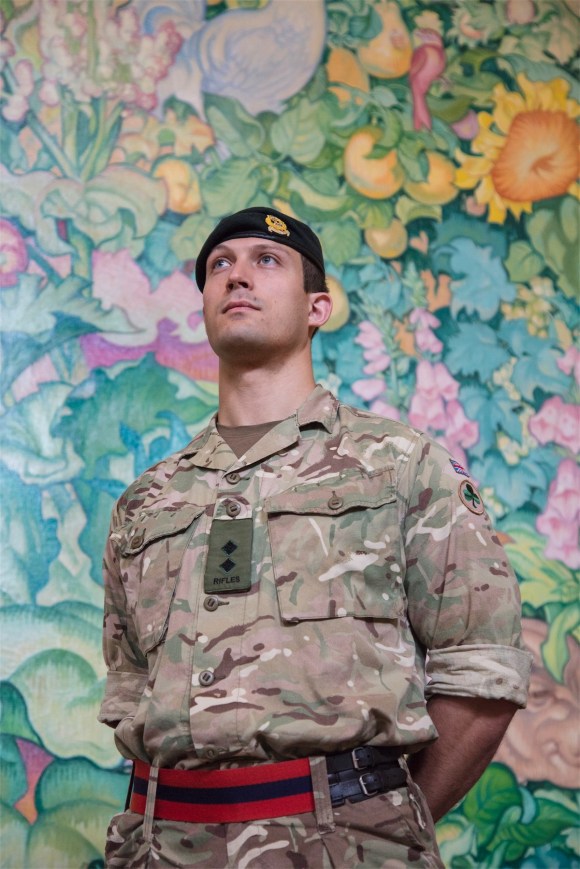
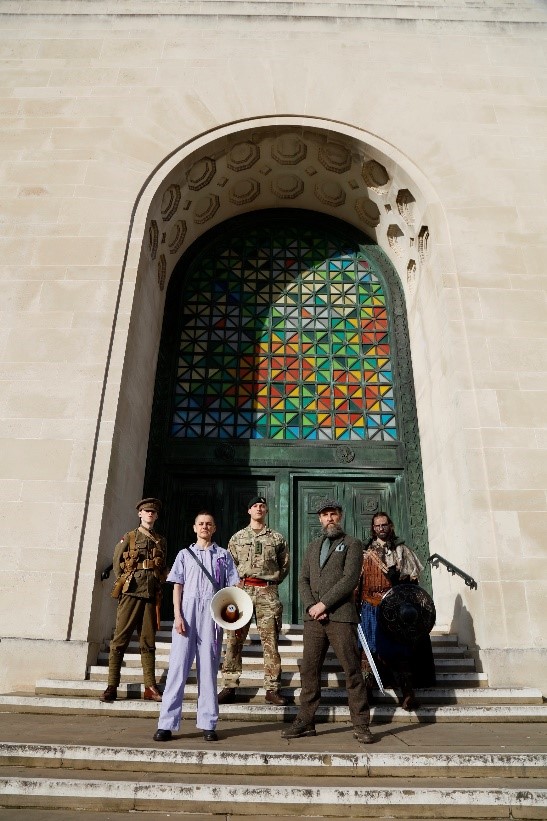
“Now The Hero” is their final piece and it looks like another winner. It is an immersive musical/theatrical parade, starting in Swansea Bay and finishing with a choir recital in Brangwyn Hall in the city. It tells the story of three Welsh warriors from different time periods. There is an ancient Celtic soldier, a First World War conscript and a contemporary service man. There is also a voice for peace, with Eddie Ladd voicing quotes from protestors at Greenham Common’s women’s camp.

Polyphony

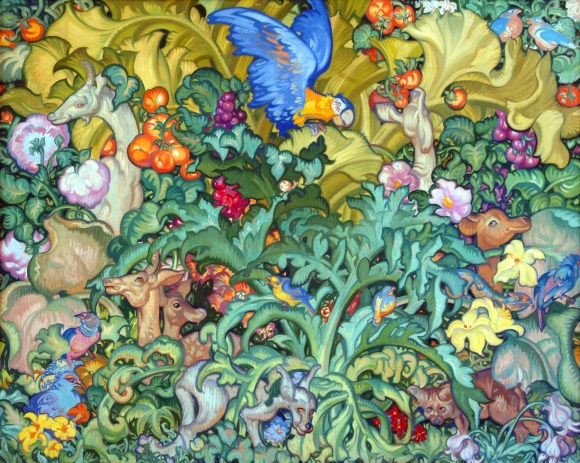
The music is a choral requiem written by Owen Morgan Roberts and Owen Sheers. It is based on a traditional old Welsh poem “Y Gododdin” and will be performed by Cambridge choir, Polyphony. Brangwyn Hall where the event finishes contains “The British Empire Panels” a work originally commissioned to be hung in the House of Lords but rejected by them as too colourful.  It was notoriously described at the time by Lord Crawford as “all tits and bananas”, however almost a hundred years later it is regarded as a powerful commemoration of Welsh participation in the First World War.

Brangwyn-Panel-©-David-Brangwyn

This event will transform Swansea over the course of five days  on 25th to 29th September and it looks as though it will be a spectacular highlight of the Swansea International Festival.

Other performances at the Festival are The BBC National Orchestra with Karl Jenkins and The Welsh National Opera doing “Rhondda Rips it Up” with Lesley Garrett and Madeline Shaw. So if you are looking for some art and culture at the end of September, Swansea is the place to be!

Categories
Theatre review

Harry Potter and the Cursed Child, Palace Theatre, Shaftesbury Avenue, London W1

Harry Potter

I guess that I had better begin by explaining where I am on the Hogwarts spectrum. I enjoy the Harry Potter franchise. I read the first three books and really liked them. I have watched all the films, including the fantastic beasts one, although I couldn’t say exactly what happened in which film, especially the ones towards the end of the series. So, I know all the main characters pretty well, but I’m not a person you would invite to be on your team in the Harry Potter trivia quiz.

This play is written by Jack Thorne, although it is based on a story by him, JK Rowling and John Tiffany. However, it does really feel like it is written by JK Rowling because it is, first and foremost, a really good story and she does know how to construct a good story. I’m not too sure why it is separated into two plays, because it is a single adventure and I suspect that if you were to just see part two, you wouldn’t have a clue what was going on at the beginning.  So, if you are planning to book, do see both parts and do see them in the correct order. Never have I been to the theatre and been warned so often about revealing the plot; luckily, I prefer leaving the storytelling to the playwright so rarely reveal plot twists in a review.

The story is great, not particularly complicated or cutting edge, but it is told in convincing detail over the course of five and a half hours. We know most of the main characters already, having lived through their adolescence, and I have to say it is interesting to see them all fully grown up with children of their own. The actors playing these parts have a tough job, taking over characters with whom we are already very familiar, but needing to bring their own ethos to the role. They all cope admirably with this challenge, Rakie Ayola and Jamie Glover are good as Hermione and Harry. I loved the reimagining of Ron Weasley; Thomas Aldridge’s character probably did have a little more of a free rein for development given his incidental part in the story, but it is very funny and he delivers it well. The new people are really the stars in this show, Theo Ancient is very good as Albus Severus Potter and Samuel Blenkin is fantastic as Scorpius Malfoy. April Hughes has a wonderful, scene stealing cameo as Moaning Myrtle.

The magic and special effects are spectacular, it is one thing seeing them on film as we are used to, but seeing them around you in the theatre really adds to the excitement. The effects are constant throughout the show and they are all top notch. The sets are clever and engaging, there is always something new to attract your attention, not an easy achievement over the course of such a long play. The choreography felt clunky at first, with too many flourishes, but you come to realise that this is necessary to help the magic along, and by the end I was full of admiration for the choreographer – with a company of 43 people, military precision must have been crucial.

These were the most expensive tickets I have ever bought, so it needed to be good, but I have to say that even so, I still feel that they were good value for money.


Categories
Theatre review

Chess, The Coliseum, London WC2

Chess

Chess at the Coliseum is part opera, part rock concert, but full on spectacle. It has a large orchestra, positioned in full view, above the stage. It has fire eaters, stilt walkers, aerial silk dancing, a company of fifty people. There are video screens, pop concert style, at each side of the stage; showing the current singer in close up. There are video clips showing American capitalist advertising and Russian communist iconography. They have lavished both money and attention on this show and it has not gone to waste. Sometimes, it is good to see a big production and the extravaganza that can be delivered when no expense is spared.  The music and performances need to be strong to cope with these distractions, and luckily here that is the case. When Chess was written, it was set in the near present, however the world has changed so much sine the 1980s that now it has become historical period drama, and this has given it has a timeless quality that it did not have at that time.

Music by Benny and Bjorn from Abba and lyrics by Tim Rice, the songs are memorable and emotional. It is clever that the American characters have the more rock style songs. Tim Howar has the perfect voice for these songs, unsurprising I suppose, as his day job is lead singer with Mike and the Mechanics – a classic ’80s rock outfit. Alexandra Burke is Svetlana, the Russian wife, not many songs but she sings them very well. Cassidy Jansen plays Florence, which is the bigger part and she also has an amazing voice. Their duet “I Know Him So Well” is beautiful. Michael Ball is Anatoly, the lead character and is just as good as you would expect him to be. All four main singers are artists at the peak of their careers and they bring out the full potential of the songs. Phillip Browne and Cedric Neal, as Molokov and The Arbiter respectively, also have lovely rich voices.

The choreography is clever and witty. I particularly liked the British dance, with the suited, bowler hatted, umbrella wielding civil servants doing their homage to the swans in swan lake, while the typing pool work away in the background. There is so much going on, all the time, in this production that, no doubt, there are elements that I missed, however, rarely has two and three quarter hours flown by so quickly. The Coliseum is a venue that is more used for traditional opera than modern musicals and Chess fitted in very well. Seeing it here, and hearing it with the benefit of the ENO chorus, one realises that this is a show that could be performed in a venue such as this for centuries to come.

Categories
Exhibition

Rodin and the Art of Ancient Greece, British Museum, London

Gates of Hell

Rodin and the Art of Ancient Greece is a fantastic exhibition, in terms of both content and context. The Parthenon marbles, which used to be known as the Elgin Marbles, are always in the British museum collection but exhibiting them with the Rodin sculptures, for which they provided inspiration, adds a frame of reference to both.

Elgin Marble 2

We see the timelessness in the Greek pieces where the damage of 2500 years only adds to their beauty.  In Rodin’s sculptures, the incompletion is intentional, but the pieces are no less pleasing because of that.  The show cleverly depicts both sets of pieces as individual parts of a larger work. Elgin removed decorations from the Parthenon in Athens and Rodin’s sculptures are part of his, never fully finished, Gates of Hell. It is very informative to see the representation of the wall near each piece which shows exactly whereabouts in the wall it came from.

Rodin 4


The room is big and impact on entry is impressive. There is a large collection of Rodin’s works here, mostly on loan from Musee Rodin in Paris. We have Athena (Pallas), The Kiss, The Thinker, The Walking Man, The Age of Bronze, even The Burghers of Calais has been brought in from Victoria Tower Gardens. The Parthenon Marbles are interspersed among them and seeing, for example, the two intertwined headless Goddesses in the background of  The Athena with the Parthenon in her hair, adds to the attraction of both.

Rodin 1

The ancient Greeks, Phaedias mostly here, tended to use an idealised form of the body in sculpture and frieze, whereas Rodin veered more toward realism in his, but this show brings attention to the association between the piece of art and its inspiration. This is its real success.

Rodin 3

The British Museum holds one of the greatest art collections in the world, but surprisingly, it does not have any Rodin in its permanent collection, so if you did need an extra excuse to visit, this is it. Also, for the first time, photography was allowed in this exhibition.

Categories
Attractions

Love London, Part 1. Trafalgar Square, Nelsons Column and Charles I, London WC2


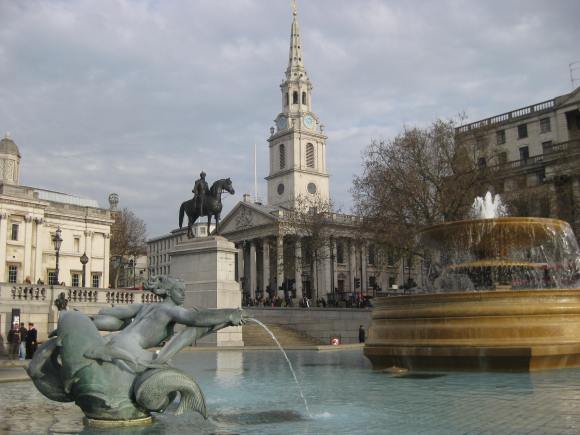
DSC_2999Trafalgar Square is a tourist attraction that is packed with both dramatic architecture and history.  It has a claim to be the centre of London, in both a physical and psychological sense. Other places have claims also; Bank, Buckingham Palace, Piccadilly Circus even Hyde Park Corner, but there are a couple of good arguments in favour of Trafalgar Square.
2014-11-29 13.12.11


It has been  the scene of major British public gatherings and demonstrations from soon after its opening right until the present day. It was the backdrop to the Poll Tax demonstrations in the 1990s, CND rallies in the 1960s and ’70s, Chartist gatherings of the nascent Labour movement in the late 1800s and more recently campaigns against Climate Change and the wars in Afghanistan and Iraq.

overview

Over the Christmas period it holds London’s most famous Christmas tree, a gift from Norway every year since 1947, as a thank you for Britain’s support during WWII. It was also the traditional gathering place for London’s New Year celebrations until the crowds became too big and deemed too dangerous to have at a single venue.

Trafalgar Square was designed in 1826 by architect John Nash, it did not really begin to take shape until the late 1830s when the National Gallery was built in 1838. It is named after the battle of Trafalgar, a famous 1805 victory over Napoleon.

Nelson


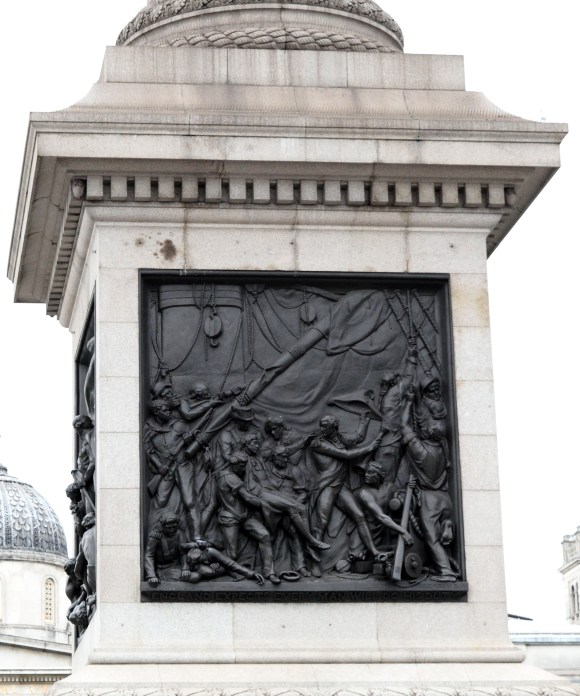
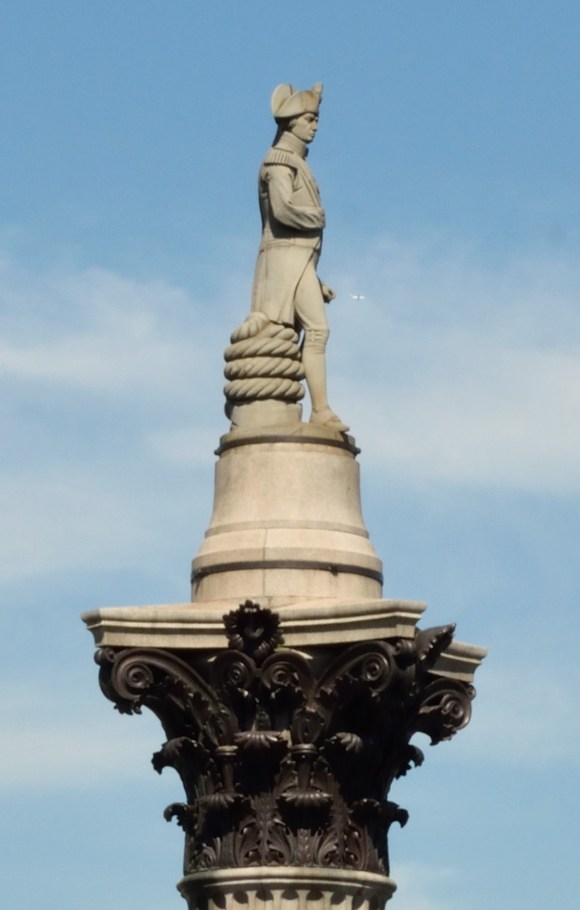
The centrepiece of the square is Nelson’s Column; a monument to the leader in that battle. This was erected in 1843 just before the square became a public area. It is a 43metre high, granite column with a 7metre statue of Horatio Nelson on top. The column itself is a Corinthian column, having an ornamental top. This ornament is made from British cannons.  There are also bas-reliefs on each side of the column at the bottom, depicting earlier famous British war victories and these are made from the melted down remains of weapons captured from the French and Spanish armies. Famously, the stonemasons who built the column are reputed to have had dinner served on its top, before the statue was placed.

DSC_3001

The Lions at each corner of the column were designed by Edwin Landseer and were installed in 1867. They are made of bronze and each one weighs over 6000kg. The fountains at either side of the column, were added later. The current fountains were designed by Edwin Lutyens and added just before the start of WWII. Trafalgar Square as a whole is Grade I listed, which is the highest level of architectural protection in the U.K. awarded only to buildings of exceptional interest.

2014-11-29 13.17.22

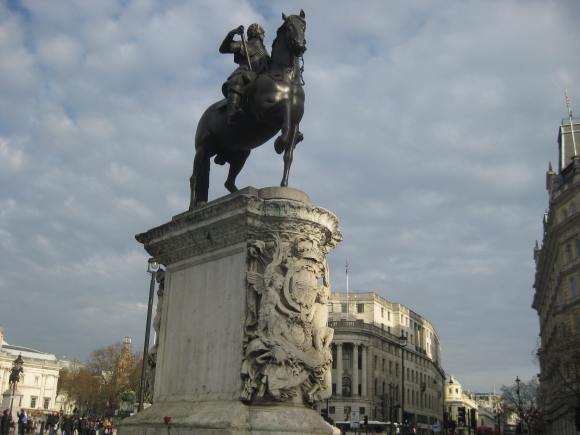
The oldest statue is to the South of the square. It depicts Charles I on a horse. This was made in 1633 and sent to be melted down after the abolition of the monarchy in 1653. The brazier to whom it was given, made his fortune selling trinkets made from the melted down statue, but he had kept it intact to return to the crown on their reinstatement. This is also what Trafalgar Square its claim to be the physical centre of London, as it is to the base of this statue that official distances to London are historically measured.

You may have heard that all the distances to London are measured from Charing Cross. This is true. The Charing Cross was one of 12 crosses placed by Edward I in memory of his wife Eleanor. It was originally in the spot currently occupied by the equestrian statue of Charles I. It was destroyed by order of Parliament after the civil war. A replacement cross was built and placed in front of Charing Cross station during the reign of Victoria. There is an original Eleanor cross still standing, from 1294, in Waltham Cross.

Part 2 of the Trafalgar Square post is here: Love London Part 2. Trafalgar Square, George IV, Victorian generals and the Fourth plinth.


Categories
Restaurant review

Browns, Cardinal Walk, London Victoria

browns-victoria-private-dining-image-1

Victoria Station and its surroundings have changed dramatically in the last couple of years. It is now full of pedestrian areas and buildings made of glass and steel. Cardinal walk is probably one of the oldest of these but still fits nicely into this environment. The décor and the ambience of Browns matches this well too, it is set over two floors, all glass. The restaurant is on the first floor so if you get a table by the window you can watch the world go by as you eat.

Their Pinot Grigio is good, although at over £8 for a large glass, it needs to be. They have a reasonable selection of beers and the cocktail list looks impressive although we did not try any. The service was good, our waiter was friendly and helpful, but he wasn’t really that busy, so maybe he should have picked up on our indifferent response when he enquired how the food was.

The thing that let them down was the food. The fish pie was ok, but I expect better than that when I pay over £15 for it. The only way to tell the difference between the different fish was texture, the overall effect was bland and the potato topping was runny. The steak sandwich was also all right, no butter on the bread – just mayo, but the chips were only slightly hotter than luke warm and they didn’t have any English mustard. The side order of onion rings contained four rings!

I wanted to like this place because I have enjoyed other restaurants in this chain in the past. With such a large choice of places to eat around Victoria now, average food will not get repeat business.

Categories
Theatre review

The Ferryman, Gielgud Theatre, Shaftsbury Avenue, London W1

theferryman_03

The Ferryman is a kitchen sink drama with an epic storyline. Apart from the prologue, it is totally set in the large kitchen of a family farmhouse outside Derry. The action is a day and a half in the lives of the extended family that resides there. But, the themes are huge, its about family and war, about love and loyalty, about freedom fighting and terrorism, and it tells these stories through short interwoven family interactions that come and go throughout the play that gradually meld together to make a complex tapestry.

Jez Butterworth has been spoken of as one of the best writers around today, and with  The Ferryman he delivers. The language and the narrative are superlative, it is the writing of someone both confident and ambitious. He is brave to wind traditional songs and ancient stories through the dialogue and he is talented pull it off so well.

The direction is awesome, there are 17 characters in this play, without counting the live goose, rabbit or the baby. Just moving them all around the stage must have been a major task but, Sam Mendes makes the whole setting feel real,  natural and, even simple.

The cast is also fabulous, lots of lovely performances from so many different actors. Paddy Considine and Laura Donnelly are great as Quinn and Caitlin, but right through the cast there were great turns. I loved Rob Malone as the troubled Oisin. Brid Brennan had a scene stealing part as Aunt Maggie Faraway and she played it perfectly. Dearbhla Molloy and Des McAleer are wonderful as Aunt Patricia and Uncle Pat.

As you can tell, I loved this show. I have to finish because I am about to run out of superlatives. This is a play that will become a classic piece of literature that will be on school curricula.


Categories
Attractions Exhibition

The Wallace Collection, Manchester Square, London WC1.


Franz Hals, the Laughing Cavalier
The Laughing Cavalier


The Wallace Collection is a must see museum/gallery if you come to London. The items on show were bequeathed to the nation in the late 19th Century and have been on display here since 1900.

The Shepherd, Van Dyck.JPG
Van Dyck, The Shepherd Paris

The number and quality of the Old Masters from the 15th to the 19th century is amazing. It has some of the finest examples of 18th century French furniture in existence. There is also a rich assemblage of porcelain, sculpture and royal amour in the collection. One of the more unusual pieces is a particularly ornate cannon.


Cannon

Many of the pieces were bought during the sales of art following the French revolution, which is why the collection is so strong in 18th Century French art. Such good examples of the Louis XV cabinets and marquetry cannot be seen anywhere else in the world.

Vases

A condition of the bequest was that none of the pieces ever left the collection, even to go out on loan. So if you ever wish to see, say, “The Laughing Cavalier” or Canaletto’s “View of the Grand Canal” you have to come here.


Canaletto, the Grand Canal
Canaletto, The Grand Canal


It is astounding to discover that it is free to visit this collection, although they do ask for a donation. It is also surprisingly quiet, compared to the other, bigger museums and galleries in London. This is presumably because it is not in the main exhibition area of town, although you could argue that, situated between Oxford Street, Baker Street and close to Selfridges, it is even more central than those in South Kensington.


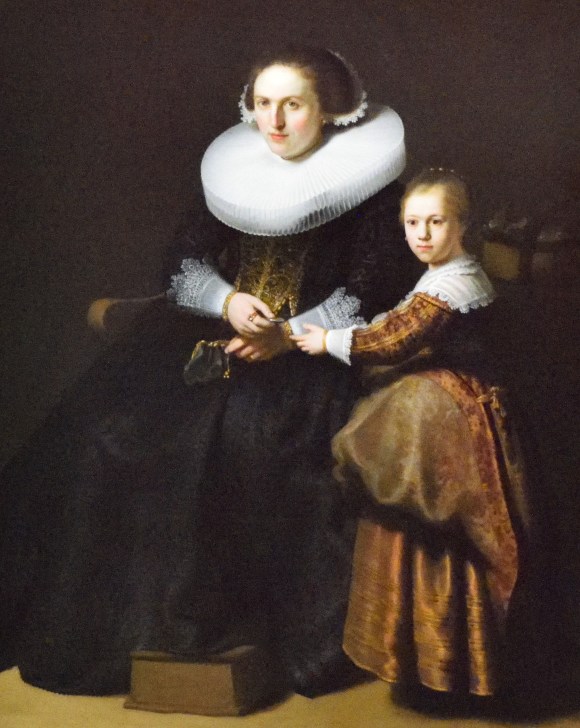
Rembrandt, Susanna van Collen and Anna
Rembrandt, Susanna Van Collen and her daughter Anna


Notable among the Old Masters in the collection are 5 Rembrandt, 4 J. W. Turner, 8 Canaletto, 2 Titian, 12 Reynold, 5 Cuyp, 2 Gainsborough….. the list goes on, it is an amazingly rich and full list. There is even a wonderful portrait of Queen Victoria from 1837, when she was newly ascended to the throne.

Queen Victoria 1837.JPG

The Wallace Collection should not be missed when visiting London. Bring your friends when you visit, and you will surprise them with both the quantity and the quality of the art here. Given how quiet it tends to be, even in the summer, I am going to count this as a hidden gem, and I recommend it heartily.