Categories
Theatre review

Strictly Ballroom, Piccadilly Theatre, London W1.

Strictly

Strictly Ballroom is a crowd pleasing juke box musical. It certainly has a lot of good things going for it. The film, on which is based, is a classic Australian indie comedy of the early ’90s and it is wonderfully odd and funny. The songs are popular upbeat singalong tunes that the audience will know and love. The cast is great and the director and choreographer have some great musicals on their CV.

The show has been rewritten for the stage and a new character, a narrator, has been added. The idea is brilliant, he sings the songs, adds perspective to the larger than life characters and propels the action along with some knowing repartee. Matt Cardle plays this part, Wally Strand, and he does a good job. He has a great voice and he is nicely self deprecating. However there are 35 different songs in this 2 hour show, many of them delivered in two, three or more pieces. He rarely get to sing more than one bar without stopping. It would have been lovely to listen to a complete song in one go, instead of hearing them broken up into fragments.

The story has not been changed from the film and is simple but solid. The difference is that, in the film it was mostly played straight and the characters were unintentionally amusing. Here we have cartoon-like caricatures played for laughs and the comedy feels strained at times. There are funny lines and the caricatures are comical. The acting is  good, Matthew Stevens and Anna Francolini’s over the top performances as Doug and Shirley Hastings were both enjoyable.

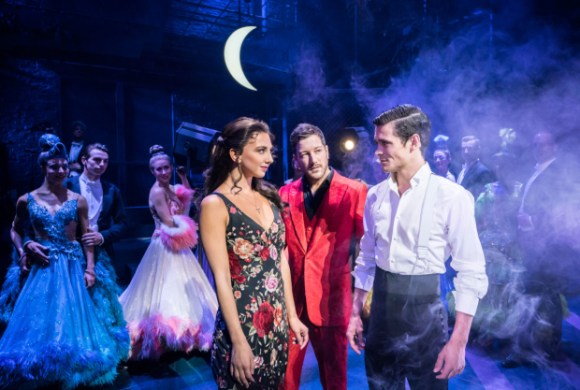
Jonny Labey and Zizi Strallen are both good dancers and excellent as Scott and Fran. The ensemble look good, but the stage at the Piccadilly is too small fit the entire company  and the group set pieces feel cramped and uncomfortable.

The set is sparse and effective, it needs to be because of the lack of space. The costumes are wonderfully sparkly and camp. “Strictly Ballroom, the Musical” has been damned with faint praise, the show is fun and the audience gave it a warm reception. It is a good show, but the sum does not quite live up to all its parts. I liked it but the expectations are high and, in London’s West End, the competition is fierce.


Categories
Theatre review Uncategorized

Hogarth’s Progress Part 1, The Art of Success, Rose Theatre, Kingston

hogarths-progress-6005-680x230-20180226

The Art of Success was first produced by the Royal Shakespeare Company in 1986. it was written by Nick Dear, he has now written a companion piece, set 30 years later and they are being presented as a double bill at the Rose Theatre in Kingston, under the title “Hogarth’s Progress”. The first play depicts Hogarth’s life at the time just before the copyright act came into force when he had just done “A Harlot’s Progress” and before he started “A Rake’s Progress”. The second will depict him in later life. They are meant to complement each other and still work as stand alone plays.

Set in London in the 1730s, “The Art of Success” is a ribald and raucous story, telling of the partying antics of many of the renowned people of the day. These include Hogarth himself, the satirist Henry Fielding, Prime Minister Robert Walpole, brothel keeper Elizabeth Needham and even George II’s wife Queen Caroline. Many scenes are salacious and slanderous, reflecting the satirical plays of the time that led to the passing of the Theatrical Licensing Act. Hogarth was instrumental in causing the engraving copyright act to be passed and there is a subtext to this play about the ownership of art and about how art develops in times of social change, which chimes with the present day challenges for art in the different forms of social media.

Having said all that, the main thrust of the play is a bawdy farce about an epic night on the town and is meant to be enjoyed as just that. In this respect it works well.  It has funny jokes, although it occasionally veers into Carry-on territory. It is merciless in lampooning the aristocracy and it has enjoyable characters. The cast is spectacular, every performance is good.  Jasmine Jones is excellent as Sarah Sprackling, she manages to get a great balance between comedy and pathos. Jack Derges as Henry Fielding is both funny and loathsome. Bryan Dick does a fantastic job of holding it all together as runs about the town in various stages of disrepair.

The set is ingenious, I liked how contemporary it manged to be while still displaying the 18th Century. I cannot imagine that they had the ability to use the effects on display here when it was first produced 32 years ago, and I enjoyed the little nods to modern technology in the direction. “The Art of Success” is a play that you continue to appreciate after you have left the theatre and I am looking forward to seeing part 2 “The Taste of the Town” when it opens next week.


Categories
Exhibition

Now The Hero, Swansea International Festival.

Swansea

Swansea International Festival runs from the 22nd September to the 7th October this year. It has many interesting events, among them a stand up performance by Rob Bryden and a production of Gilbert and Sullivan’s “Iolanthe”.

The centrepiece of the Festival is a Welsh Commission for 14-18NOW called “Now The Hero” 14-18NOW have collaborated with various artists to make some very compelling pieces over the past few years, related to the centenary of the First World War. A particularly thought provoking event earlier this year was “Fly by Night” where thousands of pigeons with LED lights were released over the Thames at sunset.

David-Williams-infront-of-Brangwyn-Panel-001

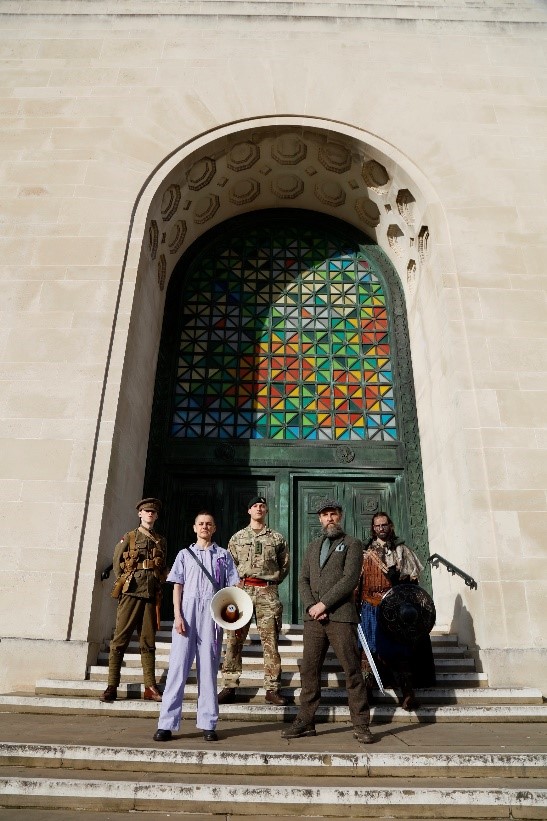
“Now The Hero” is their final piece and it looks like another winner. It is an immersive musical/theatrical parade, starting in Swansea Bay and finishing with a choir recital in Brangwyn Hall in the city. It tells the story of three Welsh warriors from different time periods. There is an ancient Celtic soldier, a First World War conscript and a contemporary service man. There is also a voice for peace, with Eddie Ladd voicing quotes from protestors at Greenham Common’s women’s camp.

Polyphony

The music is a choral requiem written by Owen Morgan Roberts and Owen Sheers. It is based on a traditional old Welsh poem “Y Gododdin” and will be performed by Cambridge choir, Polyphony. Brangwyn Hall where the event finishes contains “The British Empire Panels” a work originally commissioned to be hung in the House of Lords but rejected by them as too colourful.  It was notoriously described at the time by Lord Crawford as “all tits and bananas”, however almost a hundred years later it is regarded as a powerful commemoration of Welsh participation in the First World War.

Brangwyn-Panel-©-David-Brangwyn

This event will transform Swansea over the course of five days  on 25th to 29th September and it looks as though it will be a spectacular highlight of the Swansea International Festival.

Other performances at the Festival are The BBC National Orchestra with Karl Jenkins and The Welsh National Opera doing “Rhondda Rips it Up” with Lesley Garrett and Madeline Shaw. So if you are looking for some art and culture at the end of September, Swansea is the place to be!

Categories
Theatre review

Allelujah!, Bridge Theatre, London SE1

alellujah

Alan Bennett has consistently been one of England’s best playwrights over the course of the past fifty years. His last couple of plays have been well written and funny, but were a little too cosy to be among my personal favourites of his work. Having said that, everything he writes is at least very good and nicely droll.

Allelujah! is set in the geriatric ward of a hospital that is at risk of closure, and for most of the first act we are lulled into a gentle musical comedy about the hardships and indignities of growing old. However, towards the end of the act, things take an unexpected and darker direction and we realise that, during the first third of the play, the scene was being set for a biting political satire. Alan Bennett is cross, and this irritation has led to some of his best writing in years.

This is a play about how poorly we treat the aged in our society and it examines the reasons why this is the case, while entertaining us with smart one liners and whimsical song and dance routines. Nicholas Hynter directs the play, he is a long time collaborator with Bennett and he complements him well. The cast is big and there are many good performances. I particularly liked Sacha Dhawan as Valentine, diffident at first, but bristling with restrained anger by the end. Samuel Barnett is good too, he has an unlikable character to play, yet he manages to have us understand his motivation.

The play has so many scene changes that it might have been written for television. The ingenious set design prevents us feeling that the stage is in a constant state of flux. Arlene Phillips is the choreographer and she has a fine line to tread between keeping the routines tight and having us remember that these people are too old and unwell to be released from hospital – she does a fine job.

The real star of the show is the writing. I love Alan Bennett’s balance, he always presents both sides of an argument. Even when he is presenting a personal point of view, I admire his fairness in giving the other side a voice. He does this particularly well here, he writes some characters with quite unsavoury personality traits in this play, yet they are unapologetic and we understand that they feel justified in their actions, even if we cannot condone them ourselves.

I hope that I haven’t made the play seem too dark and political, because it is a truly funny and entertaining show, made all the better by the fact that it makes you think about the way the old and infirm are treated in our society. I think this is possibly my favourite Alan Bennett play yet.


Categories
Theatre review

Imperium, Gielgud Theatre, Shaftsbury Avenue, London W1.

ImpreriumIII_SwpMH7Z

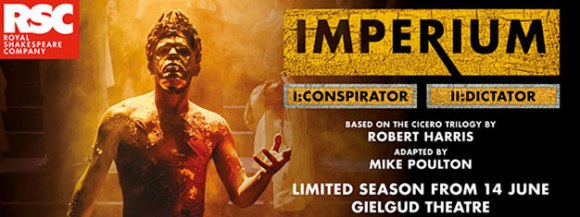
Imperium is an adaptation of Robert Harris’ three books on the life of Cicero, into six plays, each just over one hour long. These have been amalgamated into two plays; Conspirator and Dictator, which are running concurrently with the same cast at the Gielgud Theatre. It is possible, if you choose the correct day, to watch the first play as a matinee and the second one the same evening.

This is a Royal Shakespeare Company production which has transferred from Stratford to the West End. Robert Harris is an acclaimed author of historical novels, renowned for making history accessible. Mike Poulton who adapted these novels has recently brought Hilary Mantel’s,Tudor novels to the stage with great success. These three combine well to make a thoroughly entertaining and interesting biography of one of Rome’s less covered  characters.

Imp

Cicero has been written as the hero here although not without flaws. He is honourable and steadfast to his belief in the Republic of Rome. He has great oratorical skills and is politically adept. He is also vain, aware of his talents, but blind to his faults. Richard McCabe plays the part admirably, with charisma – he is self important and gossipy, but witty and likeable still. The other main part in this play is Tiro, Cicero’s slave, who is writing his biography. Joseph Kloska is fantastic in this role, he is effectively the narrator of the story. He is integral to making Cicero likeable and his affection for his master, while seeing his faults, shines through his performance. Both of them are on stage for almost the entire seven hours of the show. The synergy between these two main characters is lovely and is the column around which the whole production is built.

Nearly everyone else is an antihero and a threat to the Roman Republic. Peter de Jersey is a smooth, smiling Julius Caesar – politically adept, desirous of power for personal gain. Joe Dixon is very good as Cataline, all brawn and little brain, who believes that he deserves to rule Rome and is prepared to bring it down in revenge, if it fails to deliver his wishes. In the second series of plays Oliver Johnstone is good as Octavian Caesar. He is cold, calculating and calm, able to bide his time as he is convinced of his own divinity.

First-Look-Imperium-e1530081620609

For me, the one misstep was portraying Pompey as a Donald Trump type figure. In historical terms it is likely that they were far from alike politically, and director Gregory Doran did a nice job of drawing our own comparisons with the present day throughout the rest of the show, without us needing any coercion, so maybe we should have been trusted to do the same here. However that is a small quibble, for a production that has managed to walk the line between accuracy and accessibility.

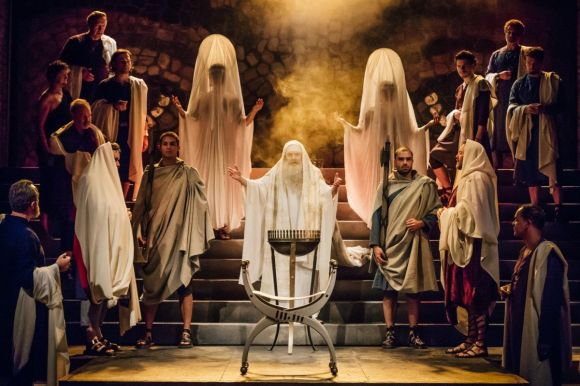
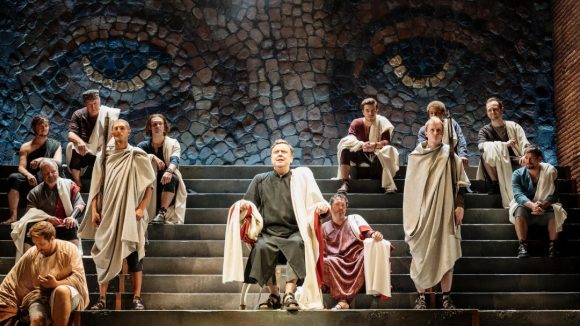
The set too is good, simple and effective. Senate steps that the cast sit upon while listening. Tesserae of watching eyes at the back of the stage. The walls of the senate are built with Roman bricks. There is a huge revolving, reflective, silver globe suspended over the set, that changes hue with events on stage – perhaps a pun on Urbis et Orbis from the city to the world. Anthony Ward has done well making the audience the forum, to whom the senate are speaking and drawing us in to the action.

Imperium is a lovely reproduction of a small part of ancient history. it is witty, funny and accessible, an enjoyable show whether or not you have an interest in the Roman Republic. Robert Harris famously said of his Cicero trilogy that is “The West Wing with Togas”, well this contemporary adaptation turns it into “House of Cards in Ancient Rome”. Surely a Netflix production cannot be far away – and if it is I will surely be watching!


Categories
Uncategorized

Pity at the Royal Court Theatre, July and August

pity-lead-16-02-18

https://checkout.timeout.com/london/pity-at-royal-court-theatre-56938?cid=~affiliate~tastemaker~Nick

Time Out offered me this special deal on tickets to see Pity at the Royal Court. They asked me to share the deal on my blog, as an experiment to see whether anyone clicked on the deal or if anyone takes up the offer.

The play looks quite interesting and the offer seems good, so I have agreed to do it as a one off experiment. I am away on holiday in July, so I’m going close to the end of the run in August. I bought the £12 tickets because the Royal Court is small and the view is good from every seat.

pity-cast-royal-court

I hope you don’t mind this different type of post and I promise that this is a single time only, I am not suddenly going to be a site that bombards you with deals and special offers.

Categories
Theatre review

The Prime of Miss Jean Brodie, Donmar Warehouse, London WC2

jean B

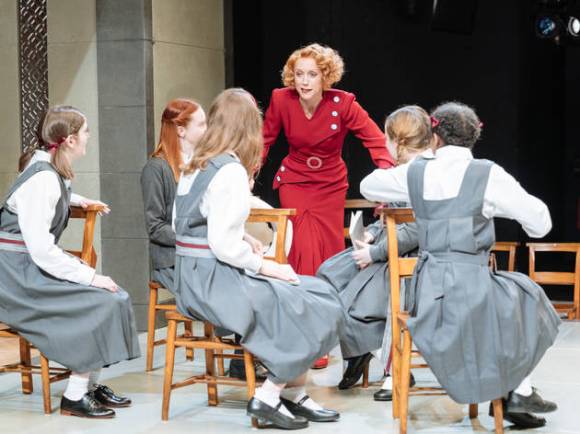
This is a new adaptation of Muriel Spark’s novel. David Harrower has changed the telling of the story, in some ways it is closer to the book than any of the previous adaptations have been. It is told in flashback rather than the flashforward of the book, but the main roles from the book are all here and their character foibles are more to the fore than in the 1969 film starring Maggie Smith.

The Jean Brodie of this play is more obviously manipulative, but still charismatic. She is a talented teacher, hugely influential, on the children she teaches. However, with great power comes great responsibility and the story is really about whether her personality allows her to use her talent to its best effect. There is no doubt that Jean Brodie is a fantastic role, although Maggie Smith – with her best actress Oscar for the part, makes it a brave soul who would be prepared to take it on. Lia Williams is amazing in the role, she really makes it her own. She shows us why the girls are so in her thrall, and she gives us an insight into why this is not necessarily always in their best interests.

The cast is small and all are good. Angus Wright is excellent, as usual, as Gordon Lowther, the music teacher whose love for Jean Brodie is not returned. His part, in particular, is more compassionately written here than in other versions, this works well as a contrast to the more dissolute role of Teddy Lloyd.   I really enjoyed seeing the role of Joyce Emily brought forward in this adaptation. Nicola Coughlan is really good in the part, I think we will be hearing that name much more in the future.

The set is simple with clean lines and cool colours, reminiscent of Rennie Mackintosh. There is also a kind of Japanese Shinto influence with different bells arranged around the set, ringing intermittently before the start and during the interval, ensuring that we are all in a state of relaxation before the action begins.

The Prime of Miss Jean Brodie is a great book and this is a lovely new adaptation of it. The dialogue is crisp and clear, the characters are sympathetically written, and the acting is top class. It is playing until the end of July, I know the Donmar has a tendency to sell out very quickly, but if you can get your hands on a ticket, then I would recommend that you do.

Categories
TV

A Very English Scandal, Television Series, BBC

a-very-english-scandal-1528212744687

A Very English Scandal is a 3 part series, a fictionalised retelling of a political scandal that took place in the UK in the 1970s. Jeremy Thorpe was the leader of the Liberals for part of that time and he was a very well known politician throughout the late 1960s and the 1970s. He is alleged to have had an affair with a man named Norman Scott, this affair ended badly and Norman Scott threatened to tell all; to the police, the papers and Jeremy’s mother. When he began carrying out these threats, beginning with a detailed and graphic letter to the mother, Jeremy Thorpe is supposed to have hired a hitman to kill Scott. The hitman was incompetent, shot Scott’s dog instead and it all ended up in a well documented court case.

Lets just say that if you were to try and make up a salacious story to sell newspapers to the British public in the 1970s, you could hardly invent a story better than this. It had everything, its biggest difficulty would be convincing the readers that it was actually true. The court found them all not guilty, however from speaking to people who lived through the newspaper coverage, the accusations were believed by the general public and the feeling was that they were acquitted because of some biased summing up by the judge and the protection of “an old boys network” which was prevalent in political circles at the time.

Nevertheless, they were acquitted and this series is fiction because it assumes that they were all guilty as charged. It has Thorpe and Bissell plotting to kill Scott, something that Thorpe denied until his death, although Bissell gave evidence to the contrary.  Stephen Frears directed this, with great attention to detail, even without the story this is a beautiful period drama, the 1960s and 1970 are lovingly recreated in the clothes, the decoration, the speech, the attitudes. Russell T. Davies wrote the piece and he adds humour and wit to the dialogue, he peoples the back story with the eccentrics of the time, but basically sticks to the story as it was covered when it broke.  The narrative itself really didn’t need any embellishment, it was more a question of keeping it from being too outrageous.

Hugh Grant plays Jeremy Thorpe, he is absolutely believable in the role of a suave, charismatic politician, with a defective moral compass, prepared to do anything to cling on to power.  Ben Whishaw as Norman Scott, is a tougher sell, part naïve ingenue, part worldly manipulator. He is alternately the hurt boy led astray and the vindictive gold digger who knows how much his silence is worth, this is a thin line to walk – but in the end, he carries it off well. There are some great performances throughout the series, Patricia Hodge is wonderful as Ursula Thorpe, Jeremy’s indomitable mother.

There are some lovely, funny cameo roles as British eccentrics, David Bamber has a role as the 8th Earl of Bamber, with badgers running around his country house. He does appear to be as eccentric as his role suggests – he introduced both the homosexual reform bill in the House of Lords and a bill for the protection of Badgers. When asked why he thought that the first passed and the second failed, he is reported to have said, “Well, there aren’t any Badgers in the House of Lords”

Overall this is a admirable treatment of an incredible story, I was aware of the people involved in the story before watching, without any great knowledge of the detail. It gives insight into the political and social attitudes of the time, for example, it was more damaging to a political career to be accused of homosexuality than to be accused of murder. It is well written, entertaining and funny, with some great acting. It is on BBC I-player now and likely to distributed around the world in the near future. If you have any interest in politics, the 1960s and ’70s, attitudes to LGBT rights, Britain and British eccentrics, I think that you will enjoy this. Actually, even if you have no interest in any of those things, I think that this series is funny enough to entertain you.

Categories
Theatre review

Translations, National Theatre, Southbank, London SE1

translations-5997-680x297-20180223

Translations is set in Donegal in the 1830s. Ireland is under British control, but most of the population do not speak English. It is at a time before the famine has set in, but people know of the blight and are aware of the damage that a potato crop failure can do to a  community. Ordinance Survey has sent teams of men to map the countryside and to standardise place names. Education had not been allowed for Catholics, so the practice of illegal hedge schools operated throughout Ireland. One of these schools is the precise setting of this play.

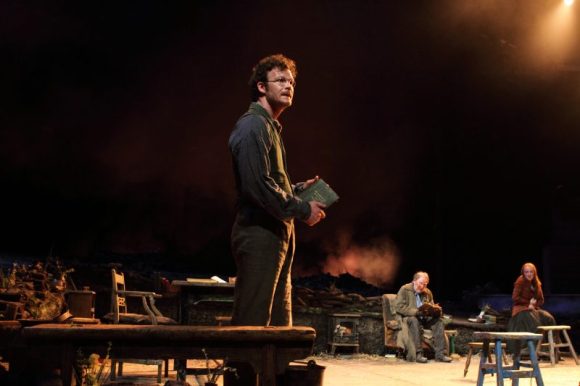
This is a play about language, the effect language can have on culture, how we can communicate with it and also about how we can communicate without it. This makes it quite an intimate piece and the Oliver Theatre, The National Theatre’s largest space and stage, does not appear to be a natural home for it. However, Rae Smith, the set designer has done an amazing job and used the space to great advantage. The hedge school is a small, low walled area right at the front of the stage and the rest of the area is peat bog stretching out into the distance, covered by the gently rolling mist that is prevailing climate of the region. Thus, we have the intimacy of the small school and the expanse of the area that is in the process of being mapped.

Seamus-OHaraManusDermot-CrowleyJimmy-Jack-Michelle-FoxSarah-in-Translations-image-Catherine-Ashmore-e1527175613872

Brian Friel was, he died in 2015, a wonderful playwright and Translations is a virtuoso display of his skills. The play itself may be about the power of words but the main love scene is between two people without a common language. It consists mostly of lists of place names, and is still a very moving piece of theatre. The director, Ian Rickson, has taken great care of the action, every entry and exit feels considered and the lines are all delivered deliberately, making you feel that each word has been carefully chosen.

The acting is of the highest calibre, Ciaran Hinds is as good as you would expect – and those expectations are high indeed. Colin Morgan is also very good, showing that he is aware that he is taking both sides, while denying it to all. Dermot Crowley, as Jimmy Jack Cassie, is a revelation, in a part as a humorous fantasist, who has to be credible to be funny. I also loved Michelle Fox, who managed to get us to feel a wide range of emotions even though her part has very few lines.

The thing that makes this production stand out for me, though, is the extraordinary way that Ian Rickson handles the final scene. The mechanism he employs, comes out of the blue and is gone in a flash, it adds a current reference to the play and suits it well. All in all, this is a beautiful piece of writing, beautifully presented and performed and I will consider myself to be very lucky if I see anything as good this year.


Categories
Theatre review

The Best Man by Gore Vidal, Playhouse Theatre, London WC2, 2018

the-best-man-01

First produced on Broadway in 1960, The Best Man points at the flaws in the democratic system that we had then and that we still have today, namely that those who crave political power are the last people who should be given it. It is really interesting to note how it manages to be a period costume drama and a commentary on the machinations of political life today. The period part comes in the fact that political drama in the early 1960s was a much more static affair than we are used to now. Since “The West Wing” and “House of Cards”, rarely do we see anyone actually sitting and talking political ideas.

Gore Vidal is a fantastic writer, and even almost 60 years on, “The Best Man” is full of provocative ideas and stinging backhanded compliments.  It is insightful and witty and has a stellar cast. Martin Shaw shows great balance being righteous without being too pompous, he carries himself as though he believes he is better than the people who he hopes to vote for him, but has to work hard to avoid showing it.  Jeff Fahey is the Machiavellian, but he makes you understand that he realises this, and it is ok because he is doing it for the right reasons. Jack Shepherd almost steals the show as the outgoing President – this is a fantastic part, he gets to deliver some nice home truths to both sides and he plays it perfectly.

This being the early 1960s one would expect the women to be ancillary to the action, but Vidal was ahead of his time here, and the three leading ladies all have relatively meaty roles, and are aware of their importance in the political machine. Glynis Barber and Honeysuckle Weeks have very different roles as the respective senators wives but both are very convincing in what they do. Maureen Lipman is hilarious in a beautifully written cameo as Mrs Gamadge, who promises to bring “the women’s vote” to the candidate of her choice. She plays it so well and so much as we know her that it feels as though it could have been written for her.

Simon Evans has done a good job as director by ensuring that, although the play was written with one senator being the more honourable and the other being more murky, we see the faults in both. Apparently there was film of this play made in 1964, I will certainly be on the lookout for it because it will be interesting to see the difference 54 years has made in our perception of its ideas.

Unfortunately, I have come to this show late and it is about to close in London, but if it goes on tour after, I urge you to try and catch it, especially if you have any interest in politics – either American or British, and either current of historical. Recommended.