Categories
Hotel review

Motel One Manchester-Piccadilly, Manchester

motel-one-20131029032519815

Motel One is about as handy as you can get if you arrive in Manchester by train. It is directly across the road from Piccadilly train station. The rooms are quite small, but they are cleverly laid out and well appointed. The windows are big, so even on a grey day the room feels bright. The bathrooms are new and modern and the shower is excellent. The bed is big and comfortable, all rooms have free wi-fi that is efficient, the code only works for 3 items though – so if you are as gadget fuelled as we are, you may have to sweet talk the reception staff into giving you more codes.  Motel One is German hotel brand and the TV comes with many European channels as standard.

The breakfast is good, but continental only, it is not included in the price and not particularly great value in a part of town that is full of great brunch venues. Head to Hilton Street which is less than a ten minute walk away and has a number of interesting cafes, including  The Pen and Pencil, 57 Hilton St, Manchester which we really liked.

Also, you need to be aware that, despite its name, Motel One, does not have a car park, so you are at the mercy of private car parks if you have driven to Manchester and parking in town is not cheap. Having said that, central Manchester is a great city to walk around and public transport is pretty good, so a car would not be essential for your time here.

The bar on the ground floor is decorated in a modern European style; flash furniture and muted colours, pleasant enough to sit and have a drink in while waiting for friends. The music is at a nice level for conversation and they have pleasant bar staff.

Overall, Motel One Piccadilly is a very good budget hotel, right in the heart of town and I will happily stay here again next time I come to Manchester.

Categories
Restaurant review

The Albert Square Chophouse, Manchester.
alberts-image

This restaurant is very centrally located – in a beautiful solid brick building, on the corner of Albert Square. The entrance is up a few steps to a nice bar space with a mixture of sofas and chairs. The restaurant is downstairs, it looks impressive as you descend, an industrial sized room filled with fully set dining tables, booths and banquettes. The windows are set high and the kitchen is open and visible from the dining room. The walls of both floors are lined with photos of Manchester luminaries, some recognisable others less so.

The menu is traditional British. The corned beef hash cake is a great starter, meaty and comforting. I had a rib eye steak and it was flavourful and tender, one of the best steaks that I have had. The steak and kidney pie was reportedly great too, done in the old fashioned way with suet in the pastry.

The wine list looked good, the house rose was excellent. They have a full bar, so the selection of beers is good too. The service was friendly and helpful. It is not a cheap restaurant, but everything they do is high quality, so definitely a meal to sit and savour. This is a venue for a night out, to enjoy the evening and chat after.

We ate early, 6pm, so we managed to get in without booking, but it was quite full by the time we left, so I would imagine it would need to be booked if you wanted to eat at a more popular time.

We thoroughly enjoyed it and will be back next time we are in Manchester.

Categories
Attractions Days Out

Southwark Cathedral, London SE1


Wooden effigy of Unknown Knight
Reputedly the oldest wooden effigy in Britain


Literally a few steps away from the hustle of Borough Market is the calm oasis of Southwark Cathedral. It is a wonderful mixture of old and new. It contains a wooden effigy of a knight from the 13th Century, reputedly the oldest in Britain and its Northern cloister was opened in 2001 by Nelson Mandela.

Shakespeare

There are monuments and memorials from many time periods in between. There is a stained glass window and bas-relief dedicated to Shakespeare, his brother Edmund is buried here. The Cathedral is on the South Bank of the Thames where many of the theatres used to be in Shakespeare’s time.


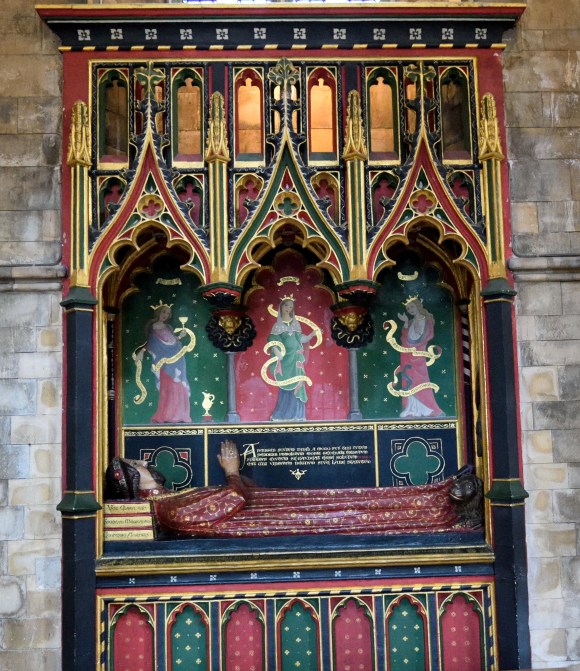
Tomb of Thomas Gower


There are tombs of quite different types, from the multi-coloured wooden one of the poet, Thomas Gower, a contemporary of Chaucer, to the more austere and eerie one of Thomas Cure, a 16th Century parliamentarian.


Thomas Cure
Tomb of Thomas Cure


There are memorials to those who lost their lives in both the first and second world wars, victims of the Marchioness sinking in 1986 and Isabella Gilmore, the first deaconess of Southwark. There are also monuments to both Nelson Mandela and Desmond Tutu.

Deaconess memorial

While you are here don’t forget to look at the fixtures and fittings in the building. The black marble font and outrageously ornate wooden cover, at the nave of the church is one highlight, the eagle lectern, near the altar is another.

Lectern

Added to all this is the architectural splendour of the Cathedral. There are details here from a whole range of different engineering periods. The vaulted ceilings in the main church are beautiful, but the marble bricked ceilings in the naves are equally so.

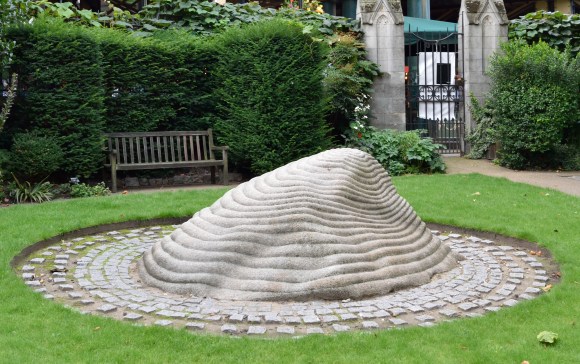
Sculpture
Walk through the church into the garden and you can sit in verdant peace, with the noise of the market in the background. There are a couple of unusual sculptures here, but the flowers are beautiful. An often overlooked gem in the heart of tourist London, just the place to dip in to, if you feel the need to step out of the boisterous city for a quiet break.

DSC_3270

Categories
Theatre review

Apologia, Trafalgar Studios, London

dd913zrxgaecwyp

I went to the first night of the previews. I really enjoyed it. The action takes place over an evening birthday party and the morning after. It was a little slow to get started but after that, the first act is good; the script is funny, arch and sharp. It appears to be a play about nostalgia for the idealism of the 1960s and children with abandonment issues. However, the second act is transformative, I love how it turns your perspective on its head, we get to know the characters better and see their motivation differently. The play is really about women’s place in society, whether this has changed over the past 50 years and about the price people are willing to pay for attempting to bring about change.

The direction is simple, Jamie Lloyd lets the words speak for themselves. The set is clever, the stage is framed like a picture or perhaps the old photograph given as a birthday gift.  The whole cast is good, but this play is really about the women, Laura Carmichael and Freema Agyeman are both outstanding and Stockard Channing is amazing.

The writing is great and I will be looking out for other plays by Alexi Kaye Campbell. I guess there will be a few tweaks before the general opening, but it got a full standing ovation on the night I went. I hope the critics like it as much as I did and that Apologia is a huge success.

Categories
Theatre review

Hamlet, Harold Pinter Theatre, London,

hamlet-2017-main-400x400

Hamlet is a play that has been done so many times in London over the last few years, it seems to be the role that every major star wants to do, to prove their worth. Well, this version, directed by Robert Icke and starring Andrew Scott is, without doubt, the best of them.  The direction is wonderful, it makes the play feel current and relevant to today. I love the use of technology; the ramparts on video cameras, the war coverage on a 24hour news station,  the paparazzi at the wedding.

Andrew Scott is a fantastic Hamlet, hurt, sarcastic and sardonic, he speaks every line as though he is having difficulty putting the depth of his feelings into words. The words are 17th century but his delivery of them is 21st century psychoanalytical. The modern setting brings out humour, in his lines, that was previously hidden and it makes his cruelty towards Ophelia and his mother, all the more harsh.

Derbhle Crotty plays Gertrude, as a worried caring mother, a bit frivolous and taken in by the attentions of her late husbands brother. I liked the chime in accent between her and Hamlet, it emphasised their bond and highlighted his reason for feeling betrayed by her.  Angus Wright is wonderful as Claudius. In this production he is a modern Machiavelli, concerned with approval ratings and how the public would feel if he prosecuted Hamlet for the death of Polonius. He is the ultimate politician king, bland and reasonable while plotting death. It makes one realise how little politics has changed through the centuries.

Peter Wight is great as Polonius, usually played for laughs, but here he is a family man, desperately trying to enhance the lives of his children by means of his diplomacy. The affection between Laertes, Polonius and Ophelia is underlined in this production, and the sense of loss is deeper because of it. David Icke is not afraid to take risks, I am not sure about the Bob Dylan songs, bringing 1960s music into such an up to the minute setting jarred a little, but Rosencrantz and Guildenstern work very well as a romantically involved couple and why wouldn’t one of them be female. I am looking forward to the Tom Stoppard update.

The finale is deliberate, each character allowed their own time. Horatio is solicited to tell the tale, but it has all been recorded on video, so it will be available for the news channels to package and present, from all points of view, for years to come….

This is a fantastic production, it has a month left to play, London theatre at its very best.

Categories
Days Out gardens

Streatham Common, London, SW16


Tree, Streatham Common

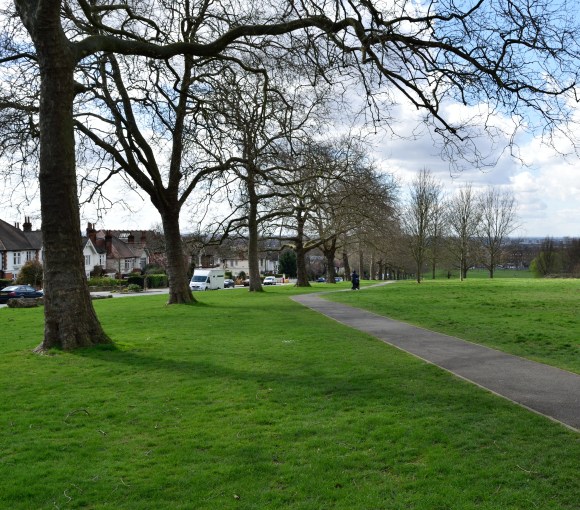
Streatham Common is an attractive green space in South London. The grass on the Northern and Western section is maintained and dotted with trees. It looks very pretty sloping upwards towards the rookery from the A23. On summer weekends it is quite busy with people, flying kites, having picnics or just chilling out. This area of the park often has events running when the weather is warm. An interesting one booked for September is “A Midsummer Night’s Dream” performed by the world first cycling theatre company!

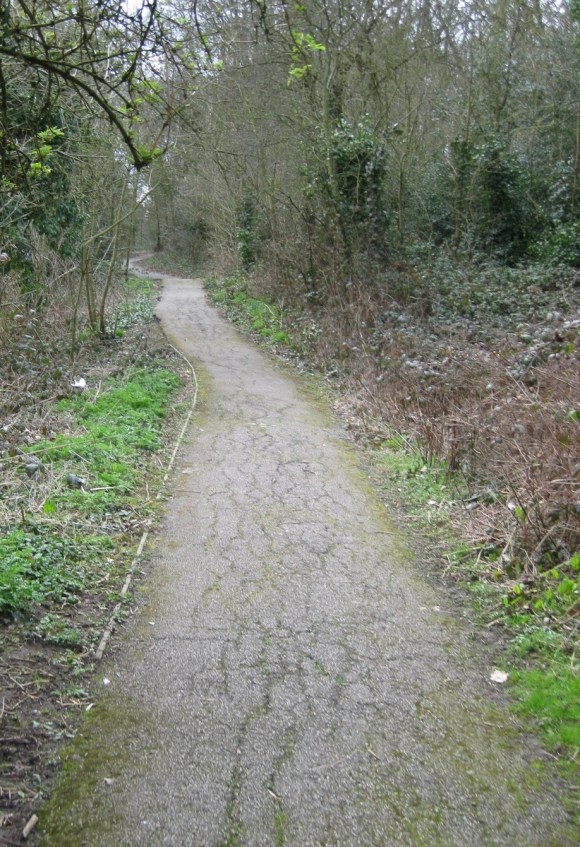
Path, Streatham Common


The eastern side is left in a more natural state. It has been designated a local nature reserve and it has many oak trees and some beautiful old cedars. Where the western part meets the east there is beautiful formal garden called The Rookery. A mineral spring was discovered here in the 1650s and was visited by royalty to take the waters. Streatham was a very fashionable out of town location in the 19th century and the Rookery Gardens are kept as they would have been in those days. There is a rockery with a pond, lovely herbaceous borders, and it has an ornamental stream running through it.

Camellia, Streatham Common

The Rookery Café is outside the wall of The Rookery just on the border between the maintained and more natural parts of the common. It is a well run café, serving hot and cold food. There are seats outside with big views to the west and south.

Trough, Streatham Common


The Common is surprisingly large – over two kilometres along the perimeter from its northwestern corner to the northeastern one. As you head farther east, the park becomes part of the borough of Croydon and is known as Norwood Grove, although historically, it has always been part of the Great Streatham Common. There is a nice 19th century house here, inside the park, Norwood Grove House, although it is known locally as the White House. This also has nicely laid out gardens and pretty, if urban, views out over Croydon.

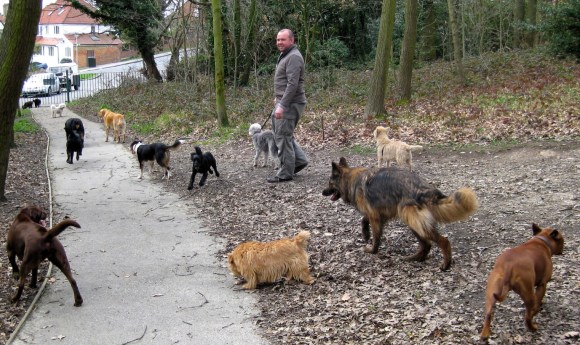
Dog Walker on Streatham Common

Streatham Common is a well used park, surrounded on all sides by houses. There are joggers, dog walkers, parents with buggies, yet it is big enough to avoid feeling crowded.   It is on the Capital Ring, which is a 120 kilometre walk around London, broken up into 15 smaller sections. This is a surprisingly green and traffic light walk for such a large metropolis. The park itself is a varied and interesting area with lots of different types of scenery, I would say that it is certainly worth a visit if you are in South London on a sunny day.

Streatham Common


Categories
Buildings

Clapham Junction Station, London SW11.

clapham_1_982x432

Whether you are travelling from Brighton to Basingstoke, Mortlake to Milton Keynes, or from Hove to Harrow, Clapham Junction Station is your friend. With around 2000 trains a day going through, it is the busiest station in Europe. It is also the busiest in the UK as an interchange with close to half a million people changing trains here per day during the week.

It is not particularly pretty, nor is it as architecturally interesting as some of the other main stations in London, but it is efficient. There are 17 platforms and there is an underpass or overhead concourse to travel between them. Personally, I like the tunnel, old and busy with shops and food vendors, as the means of movement, but it does get crowded at peak times and there are no escalators or lifts, so stairs are the only way down. The raised pathway has lifts and it is more modern. It is also brighter and it feels less claustrophobic at peak times.

Surprisingly, Clapham Junction is not connected to the tube, but it is served by many buses and has parking for a couple of hundred bicycles. Should you require step free access, make sure that you are dropped off at the Brighton Yard entrance, rather than the shopping centre side in Grant road.

Time Out Online has Clapham Junction Station listed under “things to do”. I’m not sure that I would go quite that far, however, if you spend any time travelling around in London, you are likely to change trains here. When you do, it is worth taking a moment to think about the number of trains and people going through, and then marvel at the level of competence required to run, what is effectively, one of the biggest train sets in the world.

Categories
Attractions Days Out

Madame Tussauds, Marylebone Road, London

King Kong.JPG

I had forgotten how much fun Madame Tussauds could be. You have to let yourself go, embrace the kitsch, accept the corny, give in to your inner child and play! You are going to realise that enjoyment is a conscious choice as soon as you sit down in the black cab fairground ride that takes you through a potted history of London. If you disapprove of touristy romanticised attractions you should avoid coming here; where even the rats are sanitised. But, if you are new to London, looking forward to what you are going to see over the coming week, then I can see its allure.

DSC_2924

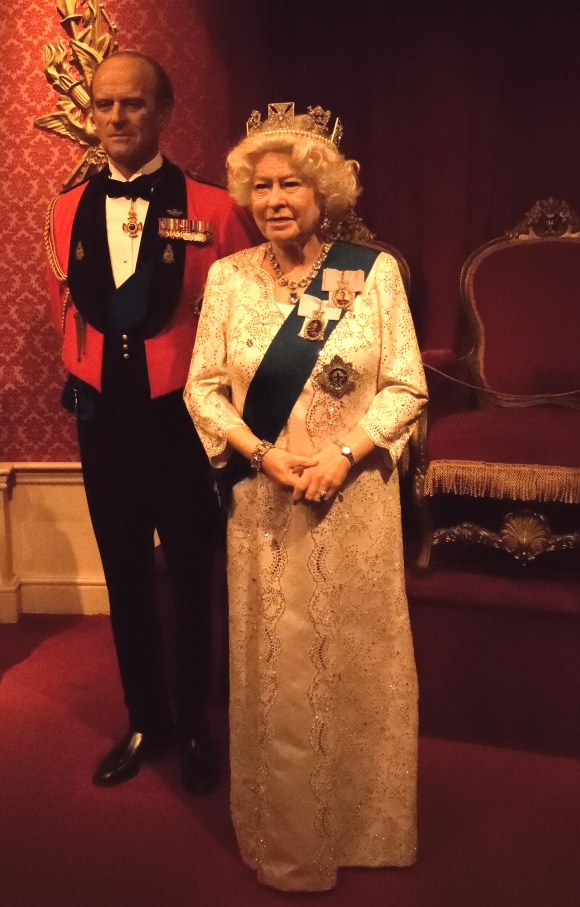
I like how hands on everything is, you can take a selfie with Kim Kardashian, put your head on George Clooney’s shoulder or even look up Marilyn Monroe’s billowing skirt, if that is what takes your fancy. It’s good to go in a group, it’s always fun to discuss how short Tom Cruise is,  how tired the Queen looks, or to try to get your Mum to pinch John Wayne’s bum.

the queen

The crew that work here are friendly and helpful, happy for you to get up close and personal with the figures and to take a photo, if you ask. They are chatty and will share an anecdote, one guy told me that they sometimes have to remove left knickers from Brad Pitt’s mannequin.

DSC_2922

Madame Tussauds is not cheap to visit, but it is possible to get deals, either with your train ticket or as a combination with other London visitor attractions. It is definitely worth looking for these online, you would be very unlucky not to find a coupon somewhere. It is also prone to get very busy, queueing to get in and get around is always a mood dampener, so if you are here in the height of the season try to go early in the day or late in the afternoon. They sometimes have evening openings, look out for these as they are often quieter.

Shrek

There are waxworks from every walk of life here; film and pop stars, historical and political people, sports and science specialists. So if you want to kiss Kylie, hug Hawkins, shimmy with Shrek or berate Boris; this is the opportunity, all you have to do is lose your inhibitions…..and make sure you take a photo!

Categories
Attractions Buildings Days Out

Hyde Park Corner, London W1.

Hyde Park Corner

Hyde Park Corner has a lot going on, for what is, ultimately, the central reservation of the busiest traffic roundabout in London.

Peace in a Quadriga

There is Wellington Arch in the centre, which used to house the second smallest police station in Britain until 1992, it is now a museum and open to the public.  It is called the Wellington Arch because the top of it used to be crowned by a 40 ton Statue of the Duke of Wellington – the largest statue of a man on a horse that has ever been made. It was moved to Aldershot in 1912 and the arch now has a statue of a winged charioteer driving four horses on it top. This is the largest bronze statue in Europe.

Australian War memorial

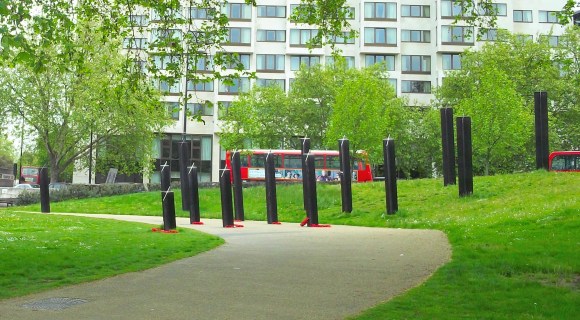
The grassed over island also has the Australian war memorial in the South Western corner and the New Zealand war memorial on the North Eastern corner. These are 21st century memorials built in 2003 and 2006 respectively and commemorating antipodean deaths in the two world wars. They are both moving pieces of public art.

New Zealand War memorial

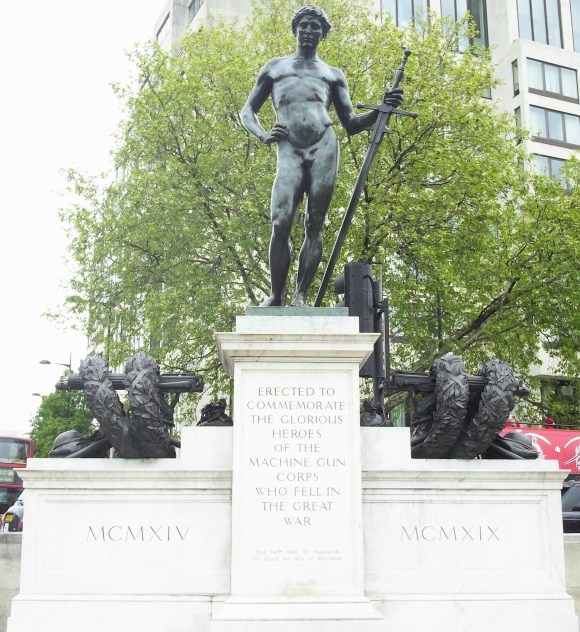
It also contains the Machine Gun Corps Memorial and the Royal Artillery Memorial, two more pieces commemorating casualties of the World Wars. These are both interesting in their own ways. I’m not sure why the Machine Gun Corps is commemorated by a statue of a young man with one hand on his hip and the other on a large sword, but it is beautiful, nonetheless. The Royal Artillery Memorial has more of a Great War atmosphere, it resembles soldiers guarding a tomb, with a cannon on its top.

Machine gun corps

There is also a statue of Lord Byron and a large bronze of The 1st Duke of Wellington sitting on a horse. The equestrian duke statue is a smaller copy of the one that used to be atop the Wellington Arch. The best way to reach the central reservation avoiding the traffic is by one of many underground passageways. These are bright and well kept and have tiled depictions of the history of the area. I can’t believe that I am recommending  visiting the underground pathways to a traffic island, but these are quite interesting in themselves and definitely deserve a view if you have an interest in the history of the area.

Hyde Park

Not only is the junction itself full of interest but, there are many places very close by. There is Apsley House, the home of the Dukes of Wellington, and Hyde Park itself to the north. The wall across the road on the southern edge is Buckingham Palace garden. Green Park is on the east, and the Old St Georges hospital, now the Lanesborough Hotel, reputedly the most expensive in London, is to the west. Plus, of course underneath all this is Hyde Park Corner tube station.

Apsley House

In short, if you are to visit any traffic island in central London, then this should be the one!

Categories
Attractions Days Out

Apsley House, Hyde Park Corner, London

Apsley House.JPG

Apsley House is the smart, columned building on the north side of Hyde Park Corner. It has been the home of the Wellington family since the 18th Century, and it is open to the public Wednesday to Sunday during the summer months. It is a stunning Grade 1 listed building, and many of the interiors are kept in the style of decoration that they would have had at the time they were built. It is unlikely that there is a better maintained aristocratic home in Central London.

The decoration is interesting, there is some of Roberts Adam’s 18th century classical interior design remaining. It was renovated in the early 19th Century when Wellington was living in Downing Street as Prime Minister. The Waterloo Gallery was added at this time to commemorate his victory over Napoleon, and to this day, there is a banquet held annually on 18th June to celebrate this.

Wellington Shield

There is also an amazing art collection, made up of gifts from grateful war allies, or items acquired as the spoils of war during the defeat of Napoleon. There are paintings by Titian, Van Dyke, Rubens, Goya and Velazquez and many others. You can even see the original painting that contained the image of Wellington, that was used on our old five pound note.

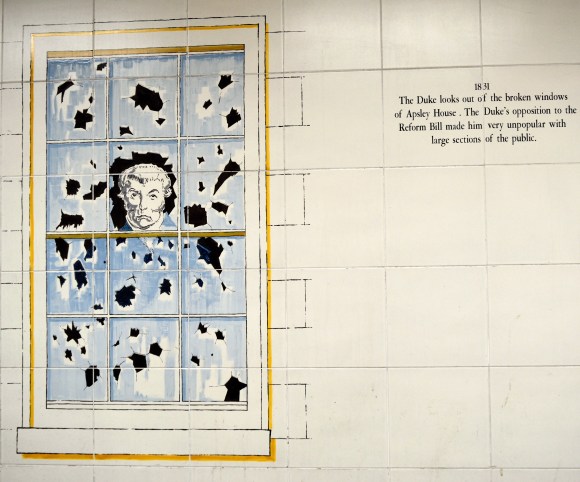
Wellington Window.JPG

The are many other items of historical interest. It holds the oldest grand piano in England. There are two beautiful porcelain dinner services on display; The Waterloo Meissen Banquet service, painted with scenes of his greatest victories, and the Josephine Egyptian dessert service given by Napoleon to his wife as a divorce gift.  Another highlight is the wonderful 3.5metre nude statue of “Napoleon as Mars the God of Peace” by Canova.

Meissen Plate.JPG

The property is run by English Heritage, so it is free to enter if you are a member, but chargeable otherwise. The entry fee includes a touchscreen audio tour, this is very informative and there are seats in some of the rooms, where you can sit and listen to descriptions of the paintings and decoration. The no photographs rule is disappointing. The pictures here are from the tiled passageways under Hyde Park Corner.  The building is nice and cool on a warm summer day. It is also surprisingly quiet given its position, right in the centre of London.

If you are looking for a break from the more crowded tourist attractions in central London, Apsley House is well worth a visit.