I have to thank Tim Miller and his podcast “Human voices wake us” for bringing this great London poem to my attention.
St Paul’s from Tate Modern
Pressed with conflicting thoughts of love and fear I parted from thee, Friend, and took my way Through the great City, pacing with an eye Downcast, ear sleeping, and feet masterless That were sufficient guide unto themselves, And step by step went pensively. Now, mark! Not how my trouble was entirely hushed, (That might not be) but how, by sudden gift, Gift of Imagination’s holy power, My Soul in her uneasiness received An anchor of stability. — It chanced That while I thus was pacing, I raised up My heavy eyes and instantly beheld, Saw at a glance in that familiar spot A visionary scene—a length of street Laid open in its morning quietness, Deep, hollow, unobstructed, vacant, smooth, And white with winter’s purest white, as fair, As fresh and spotless as he ever sheds On field or mountain. Moving Form was none Save here and there a shadowy Passenger Slow, shadowy, silent, dusky, and beyond And high above this winding length of street, This moveless and unpeopled avenue, Pure, silent, solemn, beautiful, was seen The huge, majestic Temple of St Paul In awful sequestration, through a veil, Through its own sacred veil of falling snow.
Falconwood to Grove Park is one of the shorter walks on the ring, I’m not sure how come it measured 9k on my app, when the ramblers site says they did it in 7.1k. I think they followed the direct route from the station to the footbridge whereas I followed the signposted path, which I have to admit looks a little more circuitous on the map. Start by walking in Eltham Park North, which changes to Eltham Park South once you cross the brutalist footbridge over the busy A2.
Falconwood FootbridgeCrocus in February in 2020
Next, we have a section of suburban streets. A typical London mixed income area, some posh houses and schools, with some modern new build, low rise blocks of flats, Eltham would be considered a reasonably well-off part of South London. Its big claim to fame is that it is the birthplace of Bob Hope. Conduit Meadow here. held the spring that fed the river Shuttle, although it is not visible here, and it provided the water for the nearby palace.
Conduit Head diverted the water from the spring to the palace
As the houses become older, the street names become more interesting, and we enter Tilt Yard Approach. This is a hint that we are arriving at a place of historical significance and sure enough as we go down the hill we see the walls and moat of Eltham Palace.
Eltham Palace moatArt Deco door from inside the palace
This is a fantastic historical building. Now cared for by English Heritage, both the house and gardens are a treat to visit. It has great architectural items from two very distinct historical periods. It was the country residence of the Kings and queens of England from the 14th to 16th century and then in the early 20th Century it was bought by the Courtauld Family and is one of the beautifully preserved Art Deco buildings in the country.
Small Ornamental Garden, Eltham Palace
Past the Palace we go along King John’s walk, which is now a lane of stables and riding schools. It has a lovely juxtaposition of old and new with horses grazing before a classic London skyline. There are also some nice ornate wrought iron gates along this walkway. It also passes a large house, named Fairmont, that was once the home of the cricketer W.G. Grace.
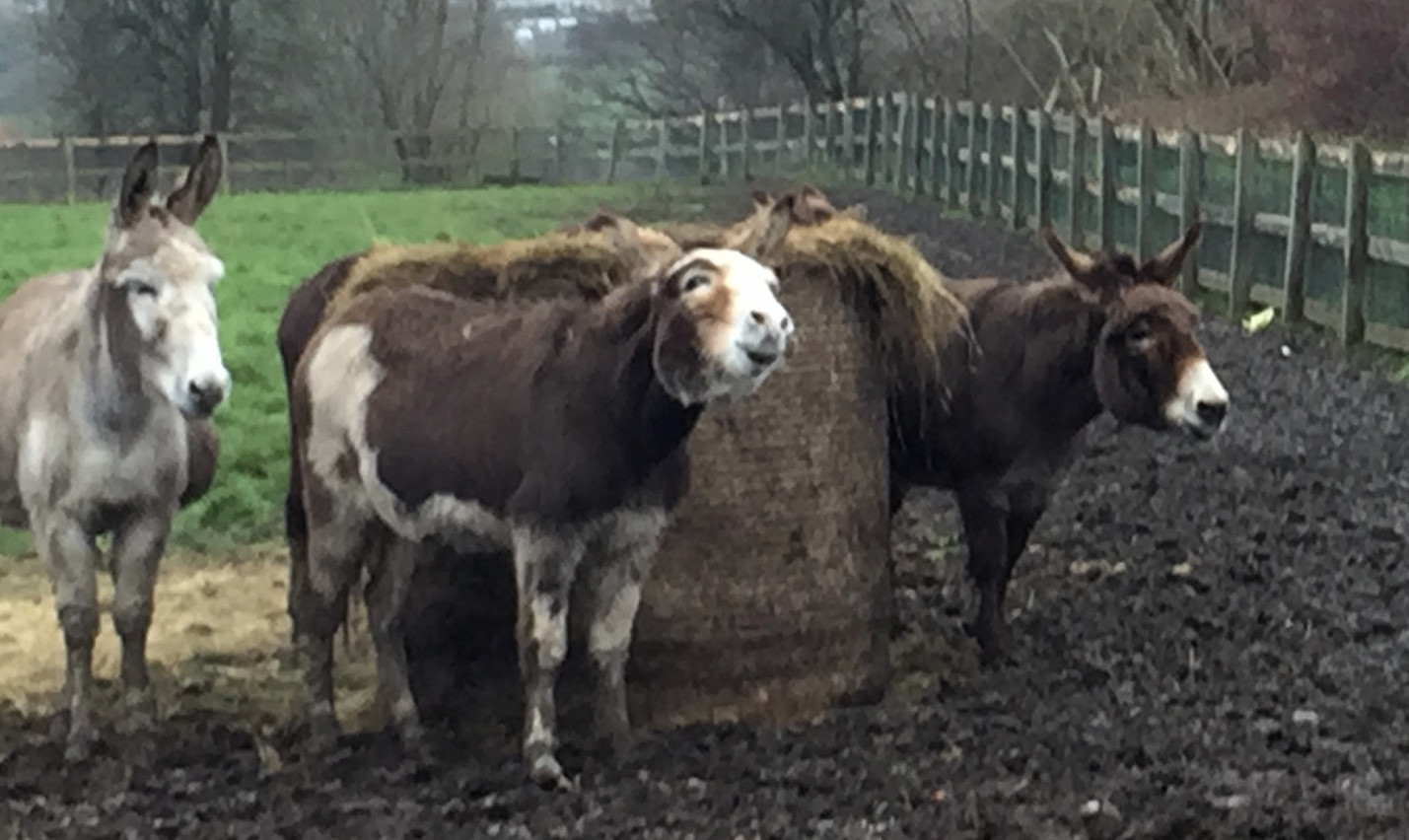
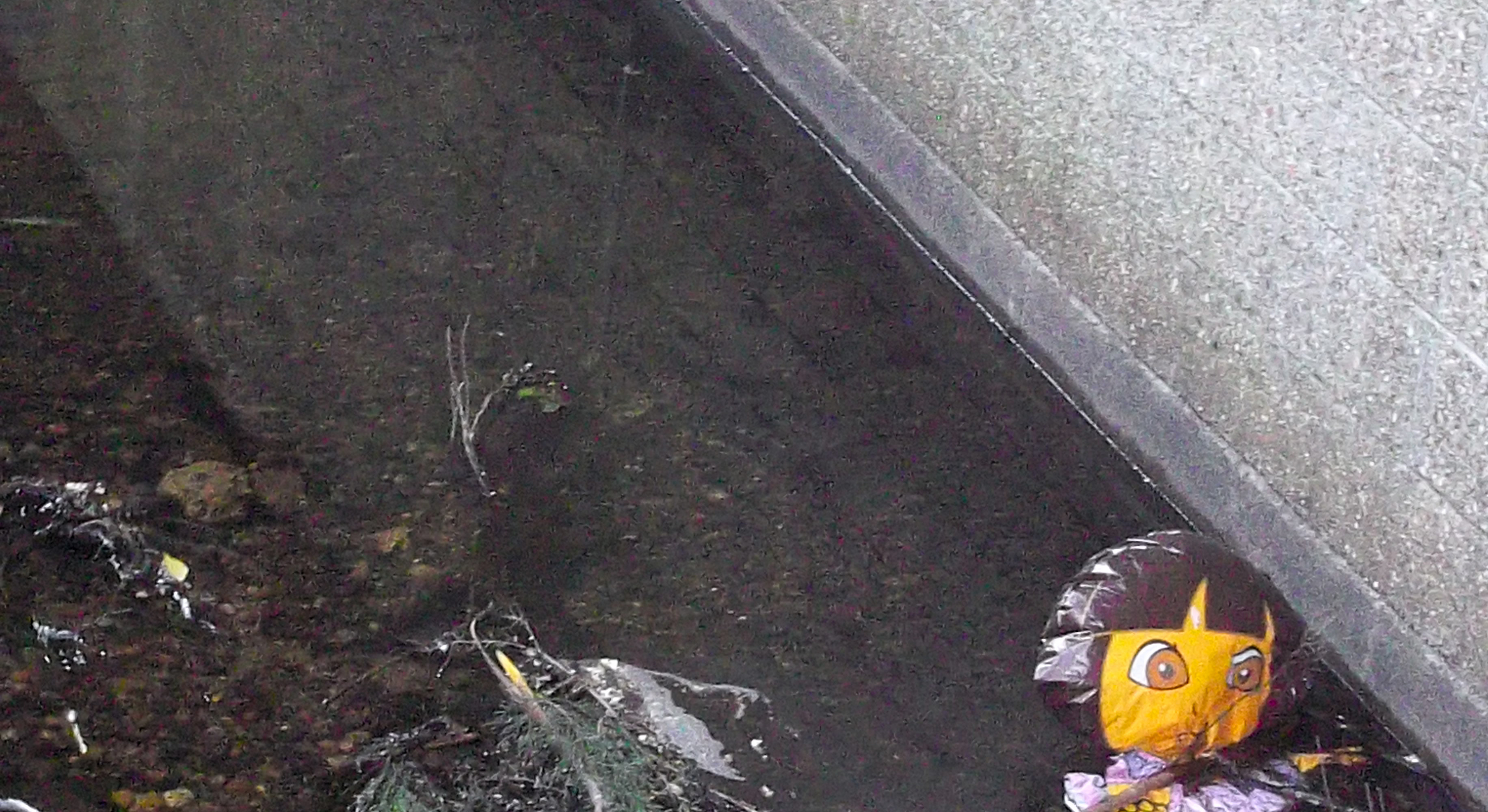
Mottingham FarmDonkeys in St John’s walkSad balloon in the Quaggy river
A brief walk College meadow, past football and cricket training pitches brings you to the nicely named, but less interesting to look at, Quaggy River. This is the end of section 2, and on to Grove Park station which brings you Back to London Bridge. Grove Park has a nice mural to Edith Nesbit, who wrote “The Railway Children”
Quaggy RiverThere is a Railway Children literary walk here.
The official walk is from Woolwich foot tunnel to Falconwood bridge and is 11.7km. The nearest train stations are Woolwich Arsenal station and Falconwood station. This adds a little under a km to the walk and is well worth the extra because Woolwich Arsenal and Woolwich Market are both interesting in their own right. Also, Woolwich Arsenal is a station on the newly opened Elizabeth line.
Woolwich Market entry sign
The Woolwich Market sign is the first thing you will see on leaving the station and although it is possibly not as vibrant as it has been at times in the past, there has been a market in that square for over 400 years! Walk through the market, through Woolwich Arsenal, a mixture of ancient cannons and modern apartments and just before you arrive at the Thames you will come to a lovely piece of open-air art – “Assembly” by Peter Burke. When it was first installed, many people (including me) thought it was by Anthony Gormley, but although there is a similarity in their work (both brilliant), this is definitely more in Burke’s style.
Assembly by Peter Burke
Soon we arrive at the entrance to Woolwich Foot Tunnel which goes under the Thames. This is the official starting point and when we emerge from this in a few weeks’ time, it will signify the completion of the Capital Ring. It was built in 1912 and you are allowed to cycle through as well as walk. If you have a car or lorry there is the Woolwich Free Ferry, I guess this would also be an option if you were claustrophobic and did not wish to walk under the river. There has been a ferry at this point for possibly a thousand years, there is reference to it in the Doomsday book in 1086.
Woolwich Free Ferry
This part of the Thames was a Royal Naval Dockyard in the times of Henry VIII and Elizabeth I. Many of the most famous ship were built here including the Ark Royal, HMS Vanguard and HMS Beagle, made famous by Darwin’s voyage. The Thames Barrier has been here since 1984, built after the 1953 floods in which hundreds of people drowned.
This is where we leave the river and head south through a series of parks. Maryon Park and Maryon Wilson Park were both originally sandpits and Maryon Park was the setting for the 1966 film “Blow Up”. Next up is Charlton Park which holds Charlton House, which was the home of the aforementioned Maryon Wilson Family. It looks very imposing, a fine example of a Jacobean house, it was built in 1612.
Charlton House built 1612
Then we go through Hornfair Park, where the infamous Charlton Horn Fair used to happen until it was banned in the 19th Century because of continuous “unseemly behavior”. Tut, tut, those naughty Victorians! On to Woolwich Common where the Royal Military Academy was situated until it moved to Sandhurst in 1948. This is where Generals like Gordon, Kitchener and Wingate were trained. Off the Common we cross Shooters Hill, which could be named for the soldiers that used to train here or for the Highwaymen for which it was notorious. Dick Turpin plied his trade here.
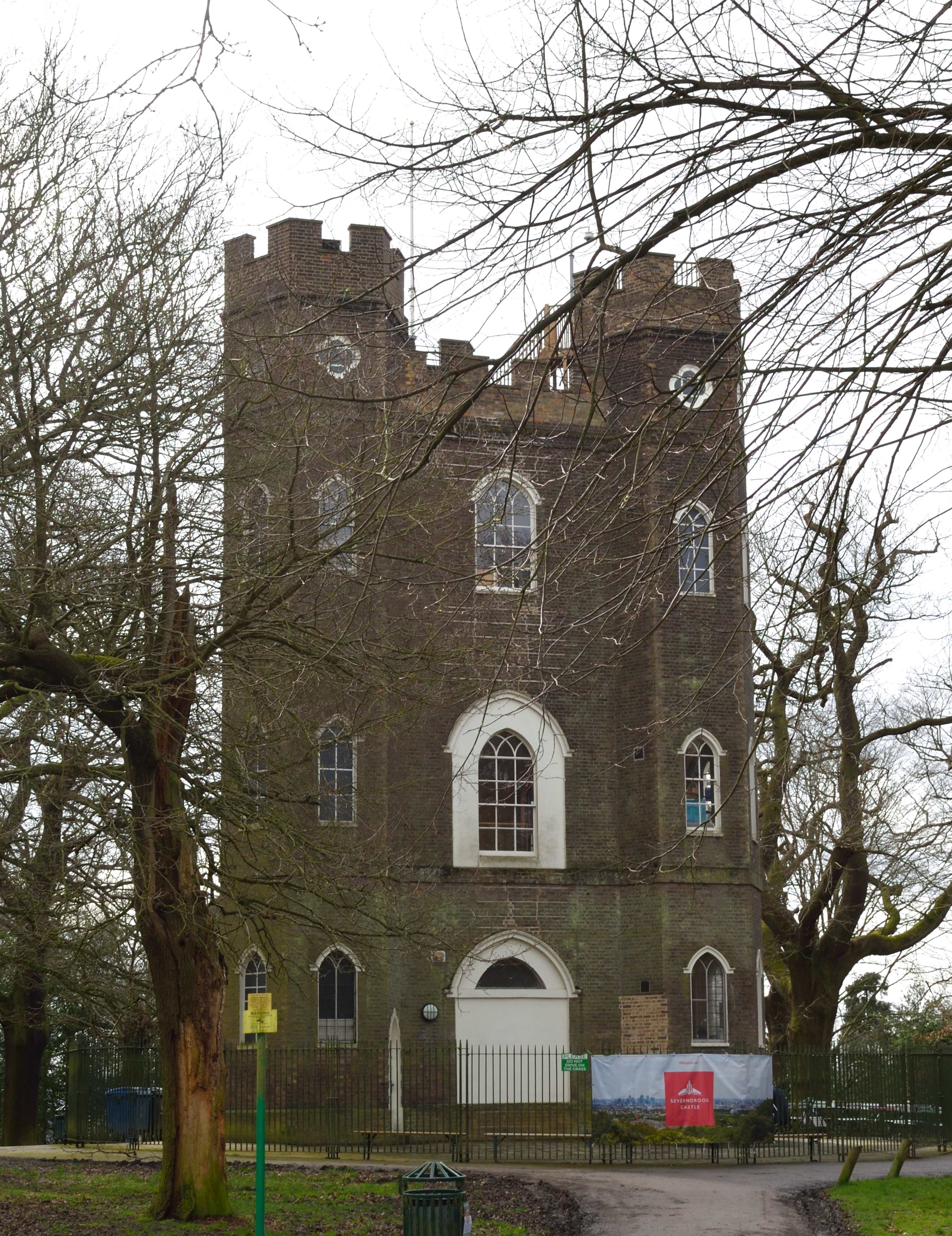
Severndroog Castle
Next, we go through a series of woods. Castle Wood which holds the triangular, Severndroog Castle, which is named after a pirate fortress in 18th Century India. This is the highest point of the Capital ring, giving long views over south London. Jack Wood is an oak wood and has a beautiful carpet of leaves, if you manage to visit it in a season when it hasn’t been too wet.
Carpet of Leaves
Oxleas Meadows lead into Oxleas wood. Oxleas Meadows has a lovely cafe which does tea, coffee, sandwiches and hot food. This also has lovely long views over the South of London. Oxleas Wood has many ring-necked parakeets. Bright green and noisy, you are likely to see them in many places on the Capital Ring, but they are in abundance here.
View from Oxleas Wood
Finally, a walk through Eltham Park North to Falconwood footbridge and then left to Falconwood station to catch the train back to London Bridge. A lovely 12.5k walk through leafy south London and I would guess that less than 1k of it was on city streets. If you have a morning or afternoon to spare in London this is a great way to spend it!
Ronnie Scott’s has been at the heart of the London Jazz scene for over 60 years. It opened in 1959 and has hosted many of the world’s most famous musicians in that time and continues to do so now. During the week they host shows in the late afternoon and evening, staying open until 3am. However, on Sundays they have and afternoon session between noon and 4pm, they serve brunch, and they have a live band playing between 1pm and 3pm.
This session is usually relaxed swing, and they serve a lunch menu – what better way to spend a chilled Sunday afternoon. If you wish to eat there is an extra charge, but the food is good quality, and the service was fast and unobtrusive on the day we were there. Once you have bought your seat ticket there is no pressure to buy either food or alcohol, the waiters refill your glasses with still water through the show.
On the Sunday I went, the music was of the highest quality, a set of Wayne Shorter songs, from his time with the Miles Davis band. Every seat in the intimate venue has a good view of the stage and the sound quality is what you would expect from one of the most famous jazz clubs in the world. The décor is dark, and the lights are low, the whole place is geared to showing off the band on stage to their best effect.
The sunshine is a shock when you leave at 4pm but it is a very pleasant way to spend a Sunday afternoon!
The Capital Ring is a 125km walk around London, mostly through parks and greenways, split into 15 parts – each starting and finishing near a bus, train or tube station. It is one of seven strategic London Walks that was part of a plan to make London the walking capital of Europe in the early 2000s. I don’t know what became of that plan, but the walks are still there. Leaflets were printed for each section of the Capital Ring and the London Loop at the time, which I still use, although London has much changed in the meantime, so I also use an updated downloadable map from Walk London as a backup these days.
Thames Barrier and London city skyline 2022Thames Barrier and London city skyline 2010
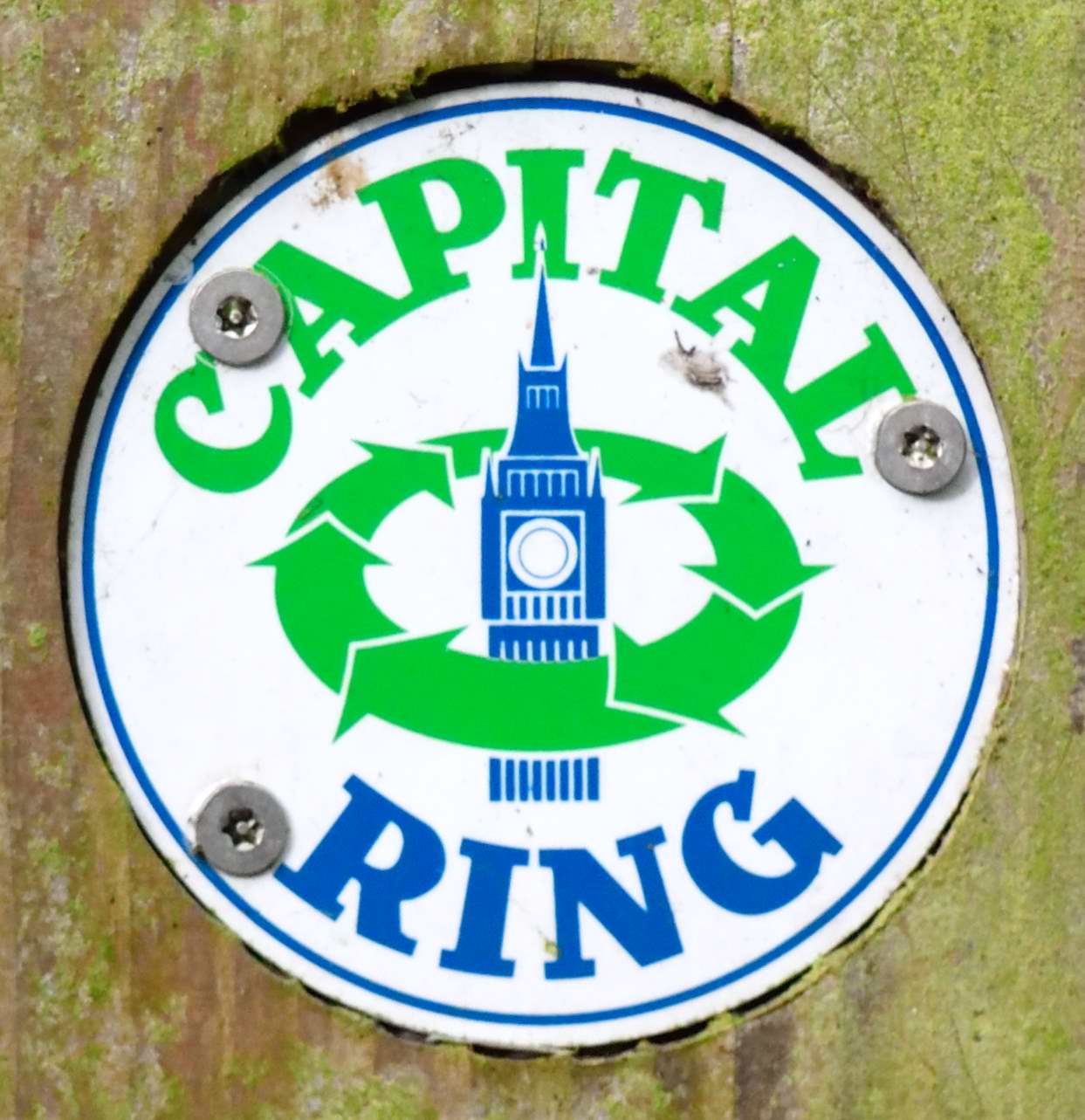
I particularly like the Capital Ring series of walks as each section is manageable without taking up the whole day and it still brings you to interesting parts of London that you are unlikely to visit for another reason. It is quite well signposted, the signs have Big Ben in blue with a green ring, made up of arrows, around it.
Moorhens on the Union Canal
I first walked the Capital Ring in 2010 and again in 2017. I also walked it in 2020 when it was very quiet due to Covid, so this will be my fourth time round. It is interesting to see the things that have changed …. and the things that have remained the same. It has some lovely views, some stunning buildings and it always surprises me how green London is, for such a large city. Many of London’s parks have cafes in them and I enjoy their variety too.
Rookery Cafe community notice board
The Capital Ring is an iconic London walk, taking in many technological, architectural and historic locations during the course of its circumnavigation of the city. It starts and finishes at the Woolwich foot tunnel south side to the east of London and crosses Richmond Bridge to the west, it goes as far north as Finchley and visits Croydon and Crystal Palace to the south. It gives a lovely insight into the history and workings of London, and I am looking forward to walking the 15 sections. Hopefully I will get some unusual views of London and some photos of nature and architecture from London’s suburbia.
As I intend this blog to be a celebration of all things London. This is the first in a series of songs that I associate with London. There are many, if you have suggestions for ones that you would like included, leave a comment and I will give them a listen and look up their links to London!
1 The Lambeth Walk – originally Lupino Lane
The Lambeth Walk is a song from the 1937 musical “Me and My Girl”, a musical about a working class London boy discovering that he is in line to inherit an earldom in Hampshire. Originally sung by Lupino Lane, a popular pre-war comedian, the song became a dance craze and was popular around the world, leading to covers by many of the big bands popular at the time, including Duke Ellington’s and Russ Mogan.
In 1940 The Ministry of Information made a short film of Nazi goose-stepping set to the tune of the Lambeth walk. This was shown in many cinemas, before the main feature, in Allied countries and was hugely popular at the time.
The stage musical was made into a film called The Lambeth Walk in 1939 and this was big hit too. The song was a genuine dance craze in Europe and America, through the Second World War. I recently found a YouTube video demonstrating how to do it. Lambeth Walk is an actual street just south of the Thames, in Lambeth near Vauxhall. It used to host a street market during the week and there used to be a pub on the corner of the street called The Lambeth Walk, but this is now closed. There are still council houses around the area and a small park called Doorstep Green, although it would be regarded as a very posh place to live now. It is where Charlie Chaplin lived as a child. Ian Dury also mentions this street in one of his songs “This is what we find”.
The makers of Whitley Neil Gins are The City of London Distillery, and on many evenings they host distillery tours and gin tasting evenings. These are held with groups of 10 people or less. When we arrived we were given a welcome drink, ours was dry gin and prosecco, while we awaited the arrival of the other attendees. Once they arrived we were taken to an alcove to the side of the main bar where tables were set up with four gin flights, botanicals and an information sheet.
To start we had a brief rundown of the history of gin and the difference between different types of gin. Then we tasted the first two and chatted about their taste. They will bring tonic or any other mixer you have with your gin. After a few minutes discussion we were brought to the still room where we got to meet the stills. Yes, they all have names and they are spoken about as though they are people. The tour was interesting and lively, because Stephen, who was our guide, was obviously interested in his subject with regard to both history and taste.
We heard how the gin is made and how it is flavoured, then we went back to taste the last two gins. Perhaps I was lucky with the crowd on this occasion, but by the time we were tasting the final gin, our conversation had moved on to more general discussions – about holidays, museums and London life. The atmosphere was relaxed and convivial. There was an amount of background noise, enough that you would notice it, but certainly not at a level that would disturb your evening. The tour and tasting event lasted a little over on hour, and a few of us stayed for an extra half an hour while we finished our tasting flights.
A real bonus was the discovery of the Whitley Neil/London Distillery Bar in Bride Street. There are not many bars that are not rammed on a summer evening in central London. The bar itself is lovely, and it is relatively quiet given its position just off Fleet Street, about a three minute walk from St Paul’s Cathedral. It is underground and down a small alleyway, so not many people will know it is there – however despite this, it is very easy to get to, less than a 5-minute walk from either London Blackfriars or City Thameslink stations. There are also many bus routes that go up Fleet Street. I will remember it for when I am next meeting a gin drinker in the City.
The Sh!t-Faced Shakespeare Company, now Magnificent Bastard Productions, have been bringing various Shakespeare plays to theatres around the UK for a number of years. It is an improv styled show where one of the cast has drunk one third of a bottle of spirits and a number of beers before taking to the stage. The comedy comes from the sober actors attempts to keep their drunken compatriot onstage and on track.
It is great fun to watch and it also looks like it is great fun to take part. Drunken Hamlet takes pleasure in his leeway to make things difficult for the rest of the cast, trying to push them off course and attempting to make them laugh. There is audience participation, in that a couple of audience members are chosen to call for the drunk actor to have another drink if they feel that he is sobering up. Also, Polonius is played by an audience member, this is a brave choice, given that his is the first death scene and the only people on stage are the audience member, the drunk actor and Gertrude, his mother.
It is a good introduction to Hamlet, because it zips through the simplified storyline in around an hour and a half. Drunken Hamlet forgets his lines surprisingly seldom – he makes a great fist of the “to be or not to be” soliloquy despite being made to drink while reciting it- and those parts where he does get lost he has the professionalism to give the audience a synopsis of the scene in modern language.
Hamlet, of all Shakespeare’s plays, is the one that is most often taken too seriously and it is often forgotten that these plays were written as mass entertainment, and that the performances as well as the audiences were raucous and bawdy. This version emphasises that element of the Bard and works very well on that level. I really enjoyed Sh!t-Faced Shakespeare’s Hamlet and I look forward to seeing others in their repertoire in future.
Wandsworth is a suburb of South London that is well served with places to eat. Bellevue Road in particular is an attractive road with the broad expanse of Wandsworth Common along one side, and an array of restaurants, pubs, artisan tea rooms and independent shops along the other. Brinkley’s Kitchen is near the top of this road, we chose it for a late lunch on a Sunday afternoon.
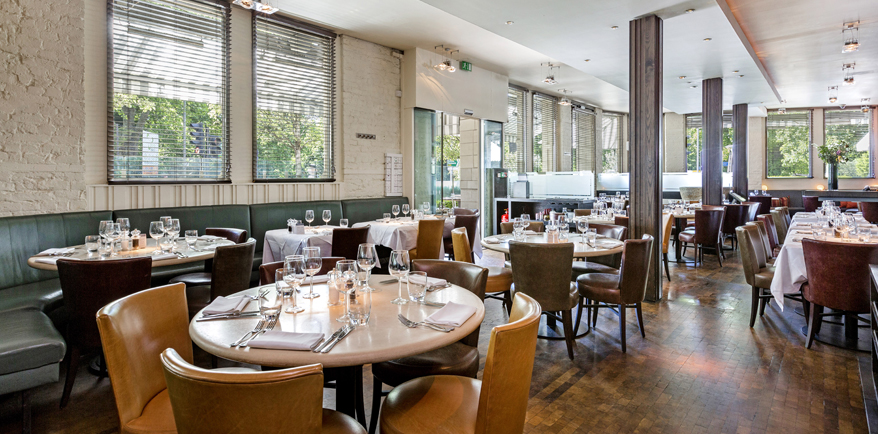
The restaurant is decorated in a smart contemporary manner. The photos on its website show it as very bright and airy, but the blinds were all drawn on the afternoon we were there. There was no tablecloth on our table for three, but it does have linen napkins, nice cutlery and glasses. The brunch menu has good choice, we opted for roast beef and a steak. The wines by the glass had a more limited selection, for example they only had one rose. When I asked the waiter what it was like – as I didn’t know it – he told me it was very good. I said I was hoping for a more descriptive reply, he just said “you will love it”. So, I asked to taste before I chose and it was fine, although I suspect the whole bottle cost a fraction of what they charged for the glass.
The food was good but unremarkable. The beef was overcooked for my taste but the gravy was nice. When I pay top end prices for a Sunday roast, I would expect the Yorkshire pudding to be freshly prepared. These had clearly been made earlier and reheated. The ribeye was okay and the chips were hot and fresh. When my friend asked for tomato sauce for her chips, they brought a bottle of ketchup to the table, at least it was Heinz. It came without the lid, so much hitting the bottom of the bottle was required to get any out.
The service was entertaining, every different waiter who came to the table enquired “How is your day going?” which became a little Stepford Wives creepy after the sixth time of asking, especially after the busboy asked it twice in five minutes without waiting for a reply. I didn’t like the fact that they brought us the bill without us asking for it, I felt they were rushing us to finish our drinks.
Overall, Brinkley’s Kitchen served us reasonable quality pub food, but charged high end restaurant prices. In an area, indeed even a street, where there are so many fine places to eat, it will not be difficult to find somewhere that gives far better value for money.
Kensington Palace has been a place of residence of the British Royal family since 1689. It was bought as a completed building by William and Mary when they ascended to the throne. Those parts not being lived in are open to the public. Currently they contain four exhibitions, one ticket allows entry to all four. Entrance to the Palace gardens, including the attractive sunken gardens is free and these are certainly worth the time it takes to walk round them on days when the weather is clement. The first two exhibitions are about Queen Victoria and Princess Diana’s dresses. They are both interesting in different ways, I have a blog post about them here: Kensington Palace, London W8. Part 1. Victoria Revealed & Diana, her fashion story.
The next two exhibitions are The Queens’ State Apartments, which has the rooms decorated as they were in the 1690s, during the reign of William and Mary, and The King’s State Apartments, which has the rooms restored in the way they were in the early 1700s, during the reign of Georges I and II.
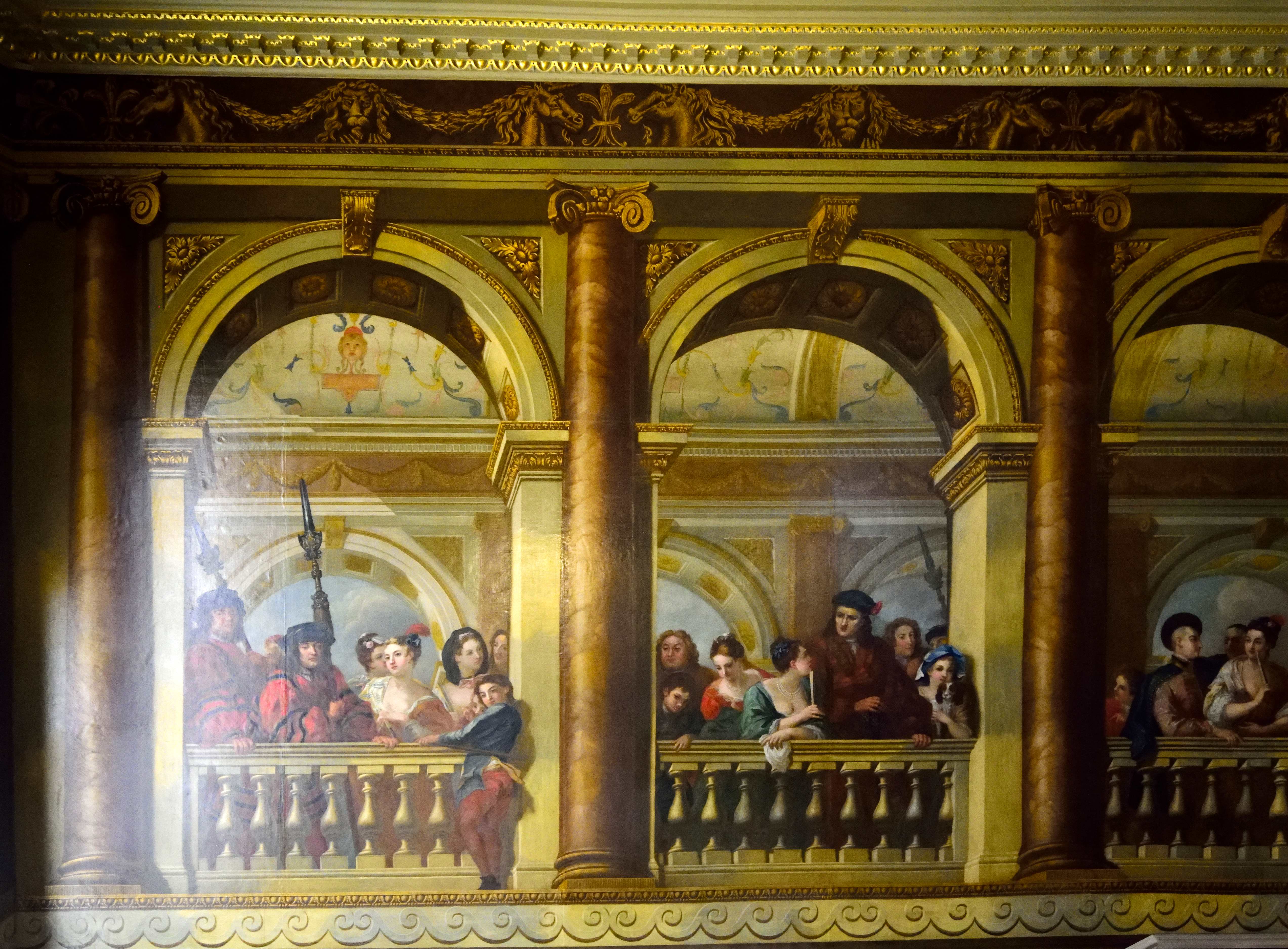
These are arranged in reverse chronological order, entry is through the sumptuous King’s Grand Staircase. Decorated in the time of George II, this is broad and spacious, we are overlooked by painted figures as we ascend. The staircase is certainly grand, immediately we can tell that we are in an era when conspicuous wealth was expected of the monarchy. The mural was painted by William Kent in 1724 and contains depictions of many actual members of the royal court at the time. Kent even included himself in the painting, he is the man wearing a brown turban and holding an artist’s palette, and the lady looking over his shoulder was reportedly his mistress.
The rooms in the King’s State Apartments have many wonderful Georgian features. The fireplaces and ceilings are spectacular. One ceiling is decorated with shields representing the members of the Order of the Garter, with its insignia making the centrepiece. The King’s Gallery has a mantelpiece with a map of the British Isles and Western Europe. This is linked to a weather vane on the roof, so that King George could see how the wind was affecting his fleet. It is still working today. The drawing room has some interesting examples of gaming tables from the era and the best perspective of the gardens, down to the lake.
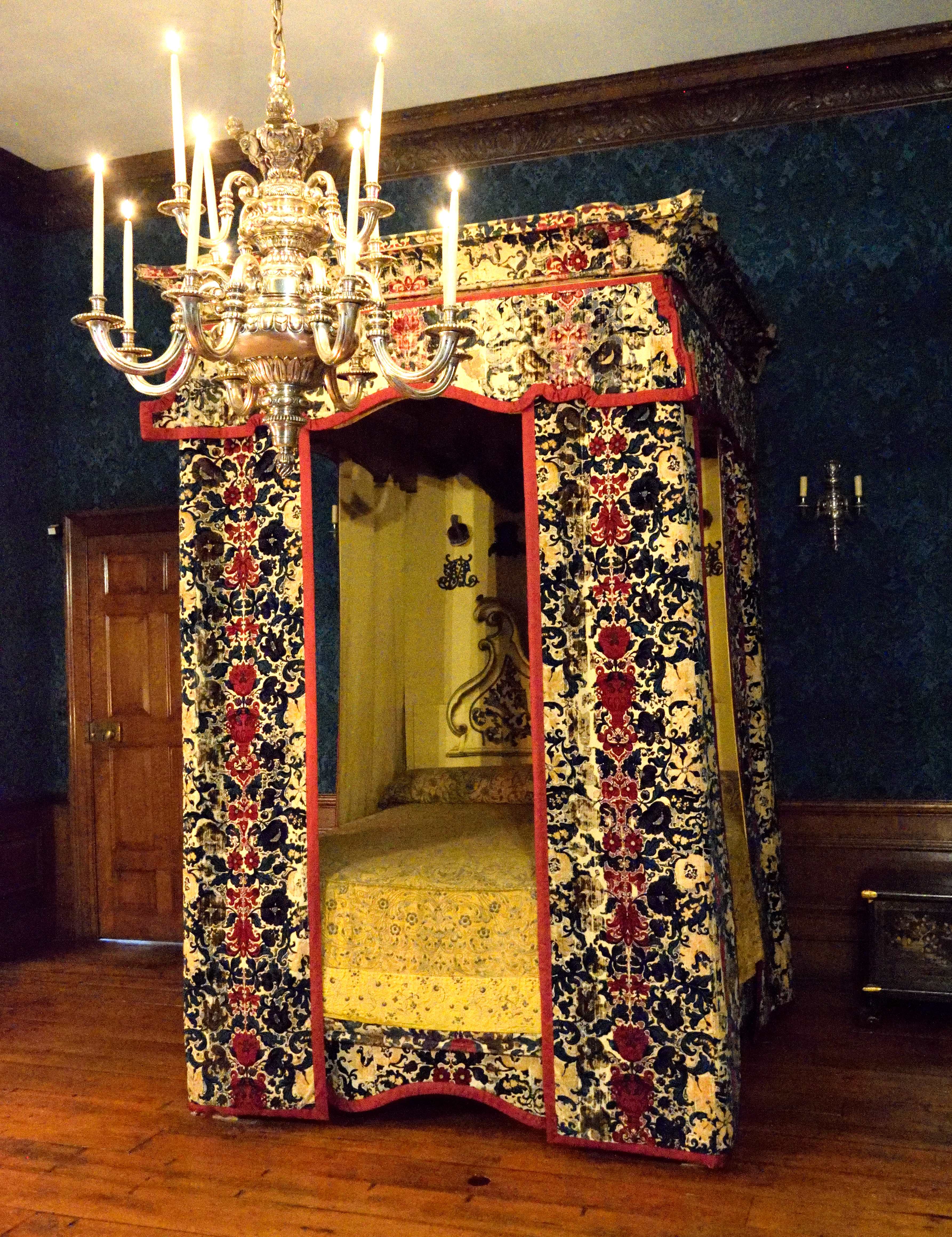
The Queen’s State Apartments are 17th Century and this exhibition is more intimate, showing their bedrooms, their dining room and gives a little more of an insight into how they went about their, still opulent, daily lives. The furniture and delft is remarkable and the tapestries and bed coverings are extravagant. It is interesting to see the shortness of the four poster bed, it was thought at that time to be beneficial to health to sleep in a sitting position.
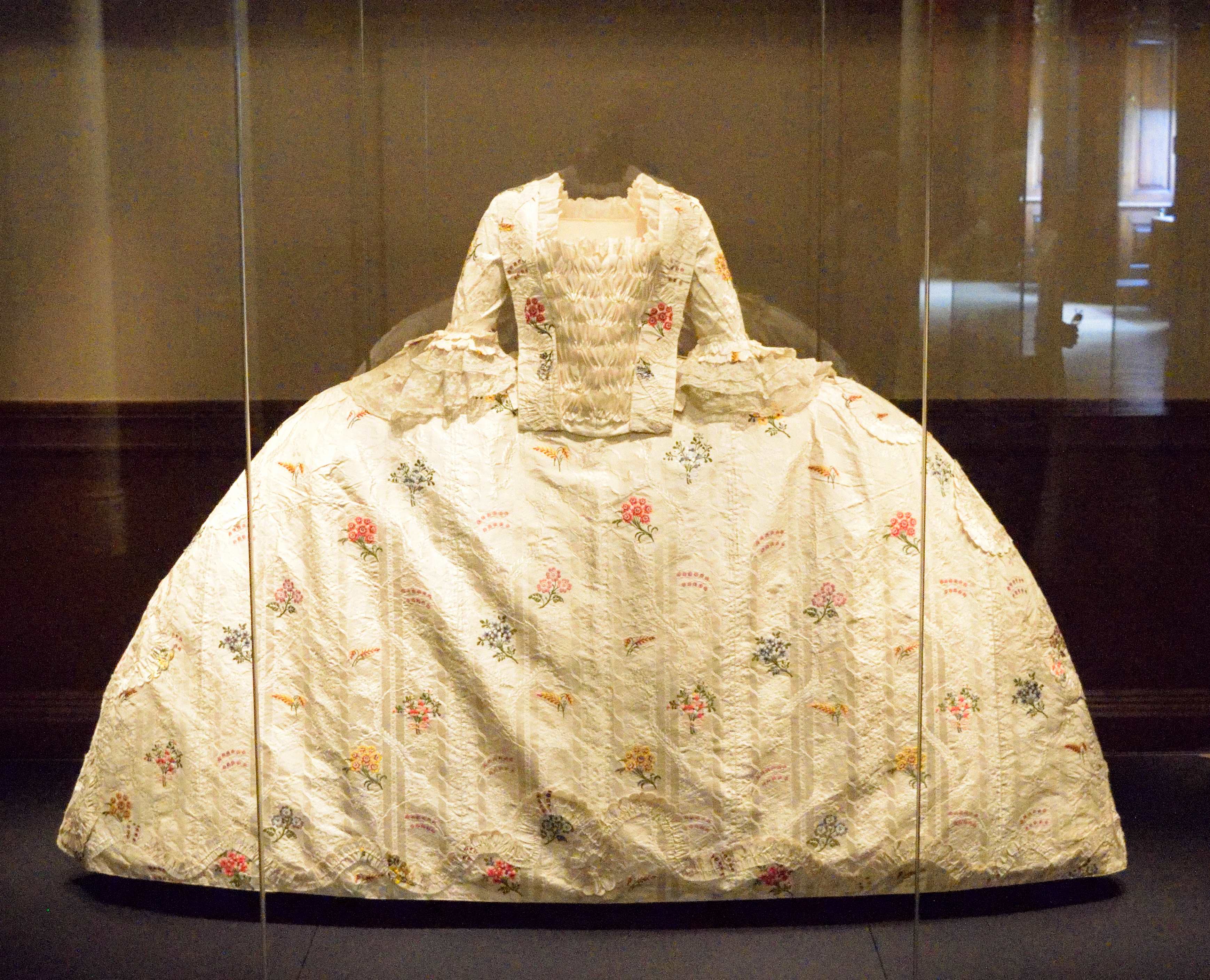
The exhibitions also contain lovely examples of the fashions at the time, there are some wonderful farthingale supported embroidered skirts, which look spectacular but must have been completely impractical to wear.
Between all four of the shows here, it would be difficult to do it justice in less than a couple of hours, there is almost too much to see in one visit. Perhaps it would be worth viewing the Palace on one day and the Gardens, Park and Orangery, which are free to enter, on another. This way you could spread the visit over a couple of days and only have to pay the, not inconsiderable, entry fee once. Kensington Palace and Gardens is one of the most historic visitor attractions in London, the exhibitions are well stocked and informative, although it is not cheap to visit, it should be among the sights that you consider when in London. It is free to enter with an Art Pass, if you have one of these you should not miss it, Kensington Palace is a highlight of their offer.












 The London Lark