Categories
walks

The Capital Ring, Section 1

12.5km Station to Station

The official walk is from Woolwich foot tunnel to Falconwood bridge and is 11.7km. The nearest train stations are Woolwich Arsenal station and Falconwood station. This adds a little under a km to the walk and is well worth the extra because Woolwich Arsenal and Woolwich Market are both interesting in their own right. Also, Woolwich Arsenal is a station on the newly opened Elizabeth line.

Woolwich Market entry sign

The Woolwich Market sign is the first thing you will see on leaving the station and although it is possibly not as vibrant as it has been at times in the past, there has been a market in that square for over 400 years! Walk through the market, through Woolwich Arsenal, a mixture of ancient cannons and modern apartments and just before you arrive at the Thames you will come to a lovely piece of open-air art – “Assembly” by Peter Burke. When it was first installed, many people (including me) thought it was by Anthony Gormley, but although there is a similarity in their work (both brilliant), this is definitely more in Burke’s style.

Assembly by Peter Burke

Soon we arrive at the entrance to Woolwich Foot Tunnel which goes under the Thames. This is the official starting point and when we emerge from this in a few weeks’ time, it will signify the completion of the Capital Ring. It was built in 1912 and you are allowed to cycle through as well as walk. If you have a car or lorry there is the Woolwich Free Ferry, I guess this would also be an option if you were claustrophobic and did not wish to walk under the river. There has been a ferry at this point for possibly a thousand years, there is reference to it in the Doomsday book in 1086.

Woolwich Free Ferry

This part of the Thames was a Royal Naval Dockyard in the times of Henry VIII and Elizabeth I. Many of the most famous ship were built here including the Ark Royal, HMS Vanguard and HMS Beagle, made famous by Darwin’s voyage. The Thames Barrier has been here since 1984, built after the 1953 floods in which hundreds of people drowned.

This is where we leave the river and head south through a series of parks. Maryon Park and Maryon Wilson Park were both originally sandpits and Maryon Park was the setting for the 1966 film “Blow Up”. Next up is Charlton Park which holds Charlton House, which was the home of the aforementioned Maryon Wilson Family. It looks very imposing, a fine example of a Jacobean house, it was built in 1612.

Charlton House built 1612

Then we go through Hornfair Park, where the infamous Charlton Horn Fair used to happen until it was banned in the 19th Century because of continuous “unseemly behavior”. Tut, tut, those naughty Victorians! On to Woolwich Common where the Royal Military Academy was situated until it moved to Sandhurst in 1948. This is where Generals like Gordon, Kitchener and Wingate were trained. Off the Common we cross Shooters Hill, which could be named for the soldiers that used to train here or for the Highwaymen for which it was notorious. Dick Turpin plied his trade here.
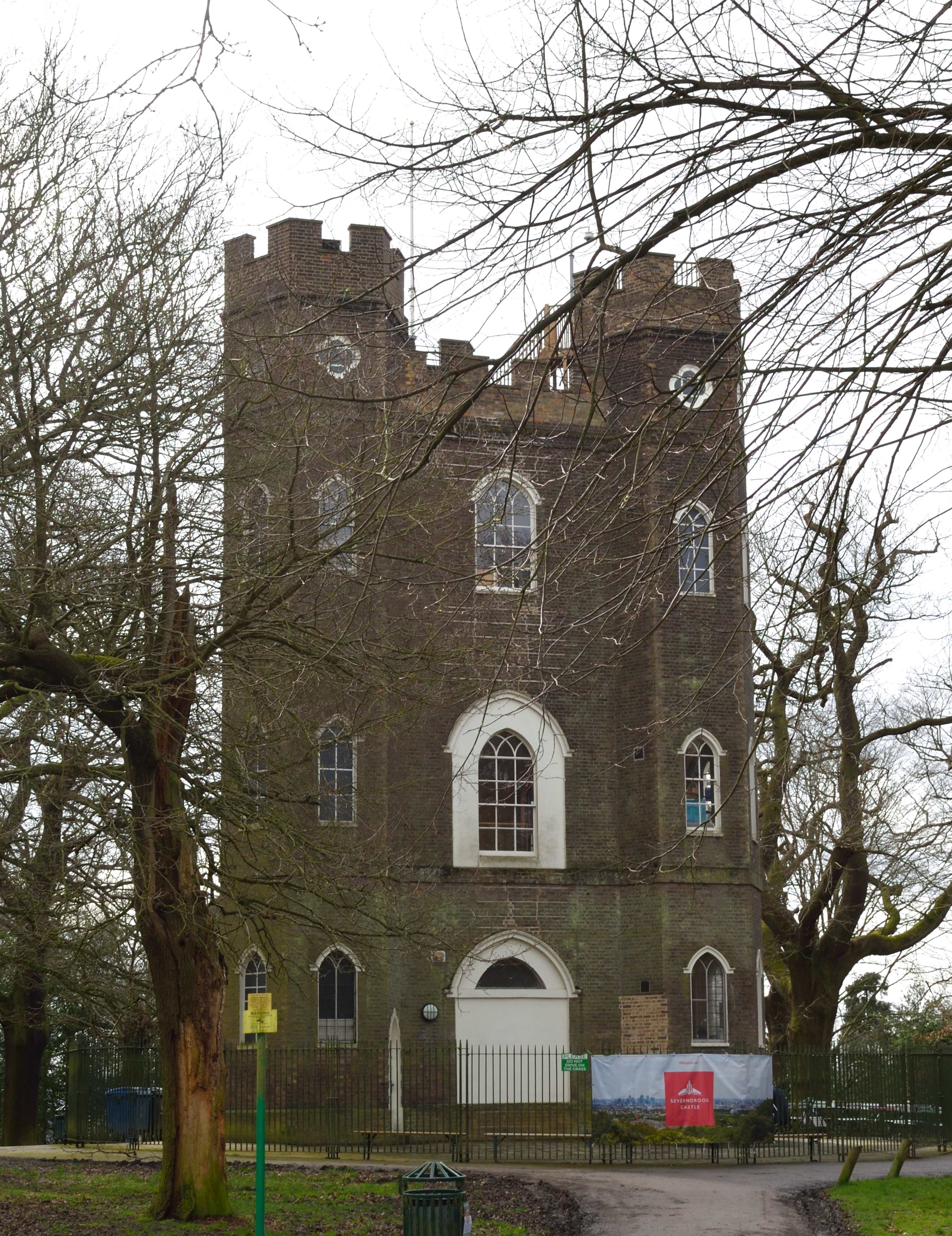
Severndroog Castle

Next, we go through a series of woods. Castle Wood which holds the triangular, Severndroog Castle, which is named after a pirate fortress in 18th Century India. This is the highest point of the Capital ring, giving long views over south London. Jack Wood is an oak wood and has a beautiful carpet of leaves, if you manage to visit it in a season when it hasn’t been too wet.

Carpet of Leaves

Oxleas Meadows lead into Oxleas wood. Oxleas Meadows has a lovely cafe which does tea, coffee, sandwiches and hot food. This also has lovely long views over the South of London. Oxleas Wood has many ring-necked parakeets. Bright green and noisy, you are likely to see them in many places on the Capital Ring, but they are in abundance here.

View from Oxleas Wood

Finally, a walk through Eltham Park North to Falconwood footbridge and then left to Falconwood station to catch the train back to London Bridge. A lovely 12.5k walk through leafy south London and I would guess that less than 1k of it was on city streets. If you have a morning or afternoon to spare in London this is a great way to spend it!
Categories
Theatre review

Allelujah!, Bridge Theatre, London SE1

alellujah

Alan Bennett has consistently been one of England’s best playwrights over the course of the past fifty years. His last couple of plays have been well written and funny, but were a little too cosy to be among my personal favourites of his work. Having said that, everything he writes is at least very good and nicely droll.

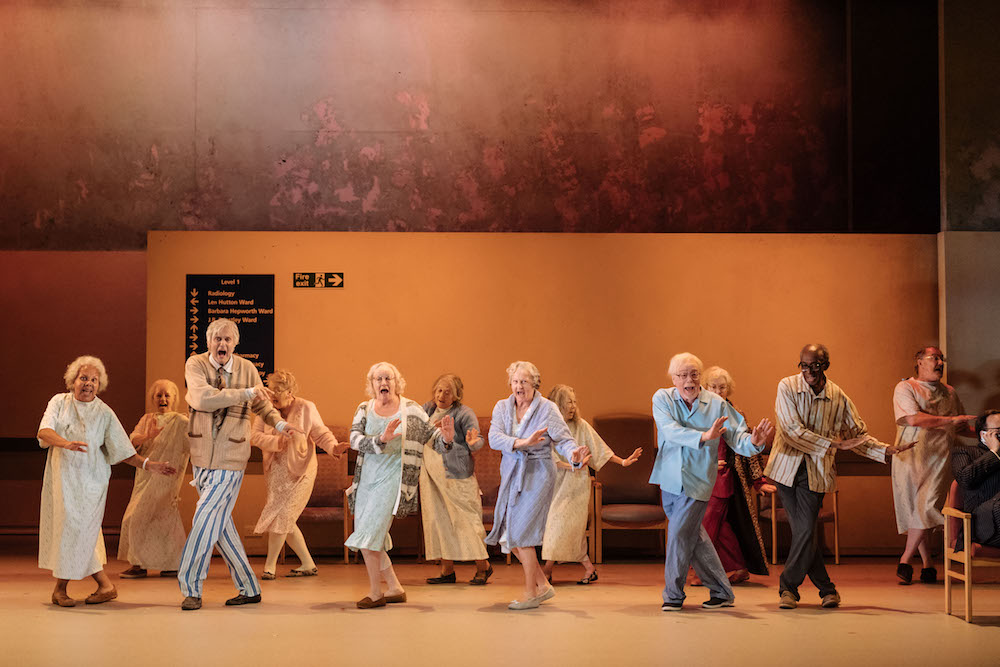
Allelujah! is set in the geriatric ward of a hospital that is at risk of closure, and for most of the first act we are lulled into a gentle musical comedy about the hardships and indignities of growing old. However, towards the end of the act, things take an unexpected and darker direction and we realise that, during the first third of the play, the scene was being set for a biting political satire. Alan Bennett is cross, and this irritation has led to some of his best writing in years.

This is a play about how poorly we treat the aged in our society and it examines the reasons why this is the case, while entertaining us with smart one liners and whimsical song and dance routines. Nicholas Hynter directs the play, he is a long time collaborator with Bennett and he complements him well. The cast is big and there are many good performances. I particularly liked Sacha Dhawan as Valentine, diffident at first, but bristling with restrained anger by the end. Samuel Barnett is good too, he has an unlikable character to play, yet he manages to have us understand his motivation.

The play has so many scene changes that it might have been written for television. The ingenious set design prevents us feeling that the stage is in a constant state of flux. Arlene Phillips is the choreographer and she has a fine line to tread between keeping the routines tight and having us remember that these people are too old and unwell to be released from hospital – she does a fine job.

The real star of the show is the writing. I love Alan Bennett’s balance, he always presents both sides of an argument. Even when he is presenting a personal point of view, I admire his fairness in giving the other side a voice. He does this particularly well here, he writes some characters with quite unsavoury personality traits in this play, yet they are unapologetic and we understand that they feel justified in their actions, even if we cannot condone them ourselves.

I hope that I haven’t made the play seem too dark and political, because it is a truly funny and entertaining show, made all the better by the fact that it makes you think about the way the old and infirm are treated in our society. I think this is possibly my favourite Alan Bennett play yet.


Categories
Attractions Days Out

Southwark Cathedral, London SE1


Wooden effigy of Unknown Knight
Reputedly the oldest wooden effigy in Britain


Literally a few steps away from the hustle of Borough Market is the calm oasis of Southwark Cathedral. It is a wonderful mixture of old and new. It contains a wooden effigy of a knight from the 13th Century, reputedly the oldest in Britain and its Northern cloister was opened in 2001 by Nelson Mandela.

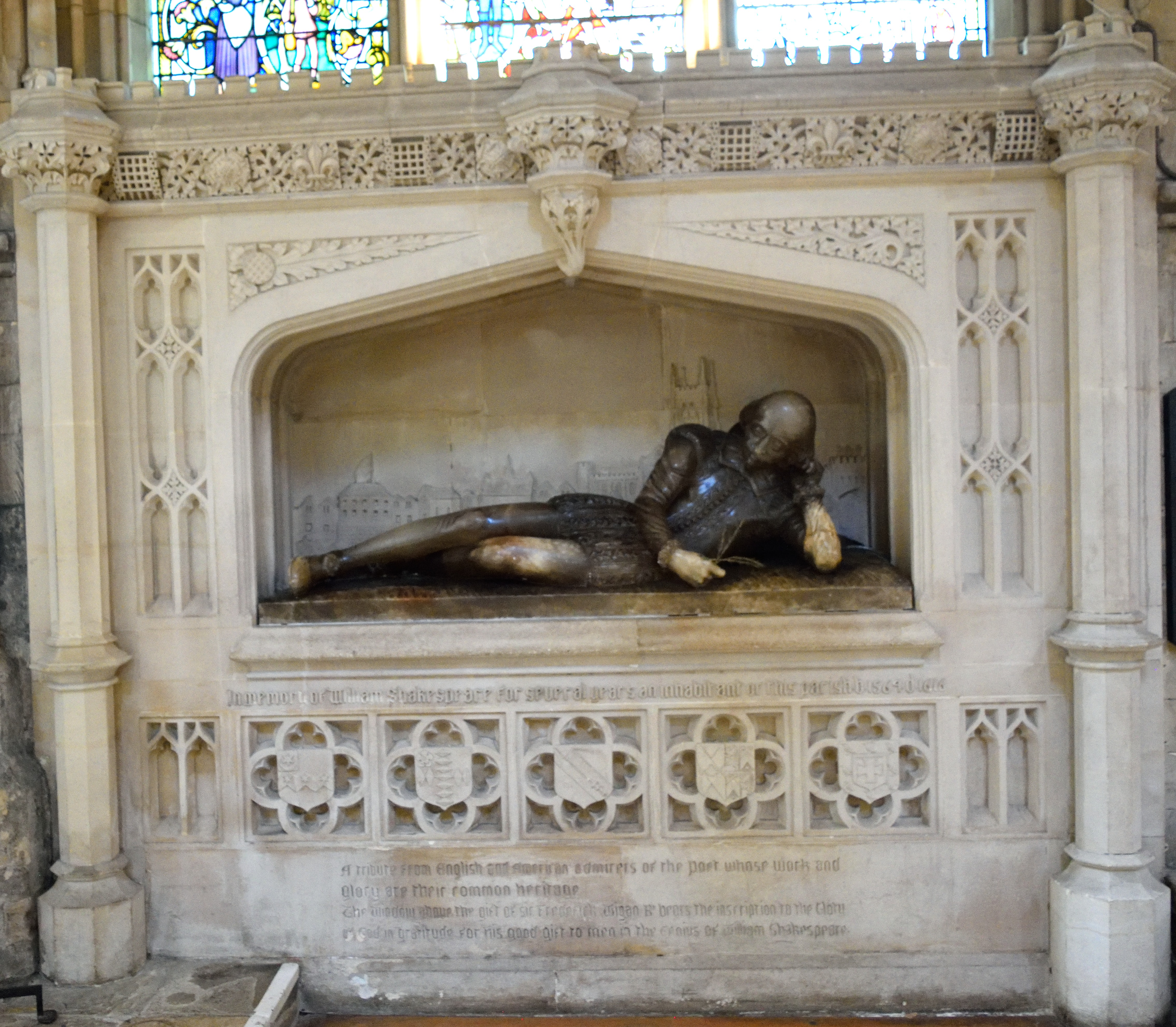
Shakespeare

There are monuments and memorials from many time periods in between. There is a stained glass window and bas-relief dedicated to Shakespeare, his brother Edmund is buried here. The Cathedral is on the South Bank of the Thames where many of the theatres used to be in Shakespeare’s time.


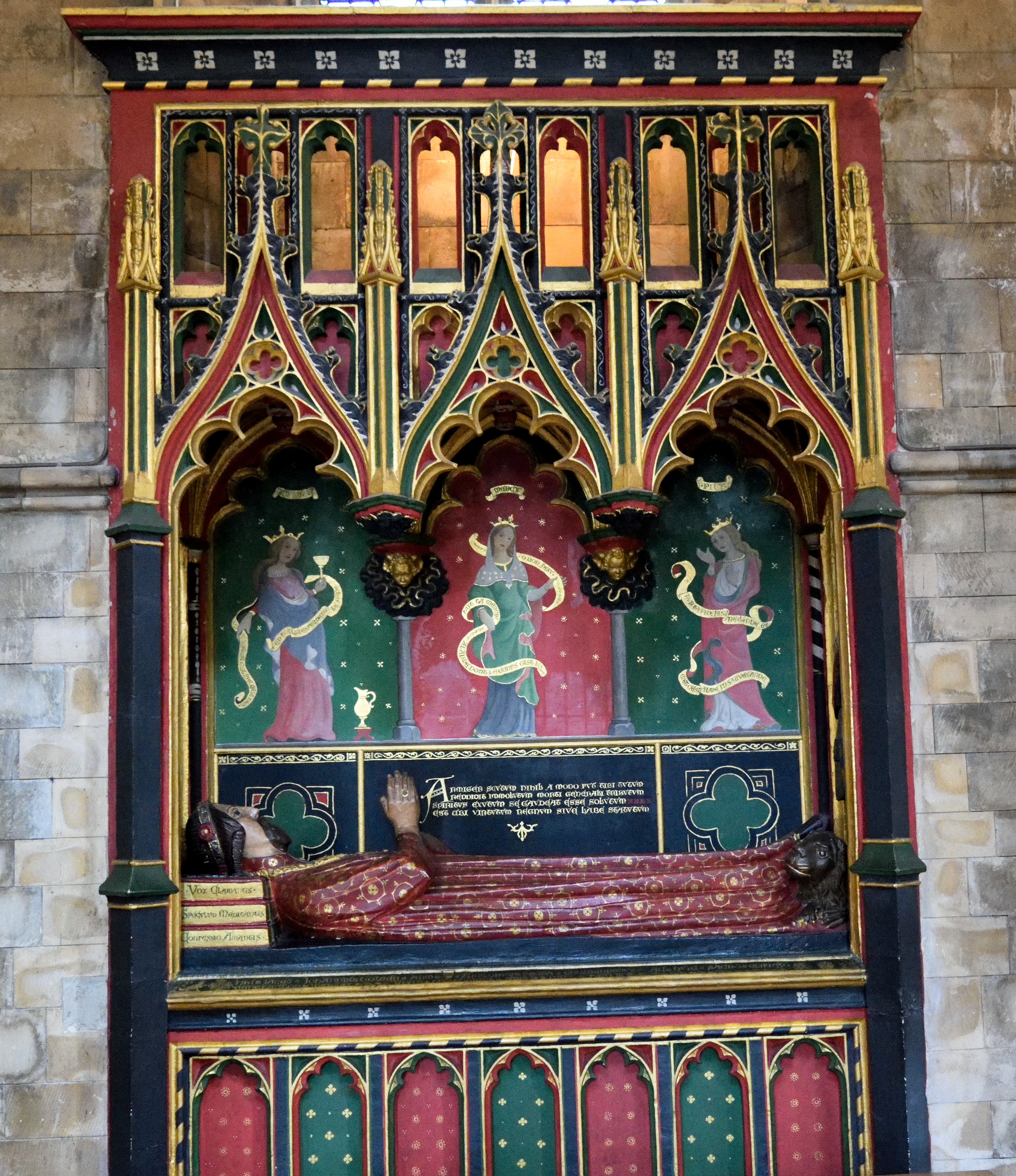
Tomb of Thomas Gower


There are tombs of quite different types, from the multi-coloured wooden one of the poet, Thomas Gower, a contemporary of Chaucer, to the more austere and eerie one of Thomas Cure, a 16th Century parliamentarian.


Thomas Cure
Tomb of Thomas Cure


There are memorials to those who lost their lives in both the first and second world wars, victims of the Marchioness sinking in 1986 and Isabella Gilmore, the first deaconess of Southwark. There are also monuments to both Nelson Mandela and Desmond Tutu.

Deaconess memorial

While you are here don’t forget to look at the fixtures and fittings in the building. The black marble font and outrageously ornate wooden cover, at the nave of the church is one highlight, the eagle lectern, near the altar is another.

Lectern

Added to all this is the architectural splendour of the Cathedral. There are details here from a whole range of different engineering periods. The vaulted ceilings in the main church are beautiful, but the marble bricked ceilings in the naves are equally so.

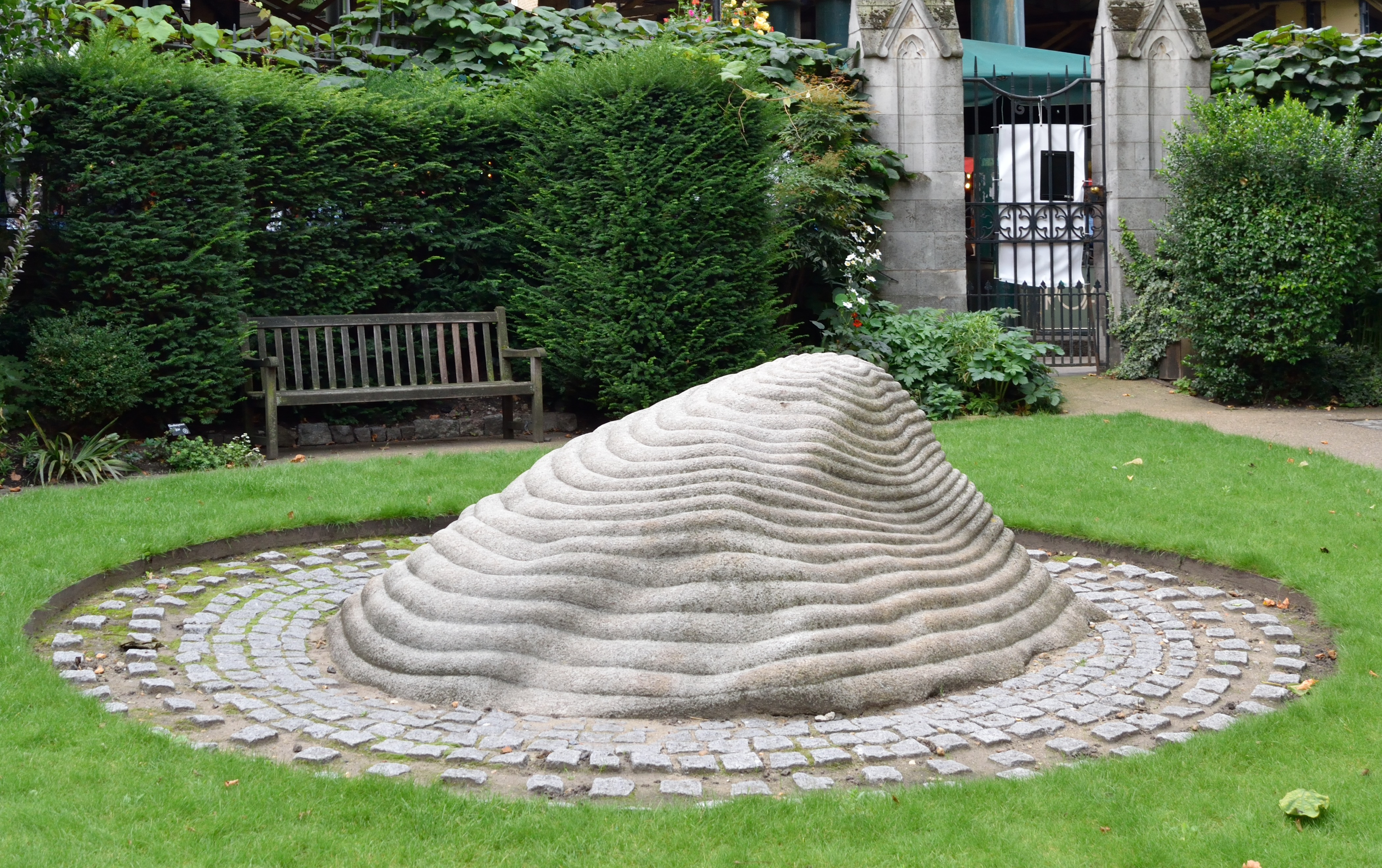
Sculpture
Walk through the church into the garden and you can sit in verdant peace, with the noise of the market in the background. There are a couple of unusual sculptures here, but the flowers are beautiful. An often overlooked gem in the heart of tourist London, just the place to dip in to, if you feel the need to step out of the boisterous city for a quiet break.

DSC_3270