-
Blue Stockings, The Yard Theatre, London E9
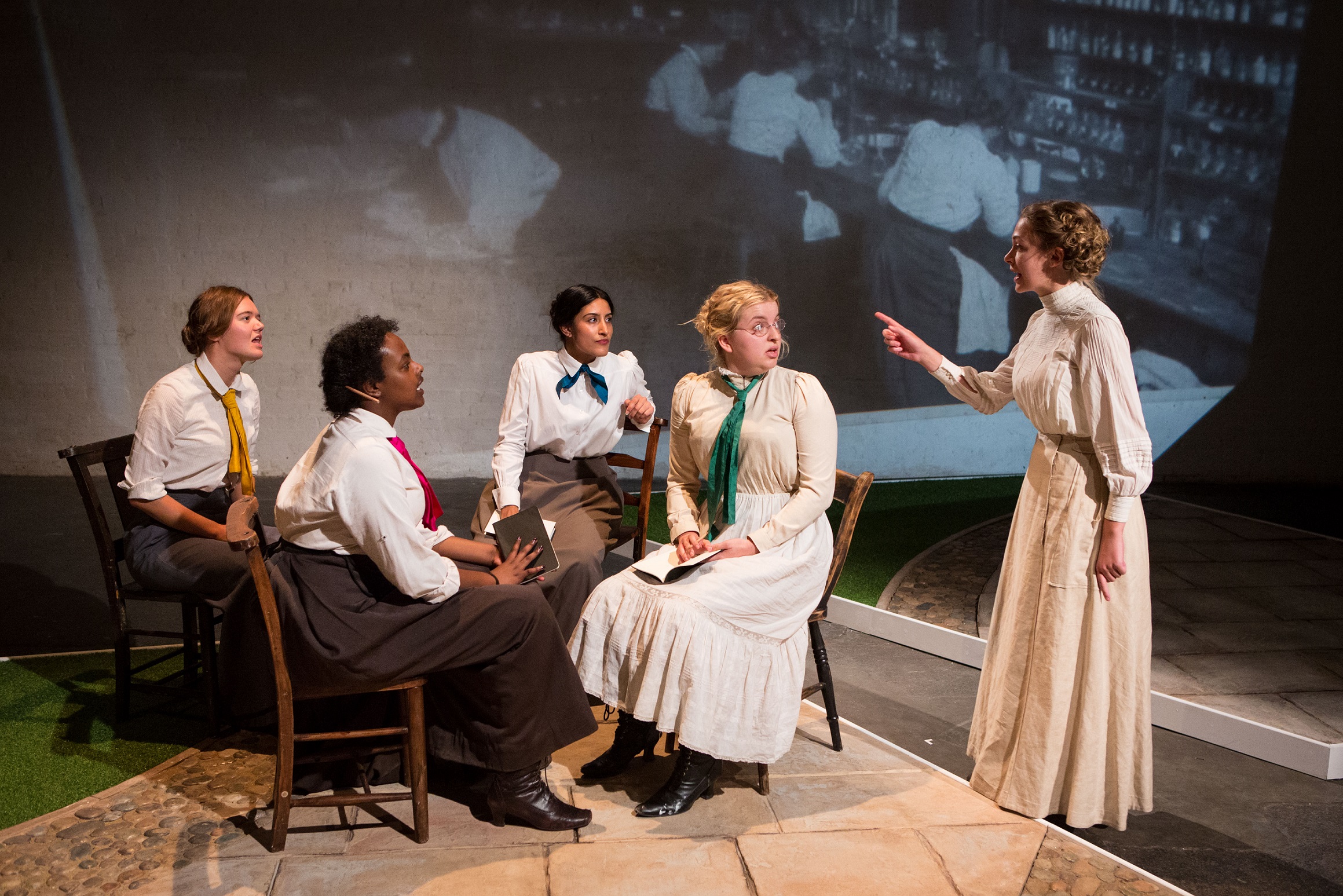
It is a shocking fact that women were not allowed to graduate from Cambridge University until 1948. This play is set 50 years earlier and concerns four ladies who attended Girton College, Cambridge at the end of the 19th Century. It is a well written and cogent drama about the beginnings of the women rights movement. it gives voice to all points of view at that time, ranging from those who believed that education would distract women from being good wives to those who thought that noisy demonstration calling for immediate emancipation was the only way forward.
The Yard is an interesting theatre space, the seats are close to the action, but the wide stage and high ceilings make it very open. I really like the apparent simplicity of the direction, schoolroom projectors set the scenes, blackboard writings mark us as being in a classroom, a pictures of an orchard or Van Gogh’s night sky move us outdoors. This is inventive and effective.
The quality of the acting is very high and there are nice performances even in the smaller parts. Mischa Jones is fabulous as Tess, she brings a nice balance of intelligence and innocence to her role. Laura Trosser has a great part as Miss Blake, resolutely playing the long game in the fight for equality and she plays it perfectly. I really liked Quinton Arigi as Will, whose position changes as the story develops.
Blue Stockings is part of the National Youth Theatre of Great Britain’s East End season at The Yard Theatre. It is a sterling production of a very good play, in an engaging venue. I will be looking out for more Jessica Swale written plays. It has also made me look forward to seeing the next play in the season, “The Host” and their revival of “Zigger Zagger” at the Wilton Music Hall, next month.
A thoroughly enjoyable evening. Recommended.
-
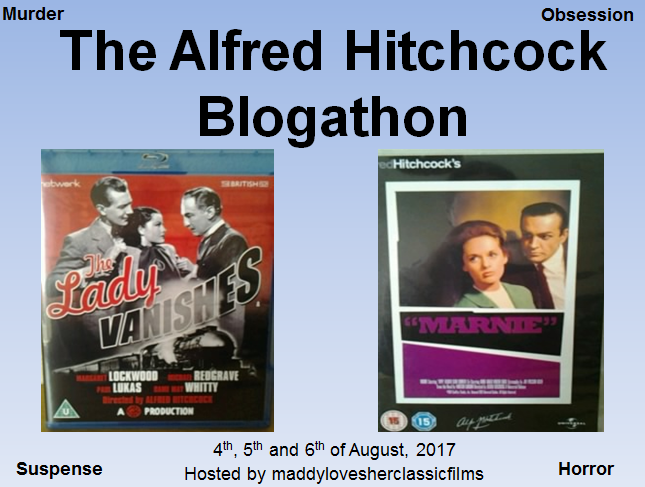
The Lady Vanishes (dir. Alfred Hitchcock) 1938

The Lady Vanishes is a 1938 comedy/thriller classic of the British Film Industry. It was Hitchcock’s breakout success and convinced David O. Selznick to offer him a seven feature deal in Hollywood. It was Michael Redgrave’s first movie part. Margaret Lockwood was already a leading lady, but this was her biggest film to date. It is also notable for being the first appearance of Charters and Caldicott a cricket obsessed comedy duo who were very famous throughout the 1940s.
The film was a huge hit, not only in the UK but also in the US, where it won the New York Times award for best film of 1938. The crime/suspense element of the film is very good with a very clever intricate story. The comedy is genuinely funny, the leading couple have great chemistry and their bickering is arch and witty. The supporting characters add to the entertainment, whether its the whimsical humour of Wayne and Radford as Charters and Caldicott, the slapstick of Emile Boreo as the Hotel Manager, or even the awkward situational comedy of “Mr and Mrs” Todhunter.
This movie is almost 80 years old, so there are parts which seem unsophisticated from a modern perspective, but for me, this adds to its charm. I love the opening scene, where the avalanche has delayed the train. To our refined eye, it is patently a set up model, but although we know this, it works perfectly well and sets the stage to start the story.
It is one of the films that contains the traditional Hitchcock cameo, very near the end of the film, he appears on Victoria station. Although he was nominated at the Academy awards, as best director, five times, he never won any of them. So this movie was his only award for best director, he won the New York Times award in 1939. This film is a significant piece of British cinema history as well as being a very enjoyable watch.
-
Apologia, Trafalgar Studios, London

I went to the first night of the previews. I really enjoyed it. The action takes place over an evening birthday party and the morning after. It was a little slow to get started but after that, the first act is good; the script is funny, arch and sharp. It appears to be a play about nostalgia for the idealism of the 1960s and children with abandonment issues. However, the second act is transformative, I love how it turns your perspective on its head, we get to know the characters better and see their motivation differently. The play is really about women’s place in society, whether this has changed over the past 50 years and about the price people are willing to pay for attempting to bring about change.
The direction is simple, Jamie Lloyd lets the words speak for themselves. The set is clever, the stage is framed like a picture or perhaps the old photograph given as a birthday gift. The whole cast is good, but this play is really about the women, Laura Carmichael and Freema Agyeman are both outstanding and Stockard Channing is amazing.
The writing is great and I will be looking out for other plays by Alexi Kaye Campbell. I guess there will be a few tweaks before the general opening, but it got a full standing ovation on the night I went. I hope the critics like it as much as I did and that Apologia is a huge success.
-
Hamlet, Harold Pinter Theatre, London,
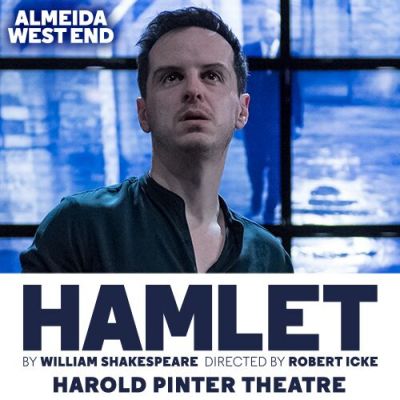
Hamlet is a play that has been done so many times in London over the last few years, it seems to be the role that every major star wants to do, to prove their worth. Well, this version, directed by Robert Icke and starring Andrew Scott is, without doubt, the best of them. The direction is wonderful, it makes the play feel current and relevant to today. I love the use of technology; the ramparts on video cameras, the war coverage on a 24hour news station, the paparazzi at the wedding.
Andrew Scott is a fantastic Hamlet, hurt, sarcastic and sardonic, he speaks every line as though he is having difficulty putting the depth of his feelings into words. The words are 17th century but his delivery of them is 21st century psychoanalytical. The modern setting brings out humour, in his lines, that was previously hidden and it makes his cruelty towards Ophelia and his mother, all the more harsh.
Derbhle Crotty plays Gertrude, as a worried caring mother, a bit frivolous and taken in by the attentions of her late husbands brother. I liked the chime in accent between her and Hamlet, it emphasised their bond and highlighted his reason for feeling betrayed by her. Angus Wright is wonderful as Claudius. In this production he is a modern Machiavelli, concerned with approval ratings and how the public would feel if he prosecuted Hamlet for the death of Polonius. He is the ultimate politician king, bland and reasonable while plotting death. It makes one realise how little politics has changed through the centuries.
Peter Wight is great as Polonius, usually played for laughs, but here he is a family man, desperately trying to enhance the lives of his children by means of his diplomacy. The affection between Laertes, Polonius and Ophelia is underlined in this production, and the sense of loss is deeper because of it. David Icke is not afraid to take risks, I am not sure about the Bob Dylan songs, bringing 1960s music into such an up to the minute setting jarred a little, but Rosencrantz and Guildenstern work very well as a romantically involved couple and why wouldn’t one of them be female. I am looking forward to the Tom Stoppard update.
The finale is deliberate, each character allowed their own time. Horatio is solicited to tell the tale, but it has all been recorded on video, so it will be available for the news channels to package and present, from all points of view, for years to come….
This is a fantastic production, it has a month left to play, London theatre at its very best.
-
Streatham Common, London, SW16

Streatham Common is an attractive green space in South London. The grass on the Northern and Western section is maintained and dotted with trees. It looks very pretty sloping upwards towards the rookery from the A23. On summer weekends it is quite busy with people, flying kites, having picnics or just chilling out. This area of the park often has events running when the weather is warm. An interesting one booked for September is “A Midsummer Night’s Dream” performed by the world first cycling theatre company!
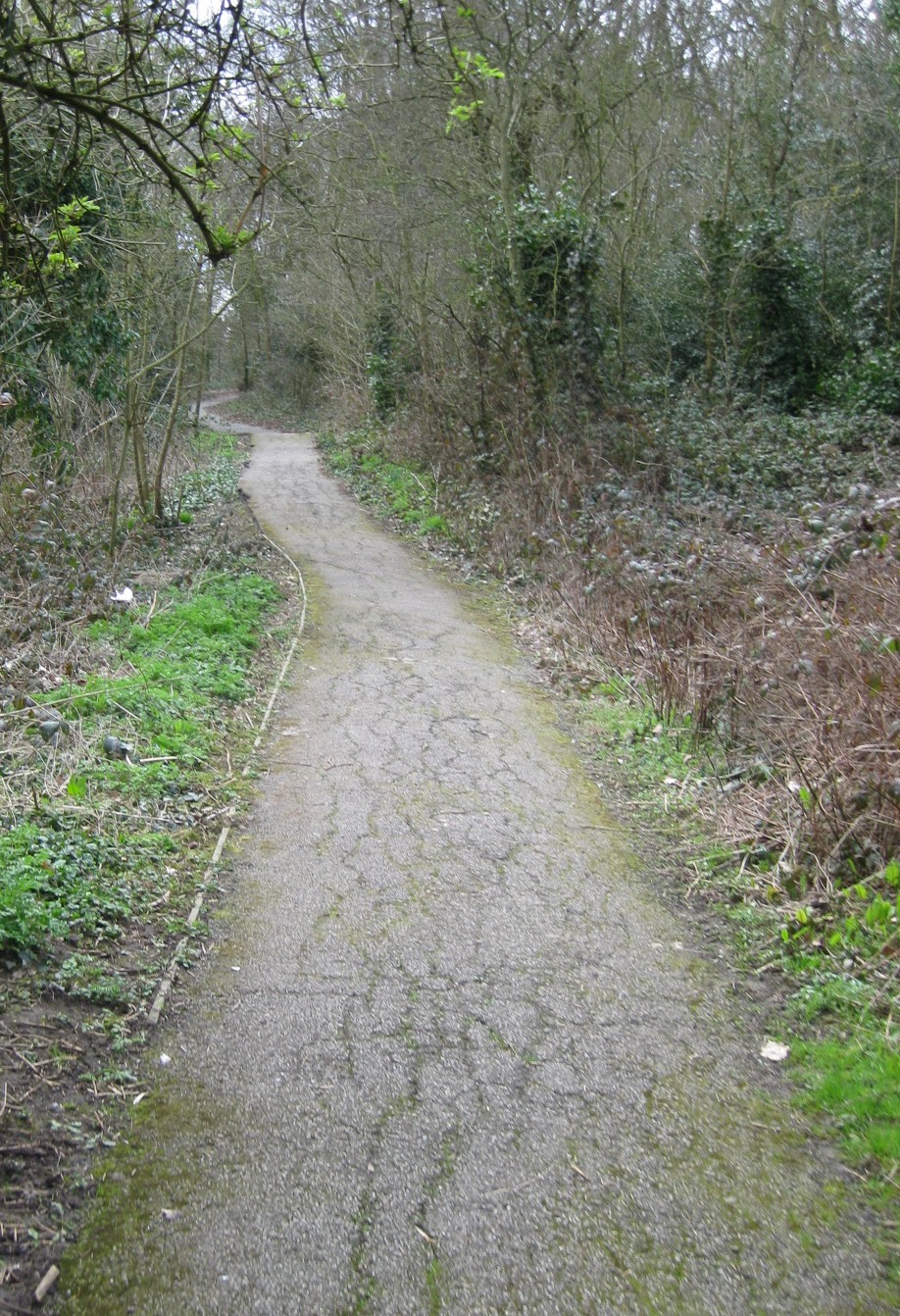
The eastern side is left in a more natural state. It has been designated a local nature reserve and it has many oak trees and some beautiful old cedars. Where the western part meets the east there is beautiful formal garden called The Rookery. A mineral spring was discovered here in the 1650s and was visited by royalty to take the waters. Streatham was a very fashionable out of town location in the 19th century and the Rookery Gardens are kept as they would have been in those days. There is a rockery with a pond, lovely herbaceous borders, and it has an ornamental stream running through it.

The Rookery Café is outside the wall of The Rookery just on the border between the maintained and more natural parts of the common. It is a well run café, serving hot and cold food. There are seats outside with big views to the west and south.

The Common is surprisingly large – over two kilometres along the perimeter from its northwestern corner to the northeastern one. As you head farther east, the park becomes part of the borough of Croydon and is known as Norwood Grove, although historically, it has always been part of the Great Streatham Common. There is a nice 19th century house here, inside the park, Norwood Grove House, although it is known locally as the White House. This also has nicely laid out gardens and pretty, if urban, views out over Croydon.

Streatham Common is a well used park, surrounded on all sides by houses. There are joggers, dog walkers, parents with buggies, yet it is big enough to avoid feeling crowded. It is on the Capital Ring, which is a 120 kilometre walk around London, broken up into 15 smaller sections. This is a surprisingly green and traffic light walk for such a large metropolis. The park itself is a varied and interesting area with lots of different types of scenery, I would say that it is certainly worth a visit if you are in South London on a sunny day.

-
Alfred Hitchcock Blogathon
This is an event happening at the beginning of August.
If you like Hitchcock films or want to read reviews of them, or if you would like to take part, roll across to maddylovesherclassicfilms.wordpress.com to find out more.
-
Our Ladies of Perpetual Succour, Duke of York’s Theatre
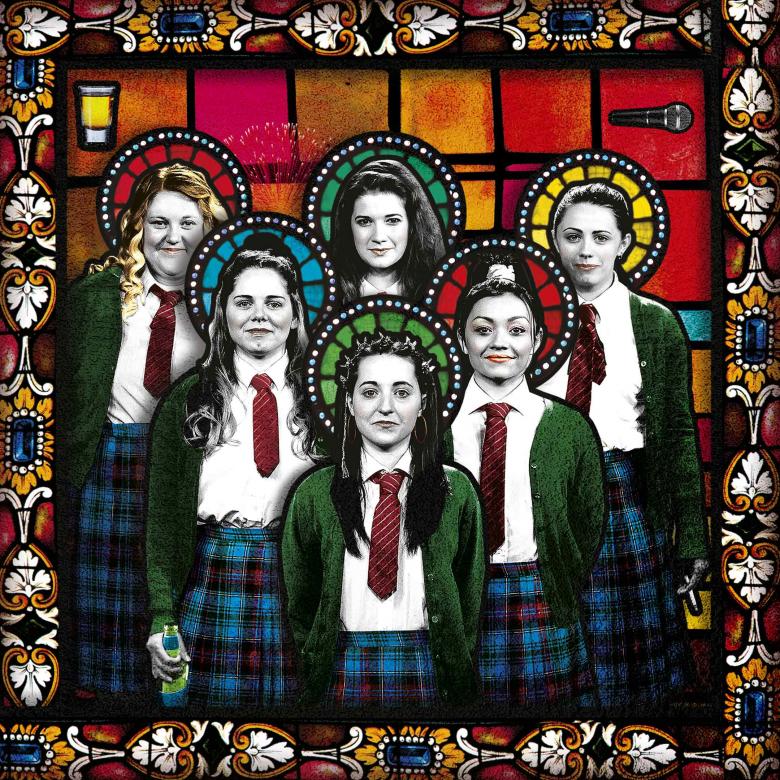
Six catholic schoolgirls in uniform arrive on stage to sing a hymn, Mendelssohn’s “Lift Thine Eyes”. They have angelic voices, it is beautiful. After the song they begin to talk, the language is sinful and the subjects are carnal. The juxtaposition is funny and moving.
This play is the story of their day trip to Edinburgh to sing in a choir competition. Over the course of this twenty four hours they meet various characters from the places they visit. These characters are played by the girls themselves and this combined with the strong accents and dialect made following the action hard work in places. However, the script is witty and coarse and the singing is fantastic, especially the classical pieces and hymns. Many of the rock songs are Electric Light Orchestra covers.
Our Ladies of Perpetual Succour is a well observed play. It is insightful, in that it makes us aware of the difference between the world that their convent schooling is preparing them for and the actual world that they will inhabit when they leave. This play makes you question how qualified ecclesiastic schools are at preparing children for a life in a secular society.
An entertaining and thought provoking show, with a very talented cast. I am sure we shall hear of many of these actors again.
-
Victim (dir. Basil Dearden) 1961
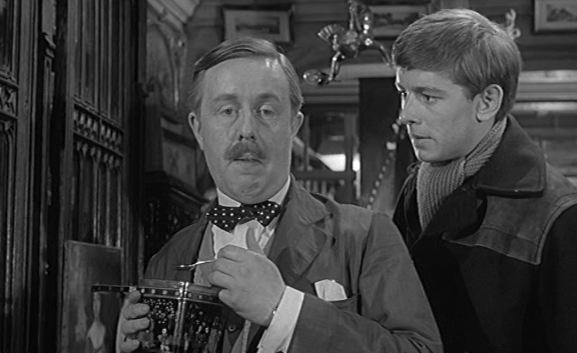
Victim is a classic movie in so many different ways. It is a great representative of the black and white, crime thriller, genre of the early 1960s. The storyline is good, it is well told and the suspense will keep you interested right until the finale. It is a fantastic British movie, made in the Pinewood studios with high production values. It has all the hallmarks of British film making at the time. The dialogue is clipped and the characters are bristling with repressed emotion.
It has a wonderful setting with splendid views of London just before the start of the swinging ’60s. St Martin’s Lane and Cecil Court are still recognisable, with Oliver! playing at what is now the Noel Coward Theatre. There are also nice shots of Millbank, Soho and the Thames. The pub scenes were filmed in a real pub, The Salisbury, on the corner of St Martins Lane, which was a gay pub until the 1980s. The pub is still there today and still has the Victorian fixtures and fittings seen in the film.
Victim has a courageous and dashing performance by Dirk Bogarde who risked his matinee idol status by taking on such a controversial role. He was a male romantic lead, so playing a man with homosexual tendencies, constrained though they may have been, would have put this career in jeopardy. He is excellent in the role and apparently he added the line “I wanted him!” which almost had the film banned. Sylvia Syms puts in a good performance as his unfulfilled wife, wavering between hurt and compassion. The whole cast is excellent and there are recognisable faces throughout the film.

This was a shocking film when it came out in 1961 and it almost did not get past either the British or American censors at the time. It was the first film to use the word homosexual and it was the first mainstream movie to allude to it in a non negative manner. It was this, that made it a danger to public morals and gave it the X rating that it received when it was released. Homosexuality is not the direct subject matter, but a blackmail ring that was targeting the frequenters of a gay pub. This was a common occurrence at the time as homosexual relations were an offence that could land one in jail and would certainly ruin a career.
While this film, itself, did not advocate gay rights, its sympathetic portrayal of some gay characters allowed the conversation to begin and this will have helped to bring about the change in the law six years later. Victim often appears in lists of all time greatest films, and it was certainly a brave and groundbreaking piece of film making. Whether you are interested in the history of cinema, or the history of gay rights then you should see this movie. It is being shown currently at the BFI on the south bank as part of the gross indecency season, celebrating the 50th anniversary of the partial decriminalisation of homosexuality in Britain, but it very often included in retrospective seasons of gay film, British film, or classic crime thrillers.
Of course, most importantly of all, it is a very enjoyable film to watch!
-
Weekend (dir. Andrew Haigh) 2011
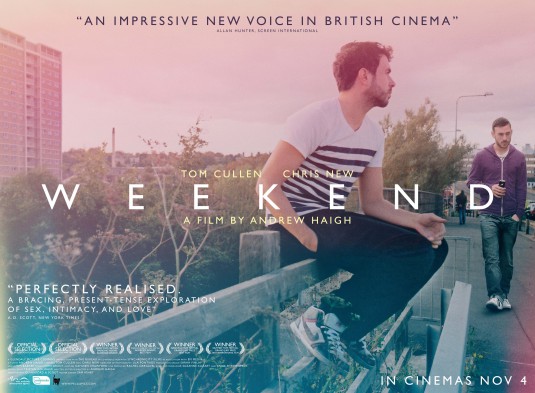
Weekend is a beautifully written and wonderfully acted film. It was made and set in 2011. Two guys hook up in a bar on a Friday night and the film is the story of their gradually developing relationship between then and Sunday evening. Although In many ways it is a universal love story, it is firmly rooted in the British urban bar scene of the time, both in the casual drug taking and in the way that they have sex first and then begin to get to know each other afterwards. Andrew Haigh, the director has gone for ultra realism in his film style and this almost feels like a documentary in places.
The two leads, Tom Cullen and Chris New, both put in great performances, as they need to for this realism to work. They are fully committed to their characters and you believe in them wholeheartedly, coming to care for them as they risk sharing their vulnerabilities with each other. It is a warm film, and we get to know them, as they get to know each other. They both appear well rounded and honest, even though our knowledge of them is limited, and we want their burgeoning trust in each other to be repaid. However it is a cold world and they have known each other for a weekend…………
This is not just a gay movie, but Weekend is one of the best British Gay Films and deserves to be commemorated as such. It is currently showing at Picturehouse Central as part of the 50 years since decriminalisation series. It is also showing on the BFI player as part of their LGBT+ series, also commemorating 50 years since partial decriminalisation. Whatever platform you choose to see it on, it is certainly worth watching.
-
Girl from the North Country, Old Vic Theatre, London
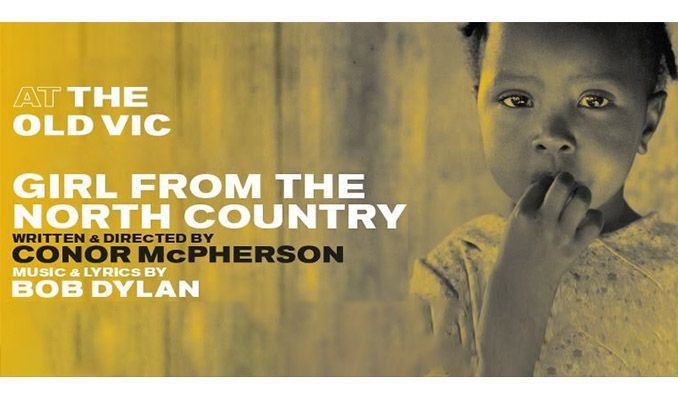
Girl from the North Country contains three or four intertwining stories. These are slight, almost sketches really, but are beautifully told so that we care about the people we see on stage. It contains about twenty songs from Dylan’s back catalogue. These are used, in an abstract way, to accentuate the drama rather than to move the narrative forward. It would be misleading to call this a musical, it is more a play with musical accompaniment.
The prose and the songs complement each other very well. Given the quality of the cast, the strength of the acting is no surprise. The singing, orchestration and choreography are the revelation. There are some amazing voices in the ensemble. Shirley Henderson and Jack Shalloo, in particular, shock when they sing, but every song is delivered well. The impact of a downtrodden, beaten character suddenly opening their vocal cords is not to be underestimated. Even the songs that I already knew, appeared to be given new life in the context of the play.
The reception of the audience was good, it is not too often that the whole audience stands at the end. I enjoyed this show, Conor McPherson and Bob Dylan are a combination that go together very well.
-
Subscribe
Subscribed
Already have a WordPress.com account? Log in now.
 The London Lark