-
The Pass (dir. Ben A. Williams) 2016

The Pass is a film adaptation of a play that was a big hit when it played at the Royal Court Theatre in 2014. I have to imagine that it comes across better in the intimate surroundings of a small theatre. The premise is good, the timing is right for a movie about a closeted gay footballer, but this is not that movie. Had it been made in the 1970’s or 1980’s it would probably have been ground-breaking and interesting but at this moment we do not need a film about a selfish gay soccer star made bitter by the possibility that he might have missed out on true love.
The film is directed by Ben A. Williams and he sticks rigidly to the three act, three hotel room setting of the play. This increases the impression of it being a filmed version of a theatre play and puts another step between us and the action.
Although there are four characters in this film, two of them are two dimensional ciphers. The lap dancer, Lyndsey, and the male groupie, Harry, are just there to use and be used. Ade, the player turned plumber, is well acted by Arinze Kene, but this film is ultimately about Jason, who is excellently portrayed by Russell Tovey. He develops into the true antihero, without a single redeeming feature. We watch him go from, a not particularly nice, 17 year old to, a harsh and vitriolic, 28 year old over the course of three acts. That is the real problem with this film, we never really liked him in the first place so we don’t really empathise with him. He doesn’t care about anybody, he uses his wife, his child, his lap dancer, his fan and ultimately even his mate Ade. He chooses lifestyle over fulfilment, so when he is unfulfilled we aren’t particularly surprised or worried.
I had such high hopes for this film, it had so much going for it, and don’t let me take away from an outstanding performance by Russell Tovey, but so many movies made from the 1930s to the 1990s are full of flawed gay characters whose life is ruined by the fact that they can’t cope with the trauma of being queer, and I had hoped that we had moved on from that.
-
Rich Mix, 35-47 Bethnal Green Road, London E1

Rich Mix is a flexible, interesting venue, very handily located less than 100metres from Shoreditch High Street Overground Station. It has a theatre space and a bar on the 4th floor, holding around 100 people comfortably. The ground floor has a licensed bar in a space suitable for theatre, dance or live music and this area can accommodate many more. The first floor is a mezzanine, looking down over the stage. There are three cinema screens on the floors in between and there is also an Indian restaurant/café on the premises.
What really makes this venue, is the variety and diversity of the cultural events that are put on here. If you look at the programme for the coming month alone, there is theatre, dance, live bands, open mic nights, story-telling evenings, political events, family events, not to mention the films showing in the cinema, where it is one of the venues hosting the London Film Festival. It is also a venue for London Dance Umbrella Festival.
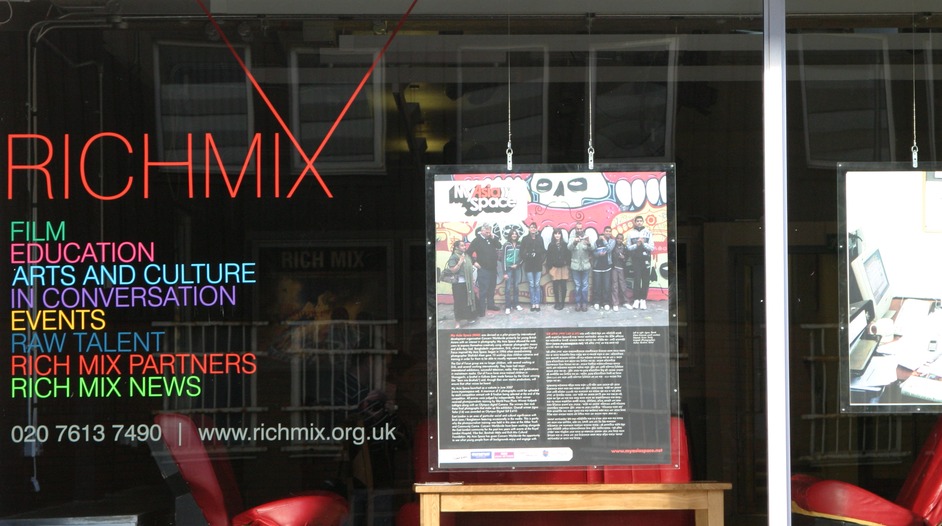
There mezzanine doubles as an art gallery and currently hosts a multimedia exhibition: Black Pride. Among upcoming exhibitions are “Hard to Read” bringing together art and poetry, and another depicting illustrations of Syrian refugees. There are weekend markets with different themes, one in December is specifically for independent potters and ceramicists.
An adaptable venue, embracing the local community, accommodating the art scene and enhancing London’s rich cultural diversity.
-
Trois Grandes Fugues, Lyon Opera Ballet, Sadler’s Wells, Islington, London
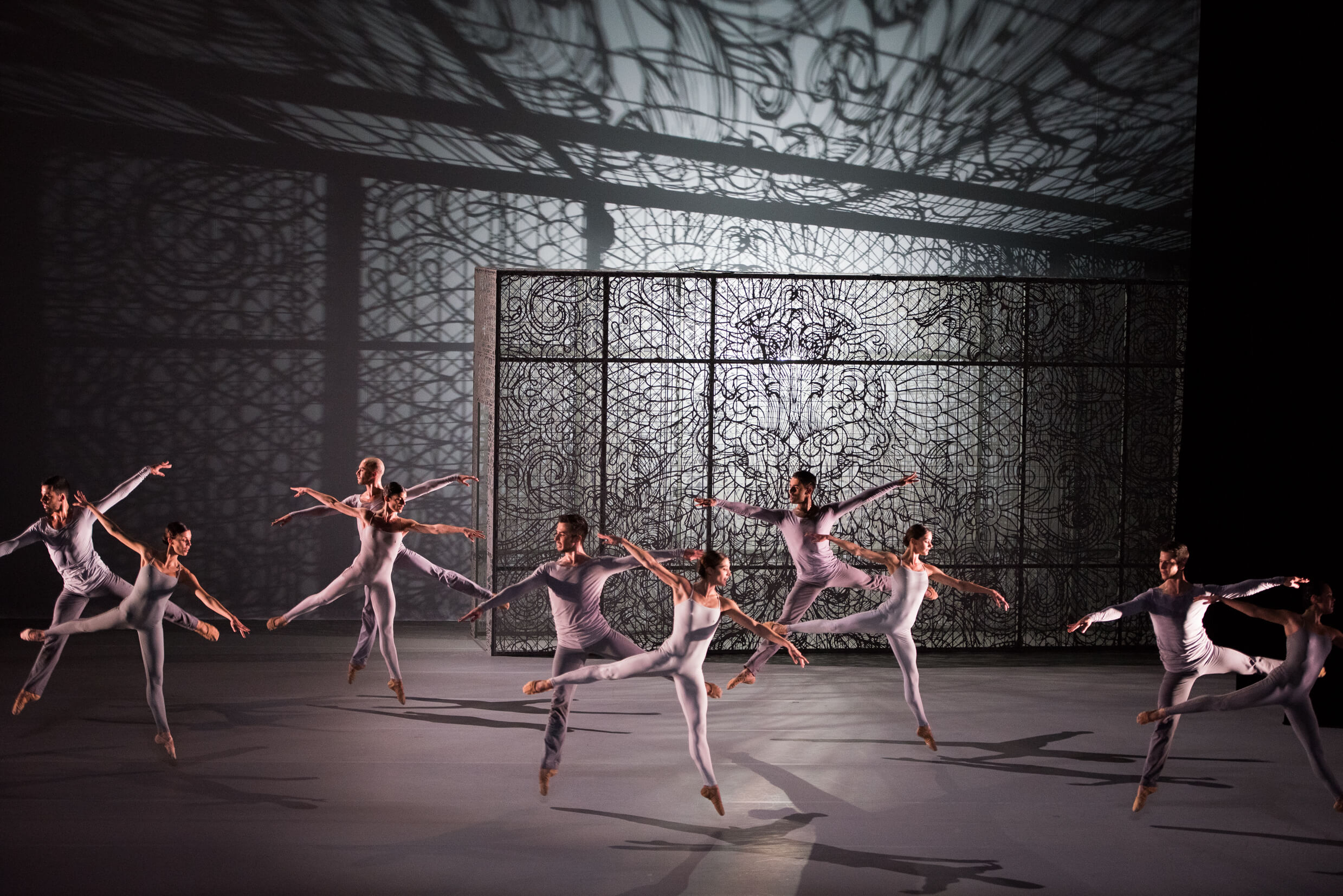
Trois Grandes Fugues is a simple but clever idea. Three different choreographers take the same piece of music, in this case Beethoven’s “Die Grosse Fuge”, and bring their interpretation of it, to the stage. I came to the show not knowing the music and uninformed with regard to the language of dance.
The three dances are all completely different. The first is the most traditionally classical in its form. Lucinda Childs has six couples investigate the geometric patterns in the music. The dancers are dressed in simple grey figure hugging body suits, the dance is graceful, formal, mathematical and balletic.

The next, Anne Teresa De Keersmaeker, has her 8 dancers, 6 men and 2 women, in dark suits with open necked white shirts. Formally dressed at first the jackets are removed and some of the shirts are opened as the dance moves on. Each dancer appears to be linked to different sections of the orchestra and they move across the stage, together or apart, each seemingly linked to their own particular instrument.
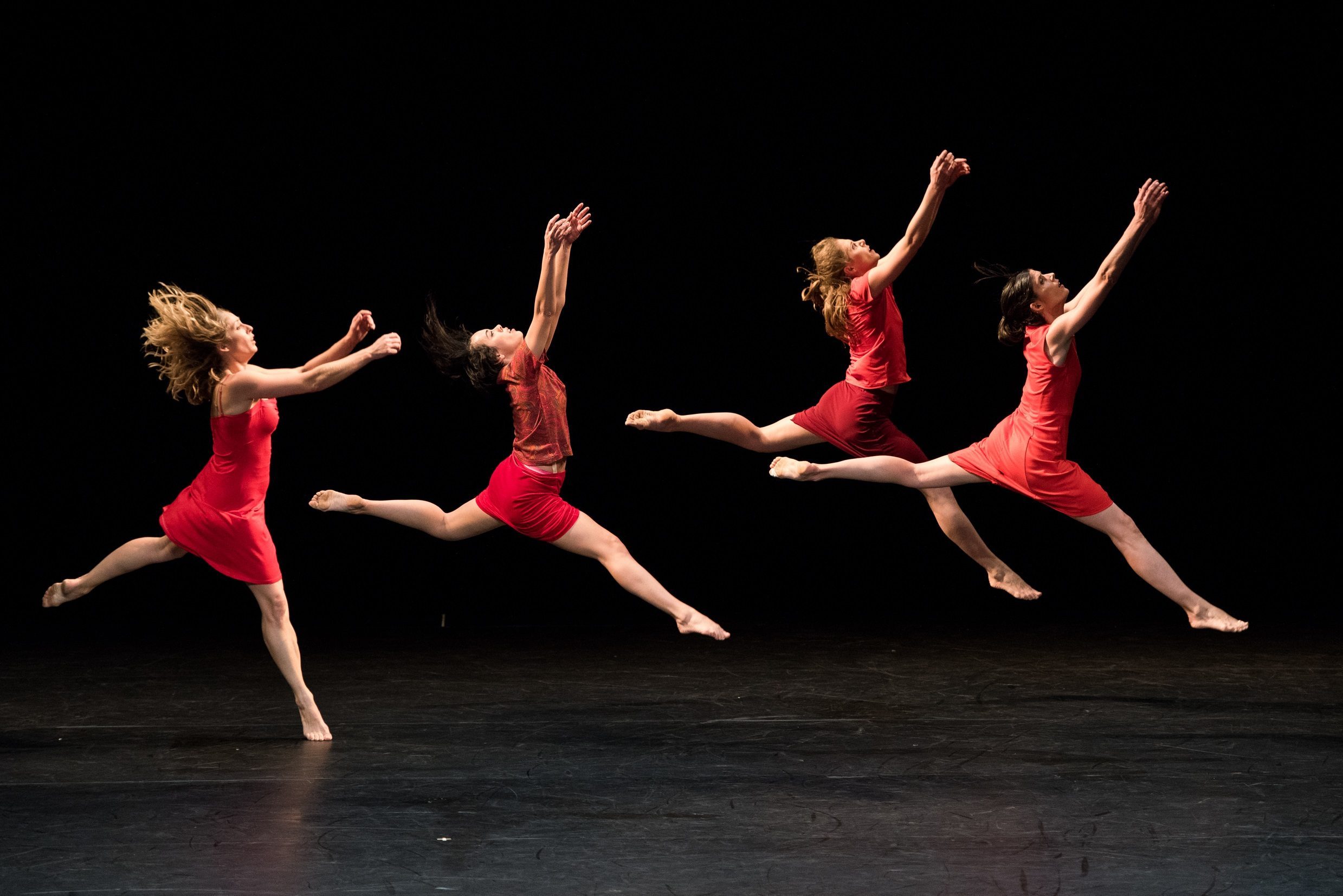
The final piece by Maguy Marin, has her dancers less formally dressed, in shades of red, and her interpretation is wilder, more emotional, and the four dancers emphasise the dramatic and canonical motifs. They follow each other round the stage in more staccato movements, showing the fierce energy and strife in Beethoven’s work.
I like Beethoven, usually his pastoral pieces are more to my taste, having heard this 20 minute work three times, each time I enjoyed it more, and I will look out for it, to listen to at home. I had a fantastic evening and I felt like I had been given an introductory lesson into both classical music and dance.
-
Jekyll and Hyde, National Youth Theatre, Ambassadors Theatre, London
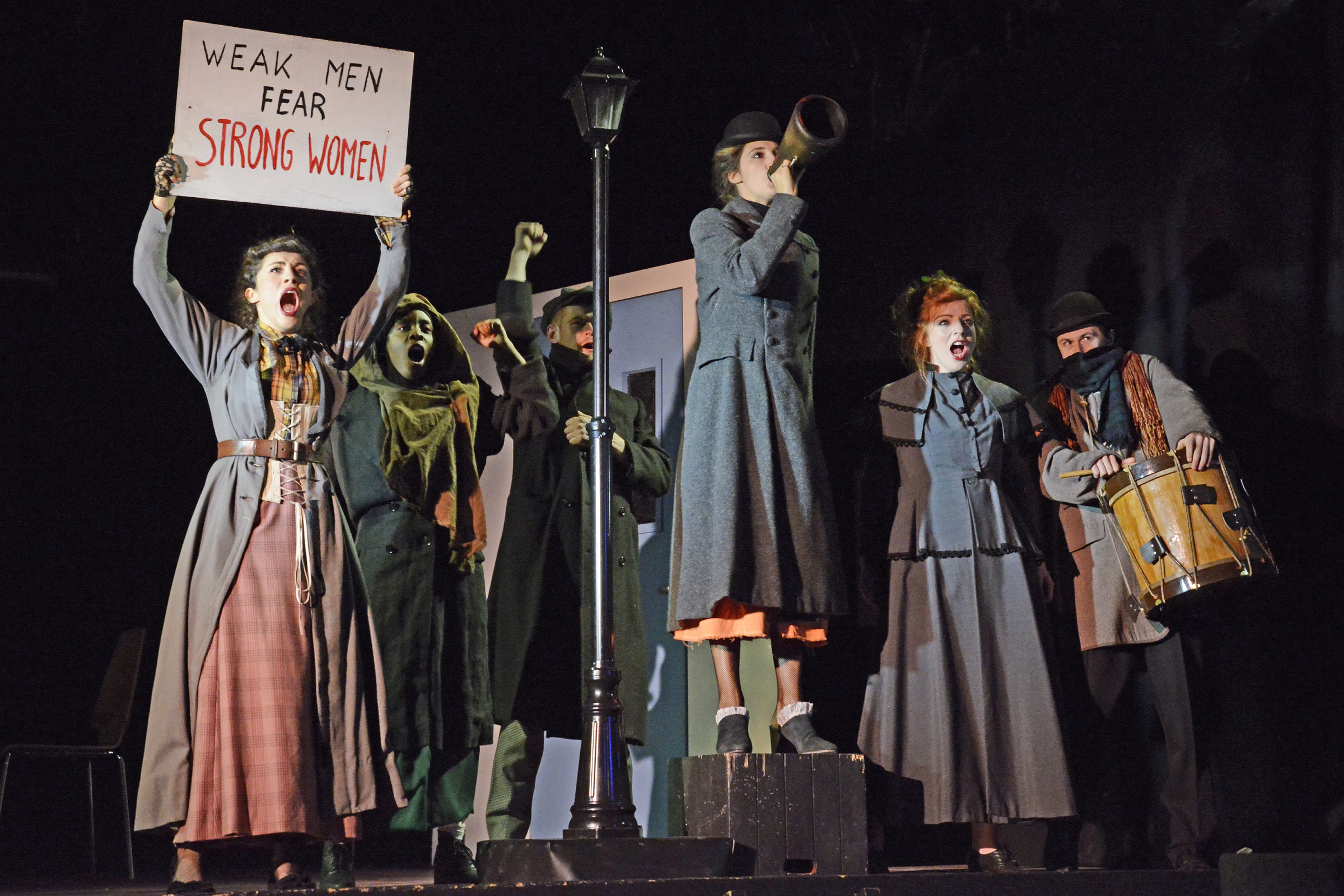
The National Youth Theatre’s production of Jekyll and Hyde is a deconstruction of the original novella by Robert Louis Stevenson, rebuilt with a modern feminist twist by writer Evan Placey. Combining Victorian settings and morals with modern day language and values adds a new dimension to the duality theme of the story.
The decision to have a female Jekyll is not only brave but astute, and this production perfectly captures the zeitgeist with the discussion about sexism in film and theatre so much in the news. The writing is forthright, the jolt of the coarse language spoken by the Victorian ladies near the start of the play becomes clear in the second act, there is no doubt that Evan Placey is a talented author, of whom we will hear more in the future.
Aside from the writing there is much to recommend in this production. The acting throughout is accomplished. Jennifer Walsh in particular is excellent as Florence, a young adult coming to terms with the fact that although no one else is going to stand up for her, she has the power to stand up for herself. Elizabeth McCafferty confidently makes the transitions between Jekyll and Hyde both striking and convincing. Mohammed Mansaray has a funny scene as a priest, which he delivers very well.

The direction is brisk and contemporary, so that even in the midst of 19th century London, we feel linked to the current day. The director, Roy Alexander Weise, is not afraid to be confrontational, daring to breach our comfort zone in order that we feel the characters’ anger. The costume design is remarkable and clever, the ensemble changes from church house to flop house in the blink of an eye.
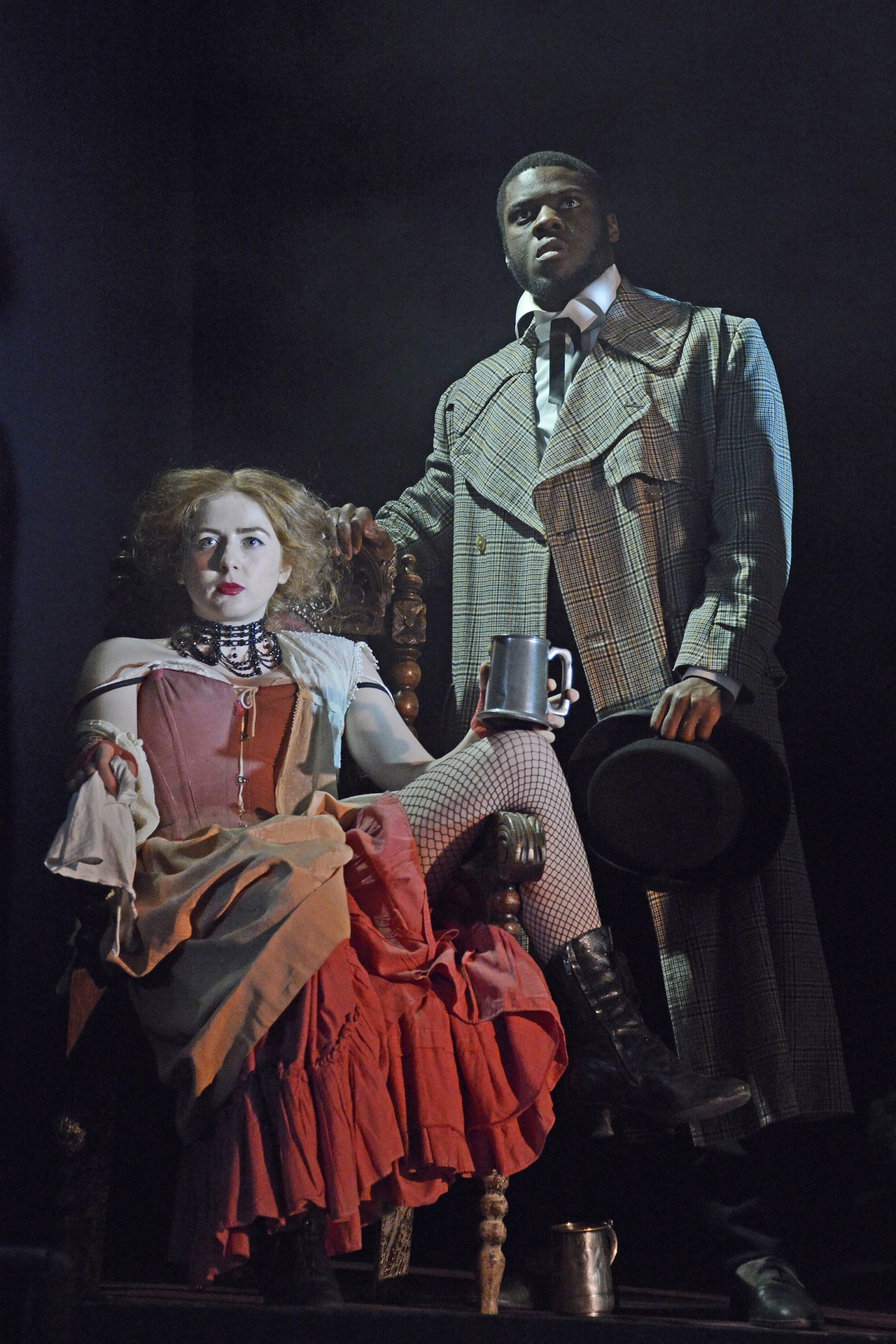
Pictures courtesy of Nobby Clark Jekyll and Hyde has a few rough edges, but challenging, thought provoking productions like this are exactly the remit of The National Youth Theatre and I have to say that I thoroughly enjoyed this show.
-
Out of the System, Rich Mix, Shoreditch, London

Out of the System, part of a three year project from London’s Dance Umbrella Festival, is curated by Freddie Opoku-Addaie and runs at Rich Mix 16-17 October.
Made up of three very different dance pieces, there is something here for all tastes. The first piece “Clay” is a flamenco based collaboration between two dancers and a guitarist, the dancing is fantastic, filled with action and humour. I loved the way the two dancers played off each other and the way they slowly drew the guitarist in.
The second is a more interpretive piece, evocative, using symbolist props and occasional filmed backdrop. I have to admit that some of the symbolism went over my head, but the dancing is eloquent and emotional.
The third “Ven” is a double hander, with two harmonious dancers intertwining to dance almost as one person, clever and moving. The trust that the couple show in each other is beautiful, a truly symbiotic relationship.
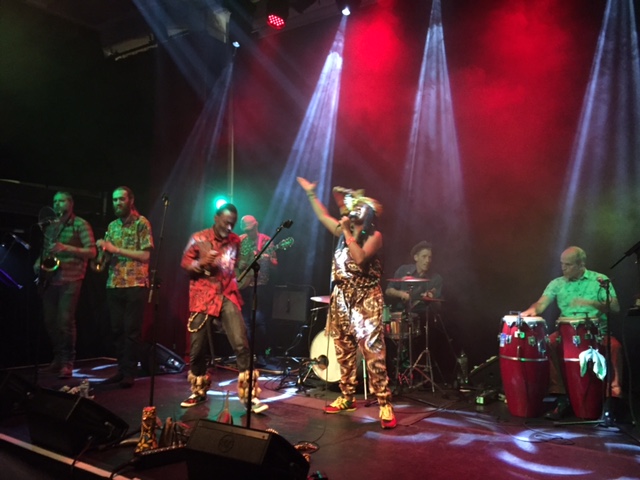
The evening is finished off with a live band, The Afrobeat rhythms of Yaaba Funk had the whole audience dancing. All in all we had a very interesting evening in a great venue. The London Dance Umbrella Festival is running at different venues until the 28th of October and with the standard this high, I am looking forward to the other nights I have booked.
-
Hershey Felder, Our Great Tchaikovsky, The Other Palace, Victoria, London
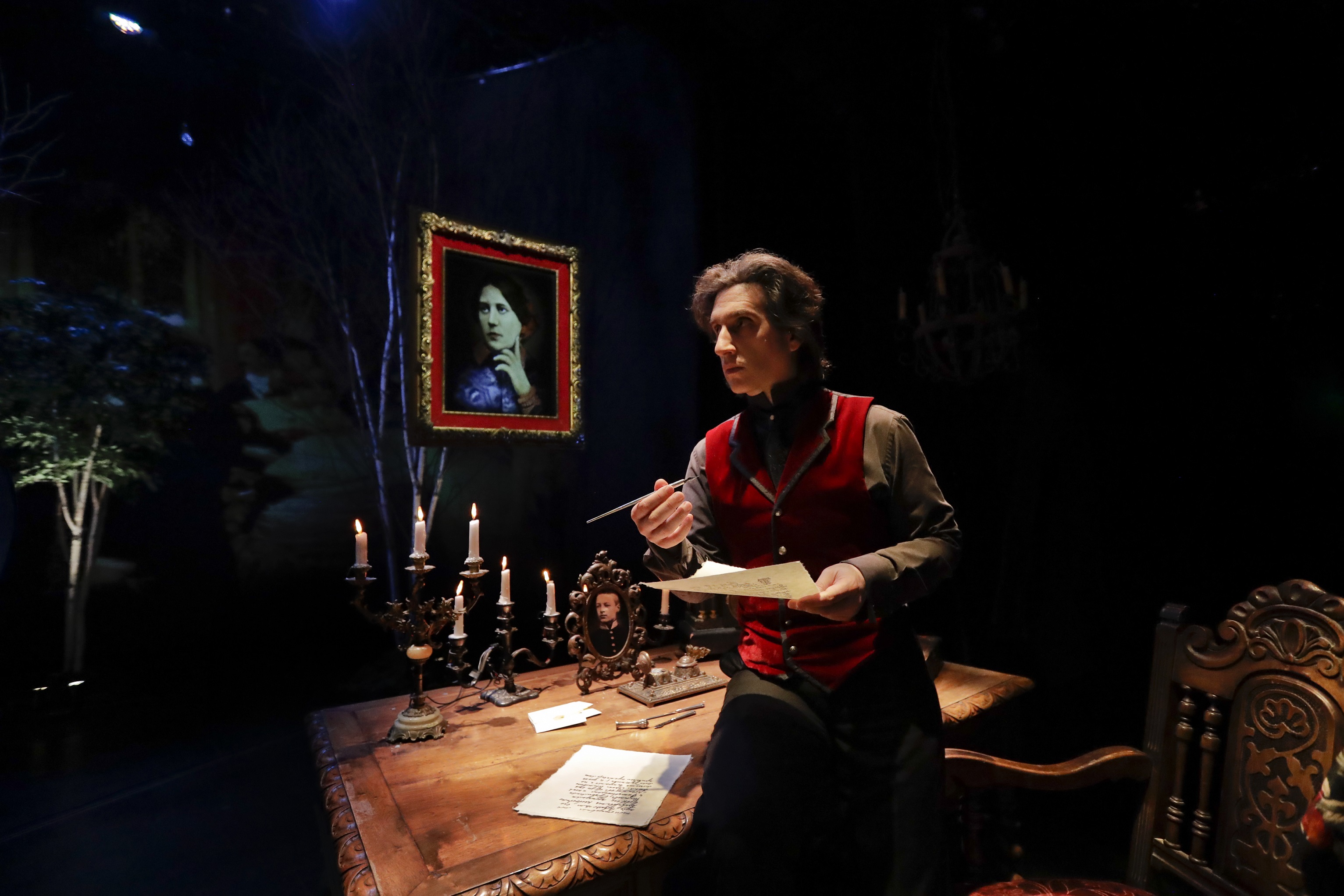
Hershey Felder has spent the last two decades recreating, on stage, the lives of great composers, while playing their music to highlight salient moments from those lives. Tchaikovsky is the sixth in this series. The genre is part biography, part piano recital.
The stage is set to resemble a room in his dacha in Klin, with rugs, cabinets and a baby grand piano. There is a large portrait over a writing table, whose likeness changes to whoever he is speaking about. The backdrop to the set also has illustrations which change to reflect different periods of his life.
Felder begins the show by coming on to the stage with a letter he has received from the Russian Government inviting him to bring his story of the life their greatest composer to be performed in his home country. He asks the audience whether he should do this. This is a rhetorical question, as the difference between his account of Tchaikovsky’s life and the official Russian version is vast, and it seems unlikely that Hershey Felder’s telling of events would prove popular there.
Tchaikovsky’s story is told by picking out individual snippets of his life, mostly in chronological order, and combining them with music that he was writing or performing at the time. The effect is like an entertaining lesson combined with a piano recitation by an inventive and musically talented professor; imagine one of the best university lectures that you have attended and you won’t be far wrong.
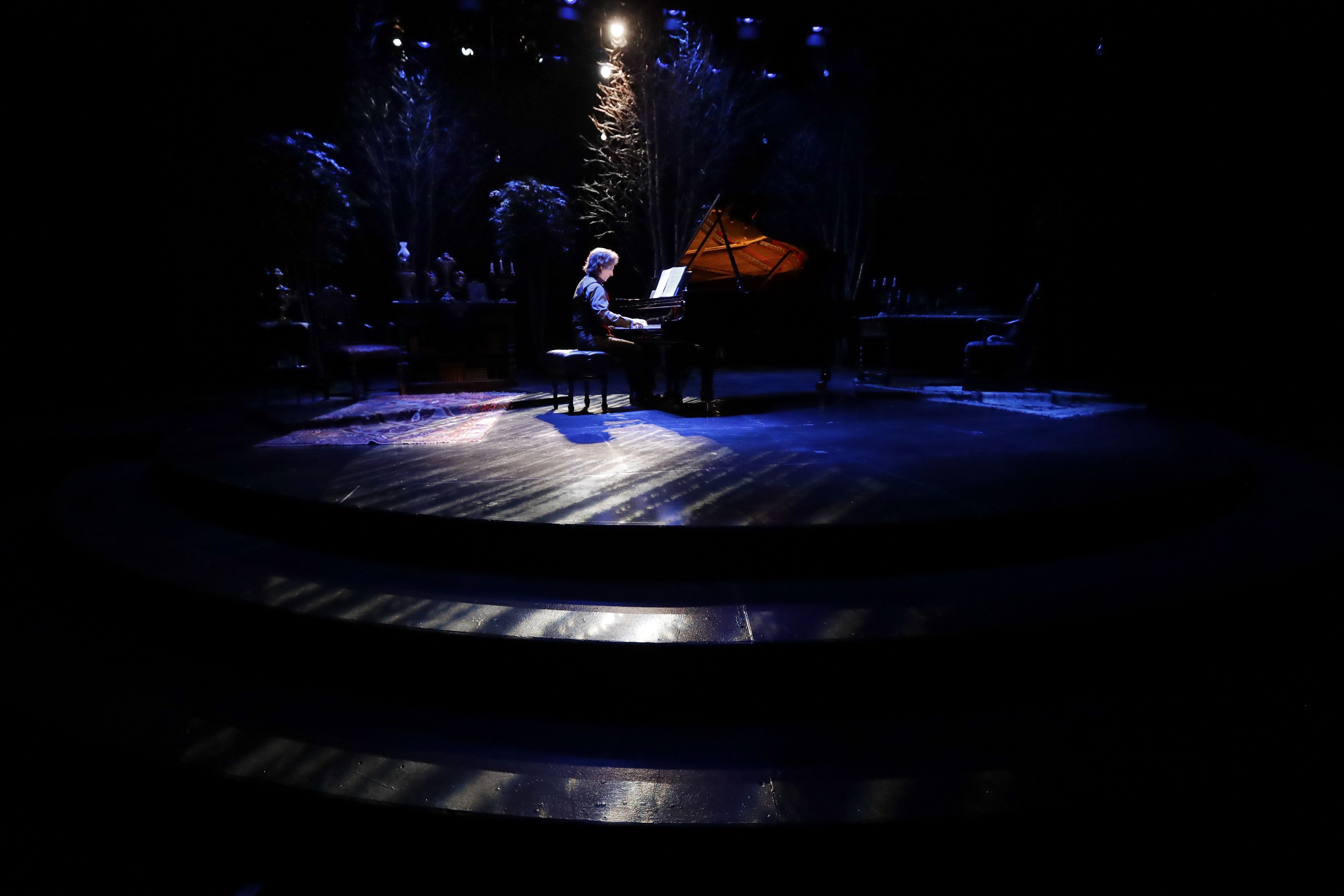
Hershey Felder has chosen which events to recreate, so we are given the narrative from his point of view, and he makes us aware that others may look upon his life differently. For me, who liked Tchaikovsky’s music, but who knew hardly anything about his life, it was a perfect combination. I was given an insight into the man while listening to an accomplished pianist playing his greatest hits.review
-
Browns, Cardinal Walk, London Victoria

Victoria Station and its surroundings have changed dramatically in the last couple of years. It is now full of pedestrian areas and buildings made of glass and steel. Cardinal walk is probably one of the oldest of these but still fits nicely into this environment. The décor and the ambience of Browns matches this well too, it is set over two floors, all glass. The restaurant is on the first floor so if you get a table by the window you can watch the world go by as you eat.
Their Pinot Grigio is good, although at over £8 for a large glass, it needs to be. They have a reasonable selection of beers and the cocktail list looks impressive although we did not try any. The service was good, our waiter was friendly and helpful, but he wasn’t really that busy, so maybe he should have picked up on our indifferent response when he enquired how the food was.
The thing that let them down was the food. The fish pie was ok, but I expect better than that when I pay over £15 for it. The only way to tell the difference between the different fish was texture, the overall effect was bland and the potato topping was runny. The steak sandwich was also all right, no butter on the bread – just mayo, but the chips were only slightly hotter than luke warm and they didn’t have any English mustard. The side order of onion rings contained four rings!
I wanted to like this place because I have enjoyed other restaurants in this chain in the past. With such a large choice of places to eat around Victoria now, average food will not get repeat business.
-
The Hippopotamus (dir. John Jencks) 2017
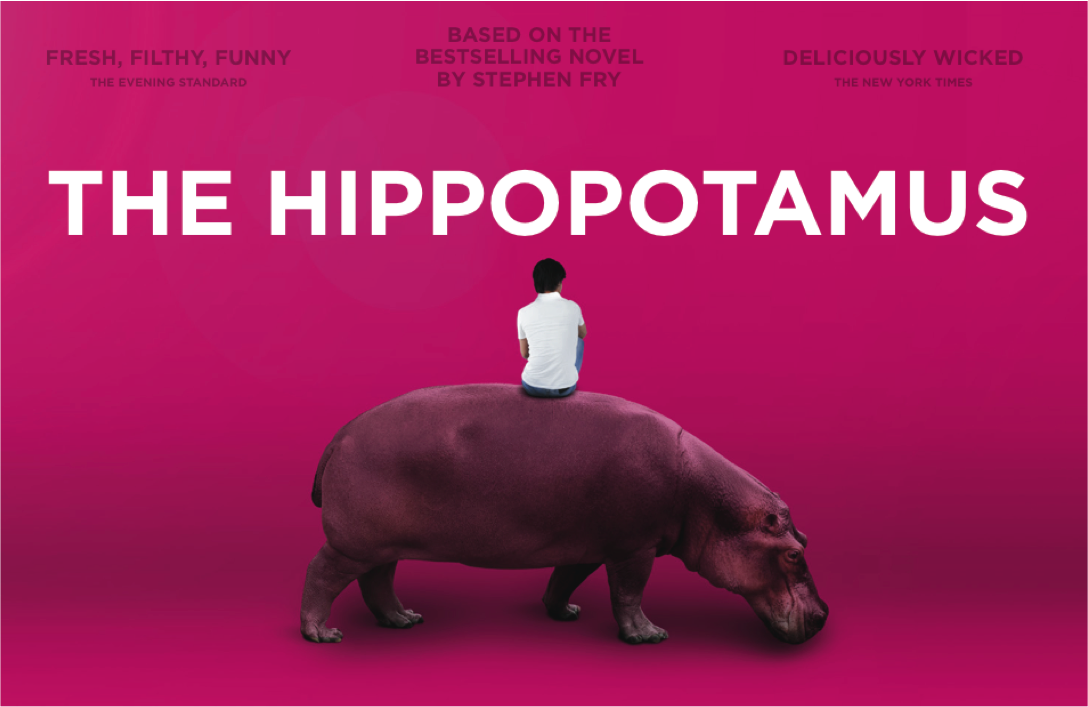
“The Hippopotamus” the novel came out in 1994. At the time the book was mildly shocking, moderately funny and quite witty. Stephen Fry was at the height of his popularity, he was clever, droll and sharp. 23 years later and everything has changed, the storyline is slightly distasteful, the writing seems bland and the dialogue is pompous.
Roger Allam is good as Ted Wallace, a washed up poet who investigates a series of miracles taking place in a country house, but he is just about the only good thing about this film. As a comedy it is remarkably banal, his vicious put downs and arch insights fall flat because everyone in the film has some major character flaw that makes the shot too easy to be funny.
The most interesting thing about this movie was trying to work out what had changed in the intervening years, that made the experience of watching it in 2017 so different to reading it in 1994. In the end, I decided that there was a combination of factors conspiring against it. Watching it over an hour and a half as opposed to reading it over a few days, intensified the characters, made them less rounded, and as the flaws were the part that was important to the storyline, these were the traits that were magnified. My taste has changed, and although I still enjoy a barbed riposte, I prefer it when both sides have the wit to take part. Sitting ducks make unexciting targets. Attitudes have changed in the last 23 years too, and the story that was shocking, but quite funny in 1994, appears borderline abusive now in 2017.
These things go in cycles, and although Stephen Fry’s star is on the wane currently, in the future he may again be recognised as a major talent. However, at the moment there is not much to recommend this film – save it to watch in 2040.
-
Follies, National Theatre, Southbank, London.
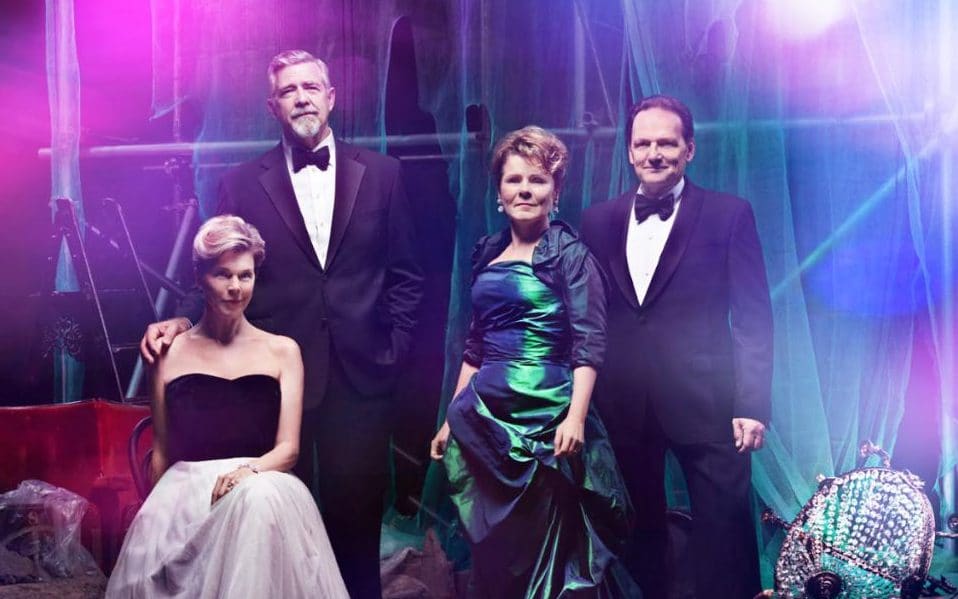
Follies is probably Sondheim’s most traditional musical, in that it has set pieces, dance routines, show girls and, separate songs that don’t bleed into each other. However, it is still complex; the story has great depth and some of the songs are operatic in nature.
It is expensive and complicated to produce, it has a large company, with demanding roles throughout the cast. It needs an orchestra. Full productions of Follies are rare, the last proper one in London was thirty years ago, so when there is a high quality, committed revival such as this on offer, the opportunity needs to be grabbed.
It’s Sondheim, so the material is fantastic. It has some of his most famous songs, the storyline is elegant, and it is almost upbeat for Sondheim, (that means everyone in the cast isn’t going to live out the rest of their lives in abject misery!). It’s the National Theatre, so the production values are top notch. Dominic Cooke and Bill Deamer as director and choreographer have both done a wonderful job. I particularly loved the way each dancer at the reunion had their younger version dancing with them. I also loved the way all the mature dancers paraded down the stairs in a dignified manner wearing evening gowns, while their younger incarnations scrambled in over the rubble at the back of the stage, in their high heels, basques and feathers.
Imelda Staunton, Janie Dee, Philip Quast and Peter Forbes are the four leads, so the acting and singing are outstanding. Imelda Staunton does an emotionally draining rendition of “Losing My Mind” and Philip Quast’s voice is as amazing as it always is. It has Tracie Bennett and Geraldine Fitzgerald in supporting roles so it has incredible strength in depth. Tracie Bennett is in full on scene stealing mode with “I’m Still Here” sung with a mixture of pain and defiance.
Follies at the National Theatre is fantastic, and given all the elements that went into making it, there was never any doubt that it would be.
-
The Ferryman, Gielgud Theatre, Shaftsbury Avenue, London W1

The Ferryman is a kitchen sink drama with an epic storyline. Apart from the prologue, it is totally set in the large kitchen of a family farmhouse outside Derry. The action is a day and a half in the lives of the extended family that resides there. But, the themes are huge, its about family and war, about love and loyalty, about freedom fighting and terrorism, and it tells these stories through short interwoven family interactions that come and go throughout the play that gradually meld together to make a complex tapestry.
Jez Butterworth has been spoken of as one of the best writers around today, and with The Ferryman he delivers. The language and the narrative are superlative, it is the writing of someone both confident and ambitious. He is brave to wind traditional songs and ancient stories through the dialogue and he is talented pull it off so well.
The direction is awesome, there are 17 characters in this play, without counting the live goose, rabbit or the baby. Just moving them all around the stage must have been a major task but, Sam Mendes makes the whole setting feel real, natural and, even simple.
The cast is also fabulous, lots of lovely performances from so many different actors. Paddy Considine and Laura Donnelly are great as Quinn and Caitlin, but right through the cast there were great turns. I loved Rob Malone as the troubled Oisin. Brid Brennan had a scene stealing part as Aunt Maggie Faraway and she played it perfectly. Dearbhla Molloy and Des McAleer are wonderful as Aunt Patricia and Uncle Pat.
As you can tell, I loved this show. I have to finish because I am about to run out of superlatives. This is a play that will become a classic piece of literature that will be on school curricula.
-
Subscribe
Subscribed
Already have a WordPress.com account? Log in now.
 The London Lark